
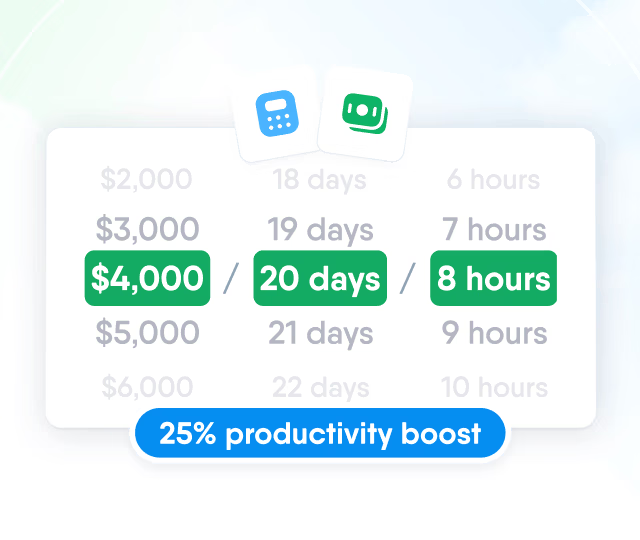
HR efficiency estimator
How does the HR efficiency estimator from PeopleForce work.
Calculate your impact



Onboarding process
What employee onboarding is, its stages and how to make it work
What is onboarding?
Onboarding is the process of bringing a new employee into the company: from accepting the offer to the moment they work independently and feel part of the team. It covers paperwork, access and equipment, meeting the team and learning the culture, training and first goals. Onboarding usually lasts three to six months, and up to a year for complex roles.
The quality of onboarding affects whether a new hire stays. According to Gallup, only 12% of employees strongly agree that their organization does a great job of onboarding new employees. A well-designed process pays off quickly: new hires reach full productivity sooner and are less likely to leave during the probationary period.
Stages of onboarding
| Stage | When | What happens |
|---|---|---|
| Preboarding | from offer acceptance to day one | paperwork, workplace and access setup, welcome email |
| Day one | the first day | meeting the team, manager and buddy, overview of tasks and rules |
| First week | working days 1–5 | training on tools, first simple tasks, a one-on-one with the manager |
| First 90 days | months 1–3 | goals based on a 30-60-90 day plan, regular feedback, review at the end of probation |
| Up to a year | months 3–12 | development plan, full integration into the team and processes |
Who is involved in onboarding
- HR plans the process, prepares documents and makes sure no step gets lost.
- The manager sets goals, holds regular one-on-one meetings and gives feedback.
- A buddy or mentor helps with informal questions and culture through a buddy system or mentoring.
- IT and facilities prepare equipment, accounts and the workplace before day one.
- The new hire completes training, asks questions and shares feedback.
How to make onboarding effective
- Start before day one. Paperwork, access and equipment should be ready in advance so the first day is about people, not formalities.
- Make the process repeatable. Define the steps, owners and deadlines once and use the same template for every new hire.
- Set clear goals. New hires should know what is expected of them after 30, 60 and 90 days.
- Collect feedback. Short surveys after the first week and month show what to improve.
- Plan for remote employees. Onboarding remote employees needs its own plan for communication, virtual introductions and equipment delivery.
Onboarding, preboarding and offboarding
Onboarding is one part of the employee life cycle. Preboarding is its first stage, between the offer and day one. Offboarding is the opposite process, when an employee leaves: handing over work, returning equipment and closing access.
In PeopleForce, onboarding in Core HR is built on process templates. A template sets tasks with subtasks, owners (the manager, the new hire, a specific colleague or a person from a profile field, such as a buddy) and deadlines relative to the first working day: tasks can start before or after the employee's start date. For every new hire, the process runs from the template and each participant gets their tasks on time.


Let us show you what's possible
From Core HR to advanced workforce analytics — see the platform saving 80 hours a month for teams just like yours. Fully tailored to your workflow.