
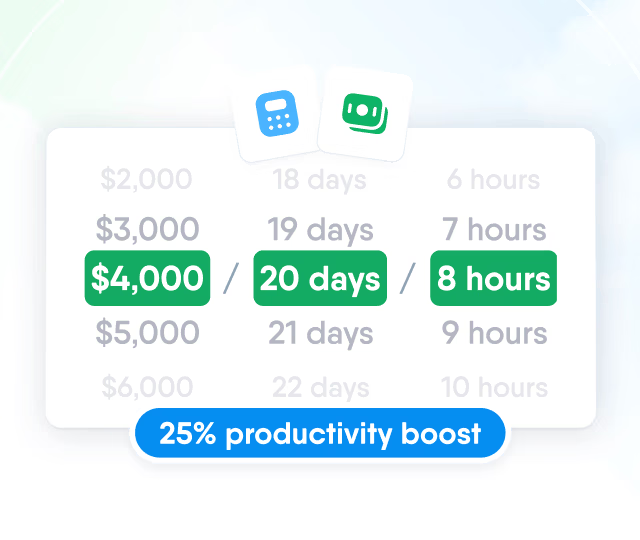
HR efficiency estimator
How does the HR efficiency estimator from PeopleForce work.
Calculate your impact



Mental health at work
What is mental health at work?
Mental health at work is the part of employee wellbeing an employer can actually affect: workload, clarity, autonomy, how managers behave and how predictable the job is. It is not the same as clinical care, which belongs to health professionals, and keeping that line clear is what stops a wellbeing programme from turning into amateur therapy.
The business case is straightforward and has been for years: sustained pressure without recovery produces errors, absence and resignations, in that order. The people question comes first, but the cost shows up in the same numbers a CFO already tracks.
What the employer controls and what it does not
An employer cannot treat anxiety or depression. It can change most of what makes work harder than it needs to be:
- Workload and pace. Chronic overload with no recovery period is the single most reliable route to burnout, and it is a planning decision rather than a personal failing.
- Clarity. Not knowing what is expected, or being measured against a standard nobody stated, is exhausting in a way that hard work is not.
- Control. Some autonomy over how and when the work happens changes how the same workload feels, which is why flexible hours come up in almost every wellbeing survey.
- Manager behaviour. Micromanagement, unpredictable moods and feedback delivered only when something goes wrong do more damage than most people admit.
- Safety from mistreatment. Bullying, mobbing and harassment are mental health issues before they are HR cases.
The signals that appear before anyone says anything
People rarely announce that they are struggling. What tends to move first is the data around them: short absences rising, overtime creeping up in the same team, engagement scores falling in one department while the company average holds, meetings that used to generate argument going quiet. Quiet quitting is usually this, not laziness. None of these signals identify an individual, and none of them should be used to.
What a company can actually do
- Fix the workload problem you already know about. No amount of wellbeing communication survives a team that has been understaffed for eight months.
- Train managers on the basics: how to notice a change, how to ask once without prying, and where to point someone. Managers are not counsellors and should not be asked to act like ones.
- Make support concrete and easy to reach. If there is an assistance programme, people should be able to find the number without asking HR, which is a knowledge management problem as much as a benefits one.
- Put a mental health day in the leave policy as a named type. If it has to be taken as sick leave, most people will not take it.
- Build in recovery: protected time off, cover during absence, and a return that is planned rather than improvised.
- Make feedback continuous rather than annual. A feedback culture with regular one-on-ones catches problems while they are still small.
Measuring without prying
The only legitimate measurement here is aggregated and anonymous. Regular surveys with a real anonymity threshold, an eNPS question, open comments and a cut by team tell you where conditions are worst without identifying anyone. Combine that with absence and overtime data and the picture is usually clear enough to act on. What is never legitimate: asking about diagnoses, treating an individual's absence as a performance signal, or building a list of people someone considers at risk.
Wellbeing theatre
Fruit baskets, a meditation app licence and a webinar during lunch are not harmful in themselves. They become harmful when they are offered instead of fixing hours, staffing or a manager everyone has complained about, because the message people receive is that the company knows and has chosen the cheaper option. Wellness programs work as an addition to decent working conditions, never as a substitute, and this is the most common way wellbeing initiatives lose credibility for good.
Tracking conditions in PeopleForce
Pulse is built for exactly this kind of measurement. Company-wide and lifecycle surveys combine rating, eNPS, single and multiple choice and open questions, and each question is attached to a driver, so results roll up into themes rather than a list of scores. An anonymity threshold is enforced at the survey level: results, comments and heatmap rows stay hidden until enough distinct people have answered, so a cut by department, location, division or position cannot expose an individual. Response rates, driver scores and free-text comments sit in the same report.
Alongside the surveys, a short mood check-in records a rating from one to five with an optional comment, and the mood report exports it across any date range, which is what makes a slow decline visible before it becomes resignations. In Perform, one-on-ones run from templates with talking points and action items, so the conversation happens on a schedule instead of only after something breaks, and leave tracking lets a mental health day exist as its own named leave type with its own policy rather than being hidden inside sick leave.


Let us show you what's possible
From Core HR to advanced workforce analytics — see the platform saving 80 hours a month for teams just like yours. Fully tailored to your workflow.