
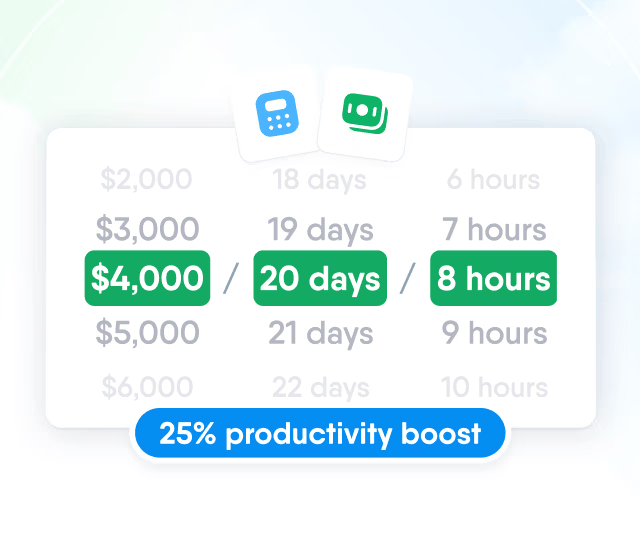
HR efficiency estimator
How does the HR efficiency estimator from PeopleForce work.
Calculate your impact



Career lattice
How a career lattice works?
Career lattice is a career development model where people grow through multiple directions, not only promotions. While the ladder only goes one way (up), the lattice enables diagonal and horizontal movement, and even allows occasional strategic steps downward to build new skills. This approach reflects how work really happens: roles evolve fast, careers are non-linear, and learning matters as much as titles.
How a career lattice works?
In a career lattice, growth is not defined by a single “next step.” Employees can move in different ways depending on their goals, strengths, and business needs.
Common types of movement include:
- Lateral moves – switching to a different team or function at a similar level
- Diagonal moves – changing both role and level, often into a new area
- Temporary roles or projects – joining short-term initiatives to gain experience
Why companies use a career lattice?
A career lattice helps companies stay flexible and keep people engaged. Instead of waiting for a promotion to become available, employees can keep growing in other ways. This reduces frustration and makes it easier to retain talent.
It also helps companies:
- adapt faster to changing business needs
- develop internal talent instead of hiring externally
- encourage continuous learning
Why it matters for employees?
For employees, a career lattice creates more options. Employees do not need to wait for a manager role to grow. They can explore different paths, build new skills, and find work that fits their interests.
It also makes career development more transparent. When paths are visible, people can plan their growth instead of guessing what comes next.
How it works in practice? Examples
- A marketing specialist moves into a product growth team for six months to learn experimentation and analytics
- A customer support lead joins a cross-functional AI implementation project to gain technical exposure
- A software engineer transitions into a solutions architect role without a formal promotion first
- An HR manager shifts laterally into people analytics to build data skills
These moves build experience that often leads to bigger roles later — but not in a straight line.
The role of tools and structure
A career lattice only works if it is clear and well-documented. Companies use tools like PeopleForce performance reviews to:
- track skill development over time
- align managers and employees on growth goals
- focus conversations on results and learning, not just titles
This creates consistency. Managers can support development more effectively, and employees can see real opportunities instead of waiting for a single promotion path.


Let us show you what's possible
From Core HR to advanced workforce analytics — see the platform saving 80 hours a month for teams just like yours. Fully tailored to your workflow.