
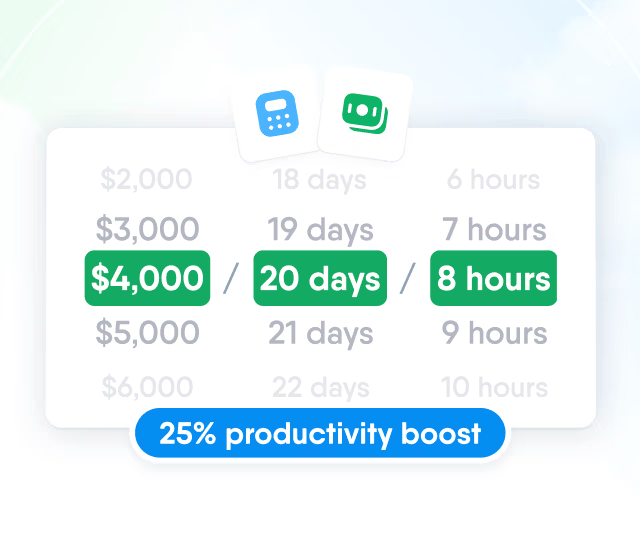
HR efficiency estimator
How does the HR efficiency estimator from PeopleForce work.
Calculate your impact



Cross functional teams
What are cross functional teams?
Cross-functional team is a group of employees from different departments—such as Marketing, Finance, Engineering, and Human Resources—working together toward a specific goal or to solve a particular problem.
From an HR perspective, these teams represent a shift from traditional "siloed" organizational structures to a fluid, project-based design. Instead of reporting strictly through a vertical chain of command, members contribute specialized expertise to a horizontal initiative.
Core Components for HR Management
To successfully implement and manage these teams, HR professionals focus on four critical pillars:
- Diverse skill synthesis: HR must ensure the team isn't just a collection of warm bodies, but a "Swiss Army Knife" of competencies. This requires a deep understanding of the skills inventory within the company to match the right talent to the project needs.
- Dual reporting lines: Often, members are in a matrix structure, meaning they report to their functional manager (for career development) and a project lead (for daily tasks). HR plays a vital role in mediating potential conflicts in priorities between these two "bosses."
- The "forming-storming-norming-performing" cycle: Because members come from different departmental cultures (e.g., the fast-paced world of Sales vs. the methodical pace of Compliance), HR must facilitate team-building to bridge communication gaps.
Best Practices for HR Oversight
- Define Clear Governance: Establish who has the final say on performance reviews. Ideally, the project lead provides 360-degree feedback that the functional manager incorporates into the formal annual review.
- Reward Systems: Shift from purely individual incentives to team-based rewards. If the cross-functional team hits its milestone, everyone should benefit, regardless of their home department.
- Conflict Resolution Protocols: HR should provide a framework for resolving "turf wars" early, ensuring that the project goal remains the North Star for all participants.


Let us show you what's possible
From Core HR to advanced workforce analytics — see the platform saving 80 hours a month for teams just like yours. Fully tailored to your workflow.