
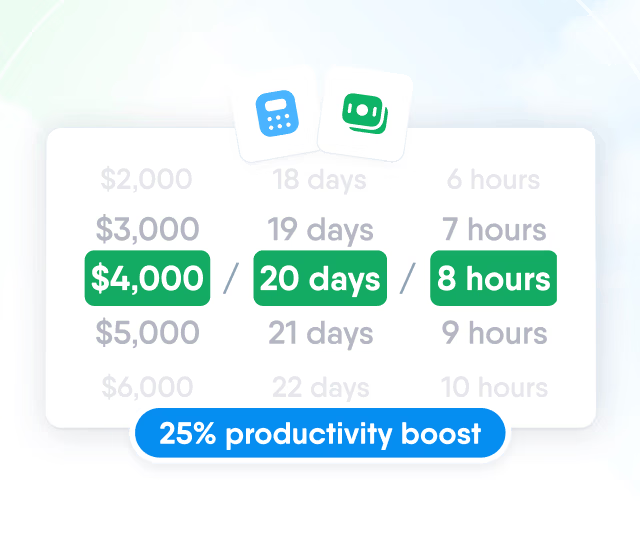
HR efficiency estimator
How does the HR efficiency estimator from PeopleForce work.
Calculate your impact



Equity
What is equity?
Equity is the strategic practice of ensuring that every employee has access to the same opportunities, resources, and rewards by acknowledging and addressing their specific circumstances and systemic barriers. While equality focuses on providing everyone with the exact same thing, equity recognizes that people start from different positions and requires HR to adjust "the ladder" to ensure everyone can reach the same height.
The Core Pillars of Equity in HR
1. Compensatory and Distributive Equity
From a total rewards perspective, equity is most visible in pay parity. This involves conducting regular audits to ensure that employees performing substantially similar work receive equal pay, regardless of gender, race, or other protected characteristics. It moves beyond "market rate" to look at internal fairness, ensuring that historical biases in salary negotiation or previous salary history do not follow an employee into their current role.
2. Procedural and Structural Equity
This refers to the fairness of the "rules of the game." HR experts design systems that minimize unconscious bias within the employee lifecycle. This includes:
- Blind Recruitment: Removing names, photos, or university prestige from resumes to focus purely on skill sets.
- Standardized Performance Reviews: Moving away from "gut feelings" toward objective, data-driven rubrics that prevent "affinity bias" (favoring people who are like the manager).
3. Developmental and Promotional Equity
Equity ensures that the path to leadership isn't reserved for those with the most social capital or "loudest voices." HR must ensure that high-potential programs and mentorship opportunities are accessible to all. This might mean providing flexible training hours for caregivers or offering specific leadership tracks for underrepresented groups to correct historical imbalances in the executive suite.
Implementing Equity: The HR Strategy
Removing Barriers to Entry and Success
Equity requires a proactive search for "hidden" hurdles. For example, if a job description requires a college degree for a role that could be performed with equivalent experience, HR is creating an inequitable barrier for those who couldn't afford higher education. An equitable approach focuses on skills-based hiring to broaden the talent pool.
The Role of Accommodations
True equity often manifests through Reasonable Accommodations. This isn't "special treatment"; it is the leveling of the playing field. Providing a screen reader for a visually impaired employee or flexible scheduling for someone observing a religious holiday allows those individuals to contribute at their full potential, which they otherwise could not do in a "one-size-fits-all" environment.
Data-Driven Accountability
Expert-level HR departments treat equity as a metric, not just a sentiment. By tracking the "velocity" of promotions across different demographics, HR can identify where the "broken rung" exists in the corporate ladder and intervene with targeted development programs to restore balance.


Let us show you what's possible
From Core HR to advanced workforce analytics — see the platform saving 80 hours a month for teams just like yours. Fully tailored to your workflow.