
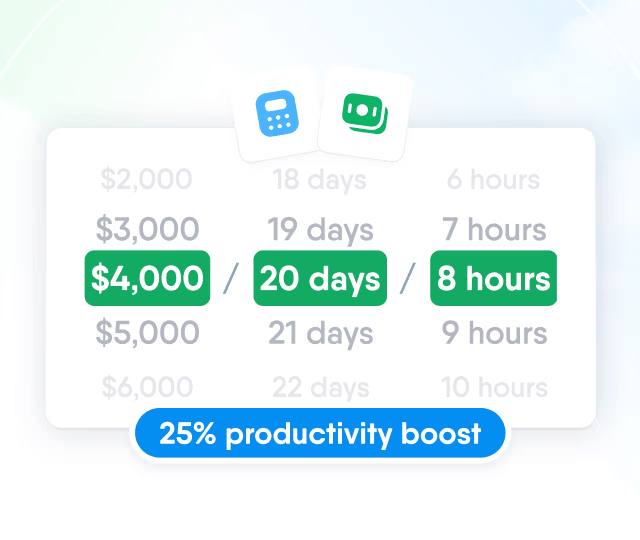
HR efficiency estimator
How does the HR efficiency estimator from PeopleForce work.
Calculate your impact



HR workflows
What are HR workflows?
An HR workflow is a predefined sequence of steps that runs automatically when a trigger fires: a date arrives, an employee record changes, or someone launches it by hand. Instead of an HR manager remembering that a new hire needs a laptop request, a signed NDA, a buddy and a first-week check-in, the workflow fires each of those steps at the right moment and tracks who completed what.
The difference between a workflow and an HR process is automation. A process is the agreed way of doing something and can live in a handbook. A workflow is that process encoded in a system, with owners, deadlines and reminders attached, so it executes the same way whether HR is watching or not.
What triggers an HR workflow
Four trigger types cover almost every case:
- A date on the employee record. Hire date, termination date, probation end, birthday or work anniversary, with an offset before or after. This is what drives preboarding, the onboarding process and offboarding.
- A change in an attribute. Department, manager, location or employment status changes, and the workflow reacts to it.
- A recurring schedule. Weekly, monthly or annual cycles for compliance training, policy re-acknowledgement or equipment audits.
- A manual launch. One-off situations that still deserve a checklist, such as a role change or a return from long leave.
What a workflow step can automate
A single workflow usually mixes several kinds of step: tasks assigned to a manager, IT or the employee; emails and announcements, including a new employee introduction; documents to read or sign; forms to fill; account and equipment provisioning; and meetings such as a one-on-one or a probation performance review. Steps that produce paperwork feed straight into HR document management, so the signed file lands in the right folder without anyone moving it.
Where workflows pay off first
Start with the processes that are frequent, multi-owner and costly when they slip:
- Onboarding. The highest-volume process with the most handoffs, and the one a new hire judges the company by.
- Offboarding. Access revocation and equipment return are a security problem, not an admin one, which makes missed steps expensive.
- Probation and review cycles. Dates that quietly pass unnoticed and then become awkward conversations.
- Document collection and re-acknowledgement. Anything tied to an audit or a regulator.
Everything else can wait until these four run cleanly. Automating a rare process buys almost nothing across the employee life cycle.
How to design a workflow that survives contact with reality
Map the process as it actually runs today, not as the policy describes it. Write down every handoff and who owns it. Then cut the steps nobody can name a reason for, assign each remaining step to a role rather than a person, and set a realistic deadline offset from the trigger date. Run it manually once before switching it on, and review it after the first ten times it fires.
Common mistakes
Three patterns break most workflows:
- Automating a broken process. Speed makes a bad handoff worse, not better.
- Assigning steps to named people. The workflow dies the day that person leaves or goes on leave.
- Too many notifications. When every step emails five people, the team learns to ignore all of them.
HR workflows in PeopleForce
Workflows in Core HR can be triggered by an attribute change, an event, a scheduled date, a recurring rule or manually. Scheduled workflows fire on, before or after the hire date, termination date, probation end, birthday, work anniversary or a custom date field, so a preboarding sequence can start two weeks before day one and an offboarding sequence a week before the last day.
Each workflow is a chain of actions: assign a task, send an email, generate a document from a template or request an uploaded one, collect a signature, send a form, enrol someone in a course, create a calendar event, schedule a one-on-one, launch a review, request feedback, create a Google Workspace account, set up a substitution, fire a webhook to another system, or trigger another workflow. Workflows can be attached to employees, applicants or vacancy requests, which means the same automation logic covers the handoff from Recruit into Core HR without re-entering data.


Let us show you what's possible
From Core HR to advanced workforce analytics — see the platform saving 80 hours a month for teams just like yours. Fully tailored to your workflow.