
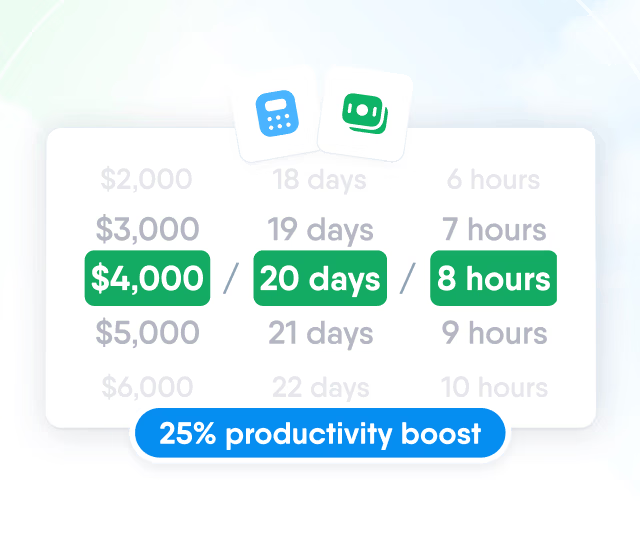
HR efficiency estimator
How does the HR efficiency estimator from PeopleForce work.
Calculate your impact



Medical leave
What is medical leave?
Medical leave is time away from work because of illness or injury, confirmed by a medical professional. The employment relationship continues, the role is held, and pay during the period follows the law and the company's own rules rather than the manager's discretion.
It is the one leave type where three things collide at once: a legal entitlement, a medical document and personal information the employer is not entitled to read in full. Handling it badly creates legal exposure and, separately, teaches people to come in sick.
Medical leave, sick days and disability leave
Three different things that companies routinely merge into one line in a spreadsheet:
- Self-certified sick days are short absences, typically one to three days, taken without a certificate. Many companies grant a few of these per year as a bonus policy, which stops people dragging a cold through the office.
- Medical leave proper starts where certification begins. A doctor confirms incapacity for a stated period, and sick leave pay follows the statutory formula.
- Disability leave covers long-term or permanent incapacity and usually runs through a separate scheme with its own rules on job protection and benefits.
Keep them as separate leave types. Merging them makes the balance meaningless and hides the only pattern worth seeing, which is whether short absences are becoming long ones.
Documentation and what the employer may actually see
The employer is entitled to know that a person is medically unfit to work and for how long. In most jurisdictions the employer is not entitled to the diagnosis. That distinction has practical consequences: certificates should be attached to the request rather than emailed to a manager, access to them should be limited to the people who process payroll and absence, and nobody should be asked what is wrong as a condition of approval.
This sits squarely inside data protection obligations. Health data carries a higher bar than ordinary employee records under the GDPR and most equivalent regimes, so a certificate sitting in a shared folder or a chat thread is a problem regardless of who put it there.
Pay during medical leave
The mechanics differ by country, but the structure is usually the same: the employer pays the first stretch of days, a state or insurance fund covers the rest, and the percentage of salary paid is fixed by labor law rather than negotiated. Companies can top the amount up and many do, but the top-up has to be written into the policy, because an undocumented one applied case by case is exactly how discrimination claims start.
What a medical leave policy should state
- How many self-certified days are allowed per year before a certificate is required.
- When and how the person should notify, and who covers their work that day.
- Which document is required, where it is uploaded, and who can open it.
- How the days are paid, including any company top-up.
- What happens on a long absence: check-in cadence, whether the role is backfilled temporarily, and how the return is planned.
- What happens when leave falls inside a booked holiday.
The pattern worth watching
Individual medical leave is not a performance signal and should never be treated as one. Aggregated data is different: if sick days cluster in one team, or spike in the same quarter every year, or start rising alongside overtime, that is a workload and management question rather than a health one. It often shows up next to burnout and is a standard input to absence management and to whatever wellness programs the company runs.
Medical leave in PeopleForce
Medical leave is set up in leave tracking as its own leave type, tracked in days or hours, with policies underneath it. A policy marks the time as paid, unpaid or counted as working, runs the count in working or calendar days, and can require an attachment, so the certificate arrives with the request instead of in someone's inbox. Access is governed by module permissions rather than by habit, which is what keeps the document away from people who have no reason to open it. A separate self-certified type with no attachment requirement and a small annual allowance covers the one to three day absences without paperwork.
Requests follow an approval chain and carry the substitution rule from the policy, so cover passes to the reporting manager, the manager's manager, the third-level manager or a named person the moment the absence is approved rather than a day later. The reports in HR analytics show leave used by type across departments and periods, which is the aggregated view that answers the workload question without anyone reading a single certificate.


Let us show you what's possible
From Core HR to advanced workforce analytics — see the platform saving 80 hours a month for teams just like yours. Fully tailored to your workflow.