
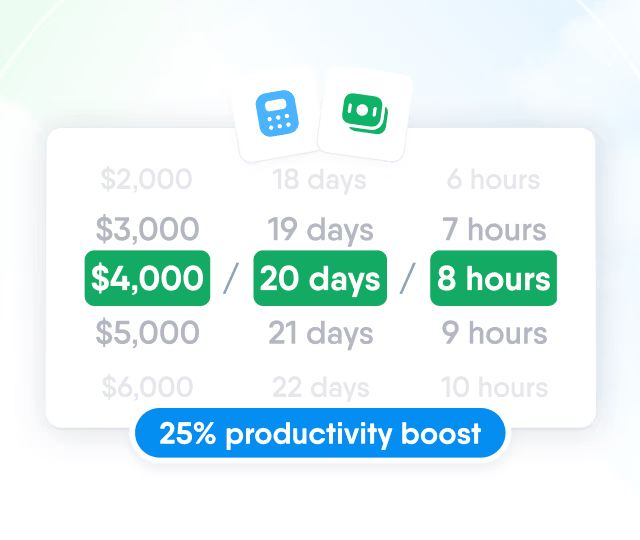
HR efficiency estimator
How does the HR efficiency estimator from PeopleForce work.
Calculate your impact



Ageism
What is ageism?
Ageism in the workplace is discrimination against employees or job candidates based on their age. While it can affect workers of any age, it most commonly targets older employees — typically those over 40 — and tends to intensify as workers move into their 50s and 60s.
How ageism shows up
Ageism rarely announces itself openly. It often takes subtle forms that, individually, might seem minor but add up to a pattern of exclusion. Common examples include:
- Overlooking older candidates during hiring, even when their qualifications match or exceed those of younger applicants
- Assuming older employees can't learn new technologies or adapt to change
- Leaving experienced staff out of training opportunities or key projects
- Making jokes about generational differences or retirement
- Pushing employees toward early retirement through pressure or redundancy decisions that disproportionately affect senior staff
These assumptions are rarely grounded in evidence. They reflect bias, not performance data.
How widespread is ageism?
The scale is significant. Around two-thirds of workers over 50 in the United States reported seeing or experiencing age discrimination in the workplace in 2025, a figure that has held steady since 2024. Among the most common forms: assuming older employees are less tech-savvy (reported by 33%) and assuming they are resistant to change (24%). Around one in five older workers also reported feeling pushed out of their jobs because of their age.
Ageism also compounds with other forms of discrimination. Black and Hispanic older workers report experiencing age discrimination at even higher rates than the general population of workers over 50.
The legal framework
In the United States, age discrimination in the workplace has been illegal since 1967. The Age Discrimination in Employment Act (ADEA) protects workers over 40 against discrimination in hiring, firing, pay, promotions, training, and benefits. The Equal Employment Opportunity Commission (EEOC) investigates and enforces the law. Similar legislation exists in the EU, the UK, Canada, and Australia, though protections and enforcement vary by country.
Despite these legal protections, around a third of discriminatory incidents go unreported, often because victims worry that nothing will be done.
What companies can do
Addressing ageism requires more than a non-discrimination policy on paper. Effective action typically involves including age as a dimension in diversity, equity, and inclusion (DEI) training; auditing hiring and promotion processes for age bias; ensuring older employees have equal access to learning and development opportunities; and training managers to evaluate performance based on output, not assumptions tied to age.
A multigenerational workforce, when managed well, is a business asset. Experience, institutional knowledge, and perspective are not diminished by age — but they are lost when ageism goes unchecked.


Let us show you what's possible
From Core HR to advanced workforce analytics — see the platform saving 80 hours a month for teams just like yours. Fully tailored to your workflow.