
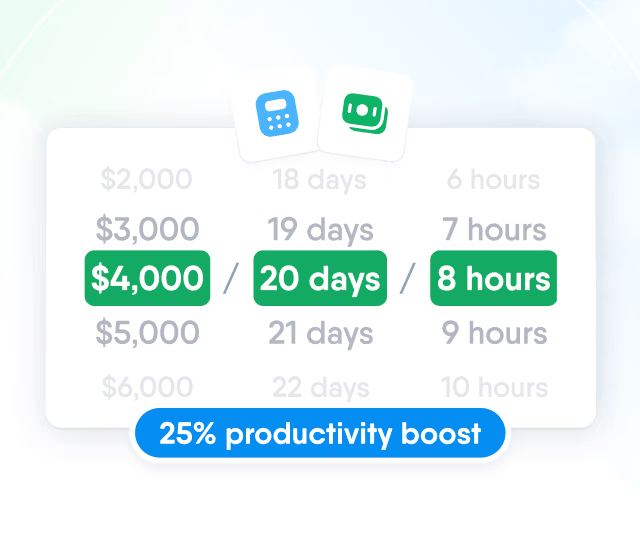
HR efficiency estimator
How does the HR efficiency estimator from PeopleForce work.
Calculate your impact



Disability leave
What is disability leave?
Disability leave is a structured period of time off from work granted to an employee who is unable to perform their essential job functions due to a physical or mental health condition. From an HR perspective, it is a complex intersection of employee wellness, statutory compliance, and operational continuity.
Core Framework of Disability Leave
HR professionals view disability leave through three primary lenses: Legal Compliance, Benefit Administration, and Workforce Management. It is rarely a singular policy; rather, it is a mosaic of different regulations and insurance products that vary by jurisdiction.
1. The Legal and Regulatory Landscape
HR must navigate several layers of legislation to ensure the company remains compliant while protecting the employee's rights:
- Job Protection: Laws like the Family and Medical Leave Act (FMLA) in the U.S. provide eligible employees with unpaid, job-protected leave. HR’s role is to track these hours and ensure the employee’s position (or an equivalent one) is available upon their return.
- Reasonable Accommodation: Under the Americans with Disabilities Act (ADA) or similar global frameworks, leave itself can be considered a "reasonable accommodation." HR must engage in an "interactive process" to determine if the leave allows the employee to eventually return to work without causing "undue hardship" to the business.
- Privacy and Confidentiality: HR is the gatekeeper of sensitive medical information. They must ensure that medical diagnoses are kept in separate, confidential files and are not shared with the employee's direct supervisors or peers.
2. Financial and Benefit Structures
Disability leave is often categorized by its duration and the source of funding:
- Short-Term Disability (STD): This typically covers illnesses or injuries that keep an employee away for a few weeks up to six months. HR manages the "elimination period" (the waiting period before benefits kick in) and coordinates with third-party administrators to verify medical necessity.
- Long-Term Disability (LTD): If an employee cannot return after STD expires, they may transition to LTD, which can last for years or until retirement age. HR assists in the transition of these claims to insurance providers.
- Paid vs. Unpaid: While some leave is legally protected (job-safe), it is not always paid by the employer. HR communicates how the employee will be compensated—whether through accrued sick bank, state-funded programs, or private insurance policies.
3. Operational and Management Strategy
Beyond the paperwork, HR acts as the bridge between the absent employee and the department’s needs:
- The Return-to-Work (RTW) Program: HR’s ultimate goal is a successful reintegration. This may involve "light duty" assignments, modified schedules, or ergonomic shifts.
- Impact on Productivity: HR works with department heads to manage the "gap" left by the employee, determining whether to hire temporary help or redistribute the workload.
- Communication Protocols: HR sets the boundaries for how often a manager can contact an employee on leave, ensuring the employee doesn't feel pressured to work while recovering, which could lead to legal liability.
Strategic Importance
An expert HR department treats disability leave not just as a cost center, but as a retention tool. Handling a leave with empathy and technical precision builds profound organizational trust. Conversely, mishandling a disability claim is one of the most common triggers for employment litigation, making rigorous adherence to policy and documentation an absolute necessity for the business.


Let us show you what's possible
From Core HR to advanced workforce analytics — see the platform saving 80 hours a month for teams just like yours. Fully tailored to your workflow.