
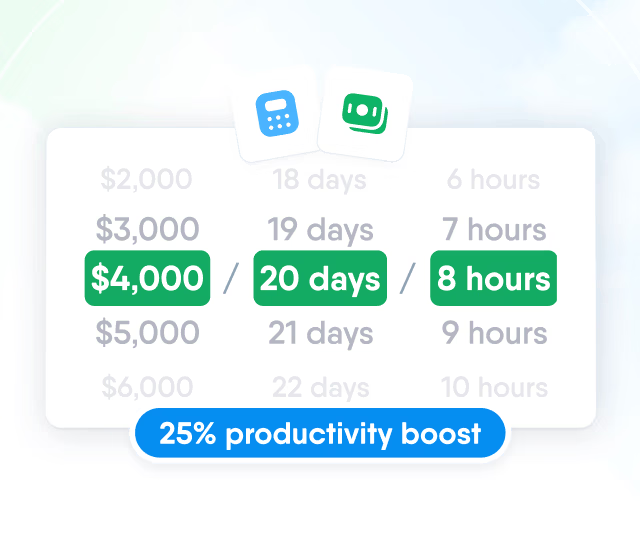
HR efficiency estimator
How does the HR efficiency estimator from PeopleForce work.
Calculate your impact



HR business partner (HRBP)
What an HR business partner does, how an HRBP differs from an HR generalist, the key responsibilities and skills, and how to measure the role
What is an HR business partner?
An HR business partner (HRBP) is an HR professional assigned to a specific business unit or function who helps its leaders reach business goals through people: team structure, hiring, development, retention and change. An HRBP is not a service desk that handles requests but a partner who takes part in business decisions.
The role comes from Dave Ulrich's model (1997), which splits HR into three parts: business partners, centres of expertise (such as learning, reward and talent acquisition) and a shared services centre for day-to-day operations. Some companies call the role a people partner.
HRBP vs HR generalist vs HR manager
| HRBP | HR generalist | HR manager | |
|---|---|---|---|
| Focus | the business goals of a unit | all HR processes in a small company | running the HR team and processes |
| Works with | unit leaders and senior management | all employees | the HR team and managers |
| Typical tasks | workforce plans, leadership development, change, analytics | hiring, paperwork, onboarding, leave | policies, HR budget, process control |
| Where needed | mid-sized and large companies | companies up to around 100 people | any company with an HR team |
Read more about the all-round role in our article on the HR generalist.
HRBP responsibilities
- People strategy. Translates the unit's business goals into a workforce plan, structure and people budget.
- Talent. Identifies key people with leaders and builds succession plans and development programmes.
- Performance. Sets up goal and performance review cycles and helps managers give feedback.
- Change. Guides restructuring, mergers and new team launches through change management.
- Employee relations. Handles complex cases, conflicts and exits, and keeps an eye on engagement.
- Analytics. Tracks turnover, headcount, people costs and survey results and turns them into conclusions for the business.
HRBP skills and metrics
| Skill | What it looks like | Metric |
|---|---|---|
| Business acumen | understands the unit's finances, product and market | delivery of the hiring plan and people budget |
| Analytics | works with data rather than gut feeling | turnover and retention of key people |
| Consulting | asks leaders the right questions | leaders' satisfaction with HR support |
| Change management | leads the team through restructuring | engagement after change |
| HR expertise | knows hiring, performance and reward | time to fill, share of internal moves |
HR business partners in the UK
The Ulrich model is widely used in UK organisations, and the HRBP is one of the most common senior generalist roles in HR. The CIPD Profession Map describes the knowledge and behaviours expected of HR professionals, and many HRBPs hold Associate or Chartered CIPD membership.
UK HRBPs also need a solid grasp of employment law: unfair dismissal, redundancy consultation, the Equality Act 2010 and flexible working requests, which became a day-one right in April 2024. Read more in our article on flexible working requests.
PeopleForce gives HRBPs the data they need for business conversations. HR analytics shows headcount, turnover and hiring by department, Perform brings together goals, performance reviews and development plans, and Pulse lets you measure team engagement regularly. All people data, from the org chart to job history, lives in Core HR, so HRBPs spend their time on decisions rather than on collecting spreadsheets.


Let us show you what's possible
From Core HR to advanced workforce analytics — see the platform saving 80 hours a month for teams just like yours. Fully tailored to your workflow.