
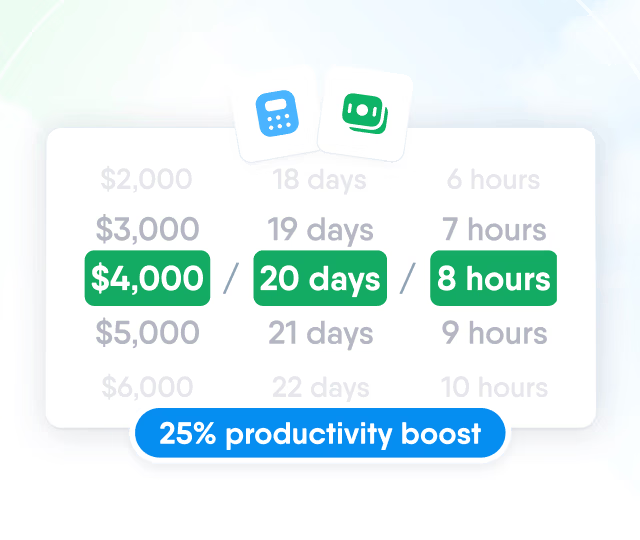
HR efficiency estimator
How does the HR efficiency estimator from PeopleForce work.
Calculate your impact



HR document management
What is HR document management?
HR document management is how a company creates, stores, shares, signs and eventually disposes of everything written about its people: contracts, offers, policies, certificates, medical notes, disciplinary records and identity documents. It covers both the filing system and the rules around it, which is where most of the risk sits.
The reason it gets its own discipline rather than living in a shared drive is that HR documents carry personal data, legal obligations and retention deadlines at the same time. A contract nobody can find during a labour inspection, a passport scan sitting in an unlocked folder and a policy the team never acknowledged are three different problems with the same root cause.
What sits in the employee file
Most companies end up with four groups of documents:
- Employment documents. Offer letter, contract and amendments, job description, termination paperwork.
- Identity and eligibility. ID documents, tax numbers, right-to-work evidence, banking details for payroll.
- Policies and acknowledgements. The employee handbook, a non-disclosure agreement, security and intellectual property terms, each with a record of who signed and when.
- Performance and development. Review records, training certificates, warnings and improvement plans.
What a document management system actually does
Storage is the least interesting part. The value comes from the layers on top: folders with permissions, so a payroll document is not visible to the whole department; templates that generate a contract from data already in the employee database instead of a copy-pasted Word file; electronic signature, so a document is signed and filed in one move; distribution, so a new policy reaches everyone and reports back who has read it; and an audit trail showing who opened, changed or deleted what.
Retention, access and compliance
Three rules do most of the work. Keep each document only as long as the law requires and delete it after, because indefinite storage is a liability rather than caution. Grant access by role and not by trust, so a manager sees what the role needs and nothing else. And record consent and acknowledgement as data, not as a memory. Data protection obligations under the GDPR and its local equivalents apply to the HR file in full, including the right to access and the right to erasure.
Moving from paper to digital
The usual sequence: digitise the active employee files first and leave the archive for later; agree a folder structure and a naming convention before anyone uploads anything; convert the highest-volume documents into templates; switch on electronic signatures for the documents your jurisdiction allows; and attach document steps to HR workflows so new paperwork is filed correctly from day one rather than sorted later.
Common mistakes
Four recur in almost every audit:
- Personal documents in a shared drive with inherited permissions nobody has reviewed in years.
- No retention policy, so nothing is ever deleted and every old file stays discoverable.
- Contracts assembled by copy-paste, which is how the wrong salary or the wrong legal entity ends up signed.
- Acknowledgement tracked in a spreadsheet that is updated by hand and therefore always slightly wrong.
HR document management in PeopleForce
In Core HR, documents live in folders whose visibility can be tied to employee fields, so access follows the org structure instead of a manual list. Documents can be uploaded in bulk, generated from templates that pull data from the employee record, or distributed to a group with read and signature tracking per person.
Electronic signature is built in, with qualified signature providers for markets that require them: Autenti for Poland and the Ukrainian qualified electronic signature through Diia. Ukrainian preboarding forms can also pull a candidate's documents directly from Diia, so the file arrives already in the right folder. Document actions plug into workflows, which means generating, sending, signing and filing happen as steps in onboarding rather than as separate chores.


Let us show you what's possible
From Core HR to advanced workforce analytics — see the platform saving 80 hours a month for teams just like yours. Fully tailored to your workflow.