
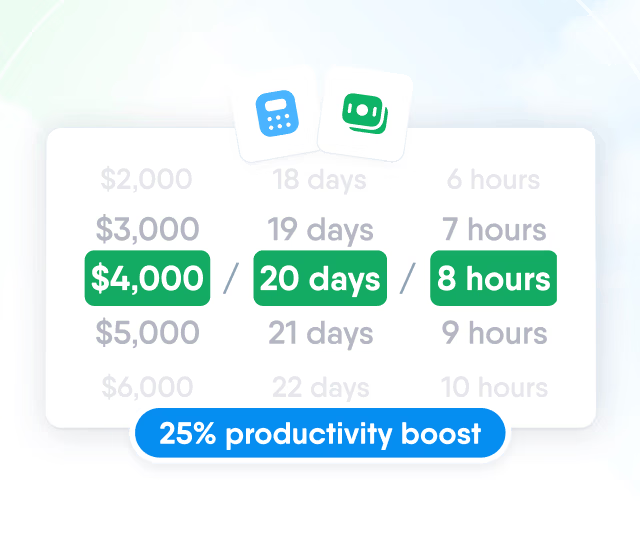
HR efficiency estimator
How does the HR efficiency estimator from PeopleForce work.
Calculate your impact



Job dissatisfaction
What is job dissatisfaction?
Job dissatisfaction is a sustained negative attitude towards the work itself, the conditions around it or the employer. It is not a bad week. It becomes job dissatisfaction when the feeling persists, shapes how someone behaves at work and starts to affect the people around them.
It sits at the opposite end of employee satisfaction, but it is not simply low engagement. A disengaged person has stopped caring. A dissatisfied person often still cares a great deal, which is exactly why the gap between expectation and reality hurts.
Where it comes from
Two timelines produce it. The first starts at hiring: the role was described one way and turns out to be another, the level was wrong, or the selection process never tested what the job actually requires. Dissatisfaction shows up within weeks and the honest fix is usually a different role rather than more motivation.
The second builds over months or years in someone who started out satisfied. The usual drivers:
- Manager relationship. Micromanagement, no feedback, or a mismatch between the person and the management style they need.
- Workload. Sustained overload leading to burnout, or the opposite problem of work too small for the person.
- Stalled growth. A career plateau with no visible route out of it.
- Pay and recognition. Compensation that has drifted below the market, or good work that goes unacknowledged.
- Values and environment. A gap between what the company says and what it does, or genuinely harmful behaviour such as workplace bullying and mobbing.
Signs that show up before the resignation
Dissatisfaction is visible long before notice is given, if anyone is looking. Discretionary effort disappears first: no more volunteering, no more questions in meetings, work done exactly to spec and no further, which is what quiet quitting describes. Then come shorter one-on-ones with nothing raised, a drop in eNPS in a specific team rather than company-wide, and changes in absence patterns. By the time someone writes a resignation letter, the decision is usually months old.
What it costs
The obvious cost is turnover, and replacing a specialist rarely costs less than several months of their salary once recruiting, onboarding and lost output are counted. The less visible cost is the period before departure, when a dissatisfied person is still present, still paid, and still influencing the mood of everyone sitting next to them.
How to respond
- Find the specific driver. Ask in a one-on-one or a stay interview, and ask about this person rather than about the company in general.
- Separate fixable from structural. A workload problem, an unclear scope or a missing promotion conversation can be fixed this quarter. A fundamental mismatch between the person and the role cannot be fixed with recognition.
- Change something visible within a few weeks. A conversation with no consequence makes dissatisfaction worse, because now the person knows the company heard and did nothing.
- Consider a move rather than an exit. Job enrichment or a lateral move through internal recruitment keeps the knowledge in the company.
- Run the exit interview anyway. When someone does leave, the pattern across several exits is worth more than any single conversation.
Spotting it earlier with PeopleForce
Pulse runs recurring surveys with rating, NPS, choice and open questions, grouped into drivers so a score can be traced to what is actually causing it rather than to a single overall number. eNPS runs on its own schedule, and results can be read by team, which is where dissatisfaction usually concentrates.
On the individual level, Perform keeps one-on-one agendas, talking points, action items and continuous feedback, so a conversation that produced a commitment leaves a trace someone can check on. HR analytics adds the numbers behind the impression: turnover and tenure reports, offboarding data and a mood report that shows how sentiment is moving over time.


Let us show you what's possible
From Core HR to advanced workforce analytics — see the platform saving 80 hours a month for teams just like yours. Fully tailored to your workflow.