
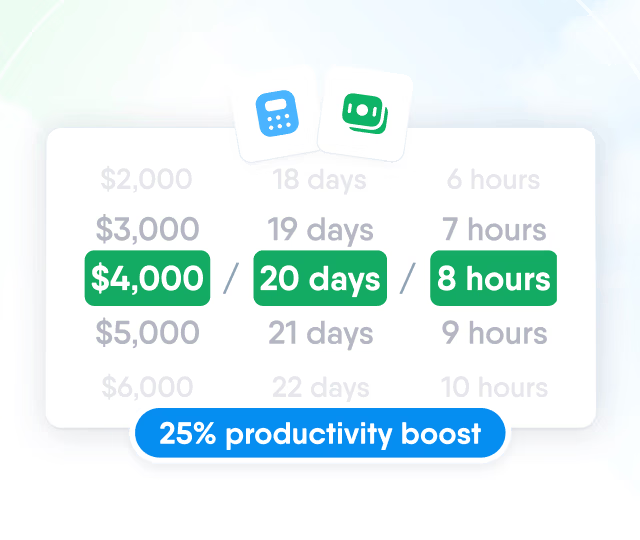
HR efficiency estimator
How does the HR efficiency estimator from PeopleForce work.
Calculate your impact



Performance based pay
What is performance-based pay?
Performance-based pay is any arrangement where part of what a person earns depends on measured results rather than on time served. The base salary pays for showing up and doing the role; the variable part pays for a specific outcome that was agreed in advance and can be checked afterwards by both sides.
The question that decides whether a scheme works is not how generous it is but what behaviour the formula actually rewards. People optimise for the number they are paid on, including when that number is a poor proxy for the result the company wanted. A commission on closed deals with no clawback rewards closing deals that later churn, and the scheme will keep producing exactly that until the formula changes.
The main forms
- Commission. A percentage of revenue or margin per deal, the classic form of variable pay in sales. Usually tiered, so the rate rises past a threshold.
- Individual bonus against personal targets, often a set of KPIs reviewed quarterly or annually.
- Team or company bonus, paid on a shared result. Better for collaborative work, weaker on line of sight because one person's effort moves the number very little.
- Profit sharing, a percentage of company profit distributed by salary weight or by tenure.
- Piece rate, payment per unit produced or processed. Still common in manufacturing, logistics and some support functions.
- Gainsharing, where a team keeps part of a documented cost saving it generated.
- Spot awards, small discretionary payments made close to the event, which cost little and are remembered far longer than their size suggests.
Designing the formula
Start with the pay mix: what share of total compensation is variable. Eighty-twenty is typical for enterprise sales, ninety-ten or ninety-five-five for most other roles, and the higher the variable share the more the formula has to be right, because it is now carrying someone's rent. Set three points: the threshold where payment starts, the target where the expected amount is earned, and the cap, if there is one. Caps protect the budget and also tell top performers to stop working in November, so many companies decelerate the rate instead of capping it. Choose a measurement period the work can actually complete inside, keep the metric something the person genuinely influences, and write the whole thing somewhere the person can check their own number without asking anyone.
Where it works and where it backfires
It works when output is measurable, attributable to an individual or a small team, and largely within their control. It backfires in predictable ways. Quality collapses when only volume is paid on. People sandbag, holding closed deals until the next period starts, when the scheme resets hard. Colleagues stop helping each other when the pool is fixed and internal ranking decides the split. And the single most common failure is paying for a proxy: ticket counts instead of resolved problems, calls made instead of customers kept. Pairing every volume metric with a quality gate, and adding clawback on revenue that does not stick, removes most of these.
The payroll and legal side
Variable pay is part of gross wages, not something separate from them. In most jurisdictions regular bonuses and commission enter the base used to calculate holiday pay and overtime premiums, which surprises companies that budgeted only the headline amount. The rules have to be documented, whether in the employment contract, a bonus regulation or a commission plan, and a scheme that management can reinterpret after the period is over is a scheme nobody will trust twice. Discretionary and guaranteed payments are treated very differently by labour law, so decide which one you are creating before writing it down.
Performance-based pay in PeopleForce
The measurement side lives in Perform, where KPIs hold the targets and their results, objectives carry named owners, and the KPI report shows attainment across the company rather than in each manager's own spreadsheet. The payment side lives in Core HR and payroll: bonuses and commission are recorded as additional compensations on the employee record, with their own kind, amount and validity dates, and a payroll run builds its entries from base salary, those additional compensations and any manual adjustments. Each cycle carries its own frequency and currency, runs in foreign currencies pick up exchange rates that can be locked, and a run moves through draft, in progress, approved and completed with a record of who approved it. Payroll and additional compensation reports export for finance, so the variable part of the wage bill is visible as a number rather than reconstructed at year end.


Let us show you what's possible
From Core HR to advanced workforce analytics — see the platform saving 80 hours a month for teams just like yours. Fully tailored to your workflow.