
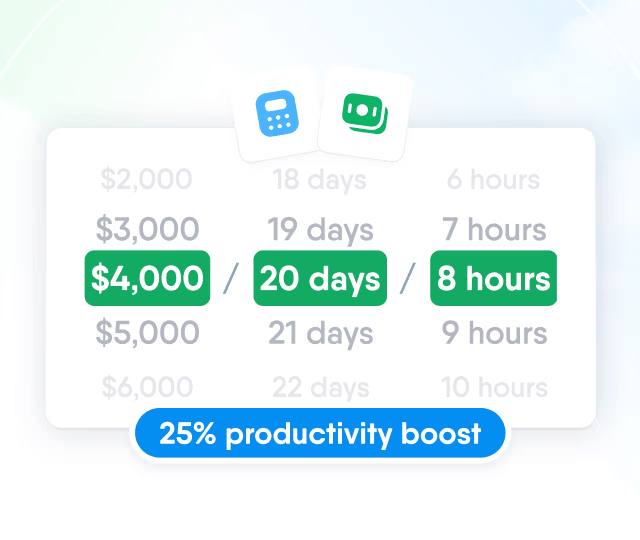
HR efficiency estimator
How does the HR efficiency estimator from PeopleForce work.
Calculate your impact



Qualified electronic signatures
What is a qualified electronic signature?
A qualified electronic signature, usually shortened to QES, is the highest legal tier of electronic signature. It is created with a certified signature creation device, relies on a qualified certificate issued by an accredited trust service provider, and carries the same legal force as a handwritten signature. Everything below it is still a valid electronic signature, just with a different burden of proof if someone disputes it.
That last point is the whole practical difference. With a simple signature, the company that relies on it has to prove the person really signed. With a qualified one, the signature is presumed genuine and the person disputing it has to prove otherwise. Most problems with electronic signing in HR come not from using e-signatures at all but from using the wrong tier for a document that legally needed a higher one.
The three tiers
- Simple electronic signature. A typed name, a scanned image, a tick box, a click on "I accept". Legally valid for a great deal of internal use, easy to challenge, and perfectly adequate for acknowledging an employee handbook update.
- Advanced electronic signature. Uniquely linked to the signer, capable of identifying them, created with means under their sole control, and tied to the document so that any later change is detectable. Usually backed by identity verification, often a mobile number and a one-time code.
- Qualified electronic signature. An advanced signature plus a qualified certificate and a qualified creation device. This is the only tier that is automatically equivalent to a handwritten signature across the whole EU, and the only one many labour codes accept where the law requires written form.
Which HR documents need which tier
The answer depends on the country, but the pattern repeats. Employment contracts, amendments to essential terms, termination documents and anything creating a financial obligation are where the highest tier is usually required, because labour law demands written form and an electronic document only meets that standard when signed qualified. Policy acknowledgements, internal requests, holiday approvals, equipment handover forms and most of what moves through onboarding and offboarding sit comfortably at the simple or advanced level. Getting this mapping written down once, per country, saves a lot of argument later, and it belongs in the same place as the rest of your HR document management rules.
How it works in different markets
In the European Union the framework is eIDAS, which defines the three tiers and makes a qualified signature issued in any member state valid in all of them. In Poland the qualified signature comes from an accredited provider and is what the labour code requires for electronic personnel files, which is why Polish companies that digitise HR documentation start with the certificate question rather than the software question. In Ukraine the equivalent is the qualified electronic signature under the law on electronic trust services, and most people already hold one through Diia.Signature or id.gov.ua rather than buying a token. Argentina runs a parallel structure under Law 25.506, which separates firma digital, backed by a certificate from a licensed certifier and carrying the presumption of authorship, from the weaker firma electrónica, where the burden of proof falls back on whoever relies on it.
What to check before rolling it out
- Legal validity per country and per document type, confirmed with local counsel rather than assumed from a vendor page.
- Identity verification. How does the system know the signer is who they claim to be, and is that method accepted locally.
- Archiving and long-term validation. Certificates expire; a signature has to remain verifiable years after the certificate behind it lapsed.
- Who obtains and pays for certificates. If every employee needs their own, that is a cost and an onboarding step, not a checkbox.
- The fallback path. Some people will not have a certificate on day one, so decide in advance what happens then instead of improvising during preboarding.
Electronic signatures in PeopleForce
Documents are signed inside PeopleForce rather than exported, mailed and scanned back. Several providers sit behind the same interface, so the right one can be chosen per document and per country. PeopleSign covers straightforward internal signing. For Ukraine the qualified route runs through Diia.Signature and id.gov.ua, both available as signing options on the same document. For Poland the integration is with Autenti, which supports the basic, advanced and qualified signature types, with the advanced option requiring a verified mobile number for the signer. Signaturit covers the EU side. Signed documents stay attached to the employee record in Core HR with their signature type recorded, and the e-signature transaction export gives the audit trail when someone asks which tier a particular document was signed with.


Let us show you what's possible
From Core HR to advanced workforce analytics — see the platform saving 80 hours a month for teams just like yours. Fully tailored to your workflow.