
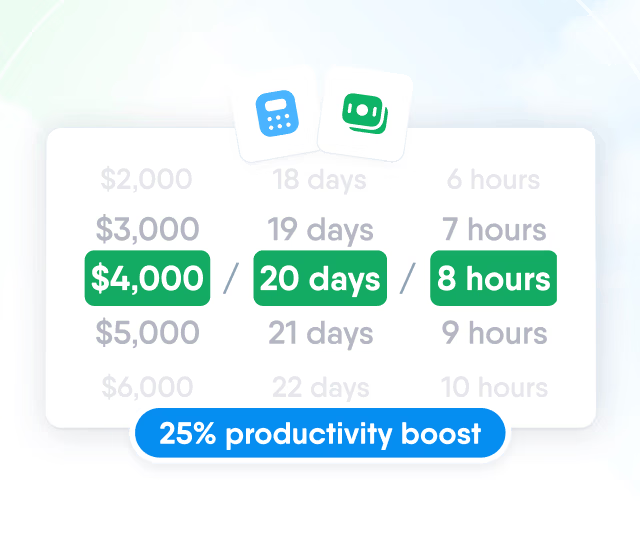
HR efficiency estimator
How does the HR efficiency estimator from PeopleForce work.
Calculate your impact



Second chance hiring
What is second-chance hiring?
Second chance hiring is the practice of deliberately considering candidates with a criminal record instead of excluding them automatically. It is also called fair chance hiring. The point is not to ignore risk, but to assess it case by case rather than through a filter that removes a large group of people before anyone reads their application.
The business logic is straightforward. A blanket exclusion shrinks the talent pool in exactly the roles that are hardest to fill, and it rejects candidates whose conviction has nothing to do with the job. The ethical argument and the staffing argument point the same way, which is unusual and worth using.
What the law expects
Rules differ by country, but three principles repeat almost everywhere:
- A background check is allowed only where it is relevant to the role, and many jurisdictions restrict which records an employer may even request.
- Ban the box rules in a number of US states and cities require the conviction question to come later in the process, after the candidate has been assessed on merit.
- Blanket exclusions can amount to indirect discrimination, because conviction rates are not evenly distributed across groups. The expected standard is an individual assessment of the offence, the time that has passed and the connection to the duties of the job.
How to run it without guesswork
The programmes that work look boring from the outside, because the decisions are made on rules set in advance:
- List the roles where a specific record genuinely disqualifies a candidate, with the legal or safety reason written down. Everything else is open.
- Move the record question to the end of the process, so the first decision is about capability.
- Use a structured interview and the same evaluation criteria for every candidate, which is also the strongest available defence against unconscious bias.
- Brief the hiring manager and the team before the first day, and give the person a named contact during onboarding. Most early failures are social, not technical.
What it changes in the company
Second chance hiring only holds if it is part of the normal process rather than a separate charity track. Treated as an exception, it creates awkward conversations and quiet resentment. Treated as one more dimension of diversity with clear criteria, it usually produces committed employees in roles where turnover is otherwise high.
Keeping the process consistent in PeopleForce
In Recruit, every vacancy runs through defined pipeline stages, and scorecards with reusable questions let interviewers rate all candidates against the same criteria. That matters here more than anywhere else: when a hiring decision is later questioned, the record shows what was assessed and when.
After the offer, onboarding in Core HR assigns the tasks, documents and responsible people for the first weeks, so a new hire who may have been out of the workforce for years gets a clear path rather than a welcome email and silence.


Let us show you what's possible
From Core HR to advanced workforce analytics — see the platform saving 80 hours a month for teams just like yours. Fully tailored to your workflow.