
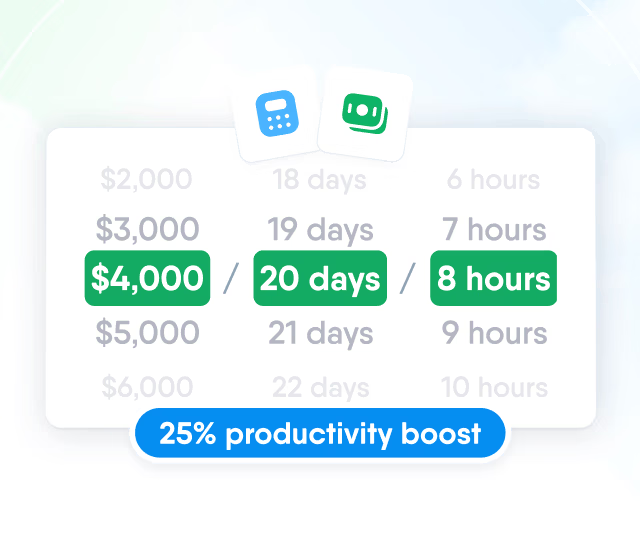
HR efficiency estimator
How does the HR efficiency estimator from PeopleForce work.
Calculate your impact



Signing bonus
A one-off payment for accepting an offer: when it works, what the clawback clause should say, and where it quietly backfires.
A signing bonus, also called a sign-on bonus or joining bonus, is a one-off payment offered to a candidate as an incentive to accept a job offer. It sits outside base salary, is usually paid with the first payroll run or split between the start date and the end of probation, and almost always comes with conditions attached to how long the person stays.
Why employers use them
A signing bonus solves a problem a salary increase cannot. It covers what the candidate gives up by moving: an unpaid notice period, a bonus they would have earned at their current employer, relocation costs, or equity left on the table. It also lets a company win a specific candidate without breaking its salary benchmarking bands, because a one-off payment does not permanently raise the cost of the role or push the whole compensation structure upwards the way a higher base would. For a hard-to-fill role it is often cheaper than another two months of talent acquisition effort and an empty seat.
Typical amounts and terms
Amounts vary widely by market and seniority, commonly one to three months of base salary for specialist roles and considerably more for executive hires. Whatever the figure, the offer should state:
- The gross amount and currency.
- The payment schedule: fully on the first payslip, or in two tranches tied to the start date and to passing probation.
- A clawback clause requiring repayment in full or pro rata if the employee resigns within a defined period, most often 12 months.
- Tax treatment, since in most jurisdictions a signing bonus is taxable employment income subject to normal payroll deductions, so the net amount the candidate receives is well below the headline number.
- What happens if the company terminates the contract first, which is where badly drafted clauses fall apart.
Where signing bonuses backfire
A signing bonus buys a signature, not commitment. Where a role has high employee turnover driven by workload, management or unclear progression, paying at the start delays the exit rather than preventing it, and the same money does more good inside the retention strategy. Internal fairness is the second risk: current employees who discover that new joiners were paid to sign will weigh their own total compensation against it, and the resentment outlasts the payment. Keep the reasoning documented and the practice consistent across comparable hires.
Tracking signing bonuses in PeopleForce
In PeopleForce a signing bonus is recorded as an additional compensation component with a once-off payout type, held against the employee profile in Core HR alongside base pay and recurring components. Because it lives as structured compensation data rather than a sentence buried in a contract, it shows up in compensation history and can be reported on through HR analytics, which is the only reliable way to answer the question that matters: how much was spent on signing bonuses last year, and how long did those hires actually stay. The offer itself is issued and tracked in PeopleRecruit, so the agreed amount stays attached to the candidate record from offer through to start date.
Alternatives worth pricing first
Before committing, check whether the same budget performs better as a retention payment at 12 months, as a higher variable pay target tied to results, or as employee benefits the candidate genuinely values, such as a learning budget or extra leave. Candidates who hesitate over something non-financial, the manager, the scope, the working model, will not be won back by a number, so establish the actual reason for hesitation before the figure is set.


Let us show you what's possible
From Core HR to advanced workforce analytics — see the platform saving 80 hours a month for teams just like yours. Fully tailored to your workflow.