
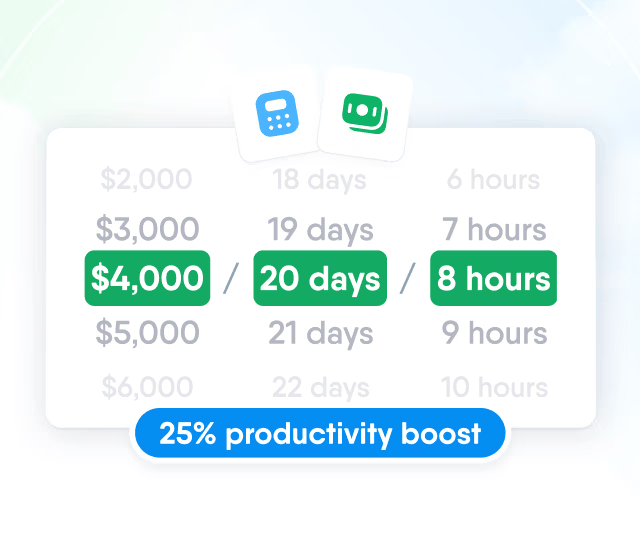
HR efficiency estimator
How does the HR efficiency estimator from PeopleForce work.
Calculate your impact



Situational leadership
What is situational leadership?
Situational leadership is the idea that there is no single best way to lead, and that the right amount of direction and support depends on how ready a person is for the specific task in front of them. The model was developed by Paul Hersey and Ken Blanchard, and it remains one of the most widely taught frameworks in management training.
The key word is task. The same person can need close instruction on one assignment and complete autonomy on another. Situational leadership is not a personality label for the manager, and it is not a ranking of employees. It is a decision made again for each task.
The four styles
The model pairs the level of direction with the level of support:
- Directing. High direction, low support. For someone new to the task: say what to do, how, and by when.
- Coaching. High direction, high support. The person has some skill but needs explanation and encouragement, not just instructions.
- Supporting. Low direction, high support. The skill is there and confidence is not. The manager listens and helps the person decide.
- Delegating. Low direction, low support. The person owns the task and reports the outcome.
Where managers get it wrong
The theory is simple to state and hard to apply consistently:
- Using seniority as the diagnosis. A senior hire in a new domain often needs directing, which feels insulting if it is not explained as task-specific.
- Staying in directing mode after the person has learned the job, which is the most common route to micromanagement.
- Jumping to delegating because the manager is busy, then calling the result a performance problem.
- Confusing supporting with avoidance. Low direction still requires presence and continuous feedback.
How it relates to other approaches
Compared with fixed management styles, the situational model is deliberately flexible, which is also the source of the main criticism: its empirical support is thinner than its popularity suggests. Used well, it sits close to coaching and leads towards employee empowerment, because the intended direction of travel is always from directing to delegating.
Making the diagnosis visible in PeopleForce
The judgement stays with the manager, but it needs evidence. In Perform, review cycles tie competencies to each role, so a manager can see where someone is strong and where they are still learning instead of relying on a general impression. Development plans then hold the agreed next steps as action items with due dates, and the progress percentage updates as items are completed, which is the signal to move from coaching to supporting.
The regular one-on-one meeting is where the style is actually chosen, and the org structure in Core HR shows how many direct reports each manager carries. A leader with twenty reports will default to delegating regardless of what any model recommends, and that is a structural problem rather than a leadership one.


Let us show you what's possible
From Core HR to advanced workforce analytics — see the platform saving 80 hours a month for teams just like yours. Fully tailored to your workflow.