
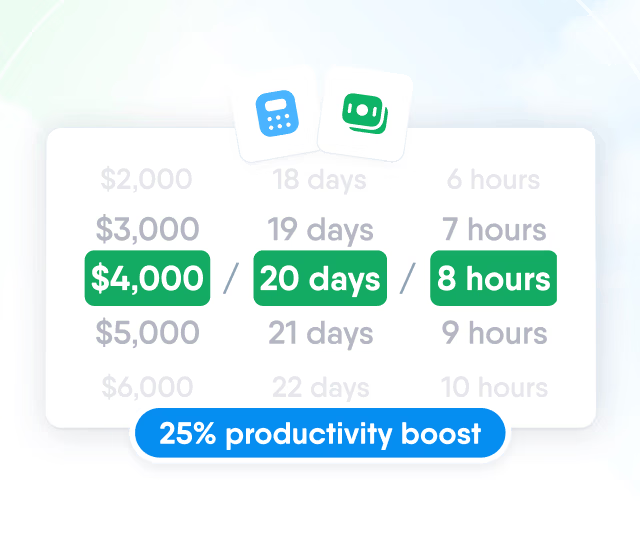
HR efficiency estimator
How does the HR efficiency estimator from PeopleForce work.
Calculate your impact



Skill based pay
What is skill-based pay?
Skill-based pay ties part of an employee's salary to the verified skills they hold rather than to the job title they occupy. A person is paid more because they can do more, and the increase follows a confirmed skill, not a promotion or a change of position in the hierarchy.
It is easy to confuse with two neighbours. Performance-based pay rewards results already delivered, and competency-based pay rewards behaviours and how work is done. Skill-based pay rewards capability that has been demonstrated, whether or not it was used last quarter.
How the model is built
A workable scheme needs four decisions written down before the first payment:
- Which skills count. Only those the company actually needs. An open list turns into a certificate collection.
- How a skill is confirmed. A certificate, an internal assessment, a supervisor sign-off or a demonstrated task. Self-declaration is not enough.
- What each skill is worth. A fixed amount or a percentage step, published in advance so the increase is predictable.
- Where the ceiling is. Without a cap, the scheme drifts away from the market and breaks the salary structure.
Where it works and where it does not
The model fits environments where cross-trained people create real flexibility: production lines, service teams, support rotas, technical crews. One person covering three stations is worth more than three people covering one each, and the pay reflects that.
It fits badly where work is project-based and the valuable skill is judgement rather than a certifiable procedure. In those teams a scheme like this pays for courses instead of contribution, and the money would do more inside total compensation in another form.
The risks to plan for
Three problems appear in most implementations:
- Paying for skills nobody uses, because the list was never reviewed after launch.
- Salary creep that pushes long-tenured employees above the market. Regular salary benchmarking is the control.
- Administrative weight. Verifying and recording skills for hundreds of people is only sustainable if the records live in a system rather than in a spreadsheet.
Keeping the skill record reliable in PeopleForce
Skills sit on the employee profile in Core HR with four levels, from interested through basic and proficient to expert, and colleagues can endorse them, which gives the record a second source beyond self-assessment. Since the data is structured, you can see at a glance who holds a given skill and at what level, which is exactly the input a pay scheme like this needs.
For the confirmation side, Perform attaches competencies to review cycles and turns agreed growth into development plans whose progress is calculated from completed action items. That gives a documented path from upskilling to a pay decision, instead of an argument about who deserves a raise.


Let us show you what's possible
From Core HR to advanced workforce analytics — see the platform saving 80 hours a month for teams just like yours. Fully tailored to your workflow.