
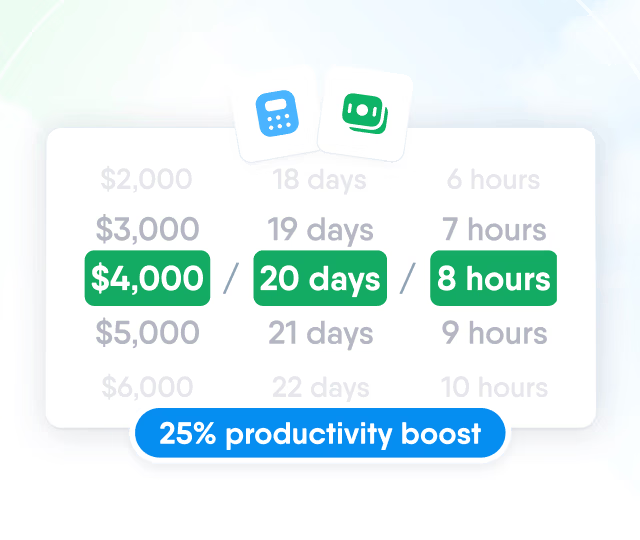
HR efficiency estimator
How does the HR efficiency estimator from PeopleForce work.
Calculate your impact



Virtual HR
What is virtual HR?
Virtual HR is the delivery of HR services through software and remote channels instead of in-person administration. Employees answer their own routine questions, requests route to approvers automatically, documents get signed without printing, and the people record lives in one system rather than in a filing cabinet and four spreadsheets.
It is worth separating virtual HR from two things it gets confused with. It is not the same as remote work: a fully on-site factory can run HR virtually, and a fully distributed startup can run it badly on email. It is also not HR outsourcing, where the work leaves the company. In virtual HR the work stays in-house; what changes is the channel through which it reaches people.
What moves online well
Some HR work is high-volume, rule-driven and low-emotion. That is exactly the work that should stop consuming human attention:
- Absence and leave: requests, balances, approvals, calendars. Time off tracking is the single biggest source of repetitive HR email in most companies.
- Personal data changes: address, bank details, emergency contacts, dependants.
- Document requests: employment confirmations, payslips, contract copies.
- Signatures on contracts, annexes and policy acknowledgements, using qualified electronic signatures where the law requires that level.
- Policy questions answered once in a searchable employee handbook instead of forty times in chat.
- Structured stages of onboarding and offboarding: accounts, equipment, checklists, deadlines.
What does not move online, and should not
The failure mode of virtual HR is treating the channel as the whole job. Terminations, grievances, pay disputes, conflict between colleagues and conversations where someone is struggling all need a human voice and, where possible, a face. A well-built system earns the time for those conversations by removing everything else from the queue. It does not replace them, and an employee who learns about redundancy from a workflow notification will remember that for years.
The four pieces that make it work
Virtual HR breaks down when any one of these is missing:
- One source of truth. A single employee database that payroll, managers and reporting all read from. Two systems means two versions of the headcount and an argument every month.
- Real self-service. Employees need to see their own balances, documents and requests without asking anyone. Self-service that only shows a form is a suggestion box, not a service.
- Automation with triggers. HR workflows that fire on events and dates rather than on someone remembering.
- A knowledge base. Policies written down, versioned and searchable, so the answer does not depend on who is online.
Where virtual HR programmes go wrong
Three patterns account for most of the disappointment:
- Digitising the mess. A broken approval chain with six approvers becomes a broken digital approval chain with six approvers, only now nobody can chase it in person.
- Tool sprawl. Separate systems for leave, documents, reviews and surveys recreate the silos the move online was supposed to remove.
- No adoption plan. If managers keep approving leave over chat, the system holds an incomplete record, and incomplete records are worse than none because people trust them.
How PeopleForce supports virtual HR
The automation layer in PeopleForce is built around triggers rather than reminders. A workflow can start manually, on a change to an employee attribute, on an event, on a schedule or on a recurring cycle. Scheduled workflows anchor to real dates in the employee lifecycle: hire date, termination date, end of probation, birthday or work anniversary, each with an offset before, on or after the day. What the workflow then does is equally concrete: assign tasks, send emails, generate a document from a template, request an upload, collect a form, book a calendar event, launch a review, trigger another workflow or call a webhook.
Around that sit the pieces employees actually touch: an employee directory and org chart they can browse themselves, request forms for anything that needs an approval, leave tracking with balances visible to the person who owns them, electronic signature on contracts and annexes, and the Desk knowledge base for the policy questions that would otherwise arrive one at a time.


Let us show you what's possible
From Core HR to advanced workforce analytics — see the platform saving 80 hours a month for teams just like yours. Fully tailored to your workflow.