
HR efficiency estimator
How does the HR efficiency estimator from PeopleForce work.
Calculate your impact




 2025-12-05
Get ready for the EU Pay Transparency Directive with PeopleForce

The EU Pay Transparency Directive (Directive (EU) 2023/970) is a new set of rules designed to strengthen the principle ofequal pay for equal workacross all EU Member States. In simple terms, it requires companies to be more transparent about how they set salaries, define pay levels, and how compensation differs by gender across the organisation.
This overview was prepared with the support of Piotr Żukowski, attorney-at-law and employment law expert, to ensure clarity and accuracy for HR teams.
Why the EU Pay Transparency Directive matters for HR
For HR teams, this Directive marks a major shift. Pay transparency is no longer just a cultural choice or an internal initiative — it becomes a regulatory requirement. The goal is to give candidates and employees clear visibility into pay structures and ensure employers can justify compensation decisions using objective, measurable criteria.
At its core, the Directive requires companies to:
- Provide salary ranges to job candidates
- Ensure pay decisions are based on objective factors such as skills, responsibility, effort, and working conditions
- Build a transparent job architecture and pay structure
- Report gender pay gap data regularly
- Give employees access to information about how their pay is determined
- Take corrective action if unjustified pay gaps appear
While national implementations may vary slightly from country to country, the foundations remain the same across the EU. That means companies operating in multiple markets will need a unified approach — and HR teams will need tools that support transparency, documentation, and consistent compensation practices.
For many organisations, this Directive is not just about compliance. It’s also an opportunity to improve internal fairness, strengthen employer branding, enhance employee retention, and build trust with both employees and candidates. Clearer pay structures also support employee development: when people understand what skills, responsibilities, or performance levels are required to reach the next role or salary range, they gain a sense of direction and fairness. This transparency contributes to stronger motivation, development, progress and long-term commitment to the organisation.
At PeopleForce, we are actively preparing product capabilities that support these requirements, help HR teams stay compliant, and make transparency manageable rather than overwhelming.
Key timeline & deadlines HR needs to know
To help HR teams prepare effectively, here are the most important deadlines associated with the EU Pay Transparency Directive:
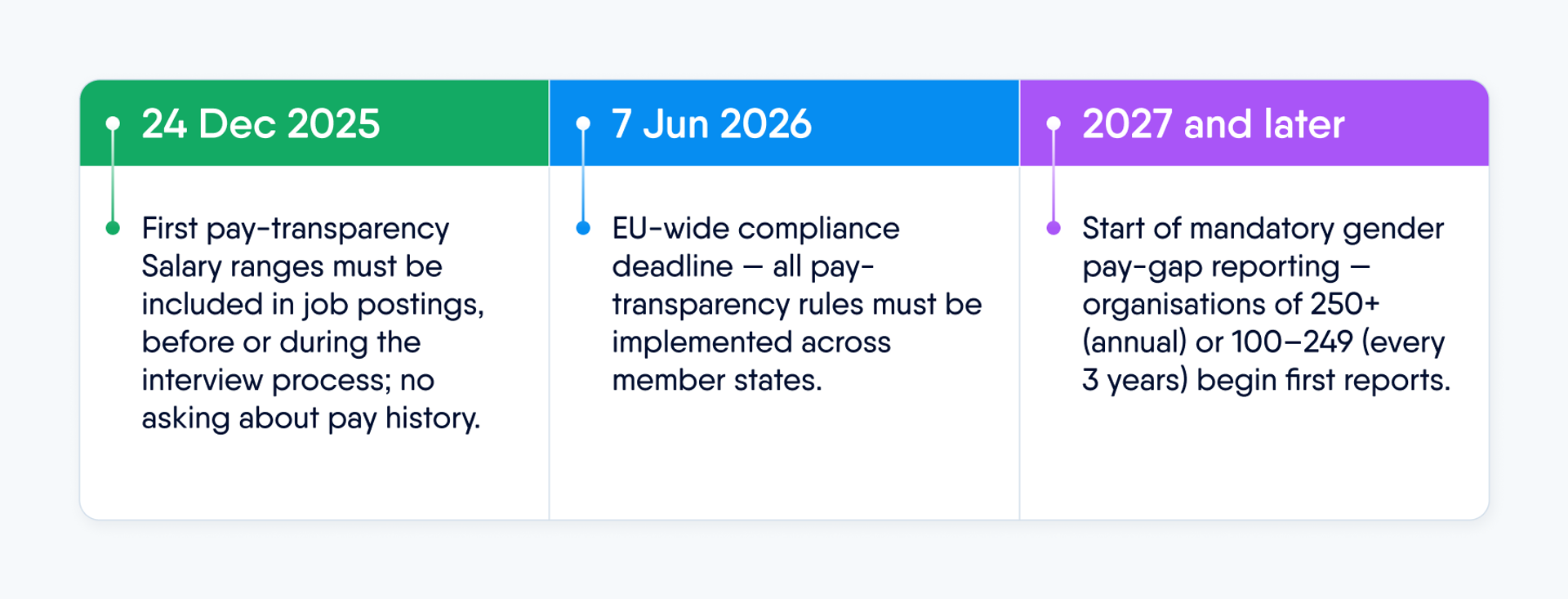
24 December 2025 — First obligations take effect in some countries (e.g., Poland)
This includes:
- Salary ranges must be included in job postings, before or during the interview process
- Employers may no longer ask candidates about their pay history
- Each EU country may introduce similar rules at different times based on local legislation, but these are aligned with the Directive’s early requirements.)
7 June 2026 — Full EU-wide implementation deadline
All EU Member States must adopt national laws implementing the Directive by this date.
From this point, companies must comply with all requirements, including:
- Having a structured, objective pay framework
- Providing employees access to pay criteria
- Being ready for periodic gender pay gap reporting
- Preparing for joint pay assessments if pay gaps exceed legal thresholds
2027 and beyond — Recurring employer reporting obligations
Depending on company size:
- 250+ employees:annual reporting
- 100–249 employees:reporting every three years
Below 100 employees:
no mandatory reporting, but transparency obligations still apply

Reporting on the gender pay gap will not be limited to a single indicator – it will cover a range of data showing differences in pay between women and men, both in base salary and in variable components, such as median pay, the proportion of employees in different pay bands, or the share of women and men receiving bonuses.

What companies must do to comply — and how PeopleForce supports each requirement
Because implementing pay structures and preparing data often takes months, most companies need to begin preparing before June 2026. HR teams should review internal processes now, assess available tools, and identify gaps in job architecture, compensation documentation, data quality, and workflows.
1. Build a Clear and Objective Job & Pay Structure
To comply with the Directive, companies must move away from ad-hoc compensation decisions and ensure salaries are based on objective, measurable criteria such as skills, effort, responsibility, and working conditions. This requires a consistent job architecture, clear role definitions, and transparent logic behind pay levels.
How PeopleForce helps:
PeopleForce gives HR teams the foundation to build a fair and consistent job structure.
- With Job Catalog, Job Levels, and competency-based role criteria, you can define positions clearly and ensure comparable roles are evaluated consistently.
- Custom workflows and approval chains in request forms ensure that compensation-related decisions follow predefined rules, involve the right stakeholders, and remain fully traceable.
- PeopleForce is introducing pay bands and a transparent pay-structure framework( both in beta)to help organisations build a consistent, compliant foundation for pay transparency. This will allow companies to define pay bands by role, record key role attributes and analyse compensation data with confidence.

- PeopleForce Recruit already supports the Directive’s early transparency obligations. You can publish salary ranges directly in job ads and descriptions, automate candidate messages that include pay information, and ensure consistent disclosure during recorded interviews. This helps HR teams meet the December 2025 requirements without changing their existing hiring workflows.
Employers will need to base pay decisions on objective criteria such as skills, responsibility, effort, and working conditions — and be able to justify these decisions when required. While these principles have existed in law for years, the Directive strengthens how they must be applied. What is new is the obligation to clearly explain to employees how these criteria translate into their actual pay. This level of transparency has not been required before, and it raises practical questions about documenting less visible factors like responsibility or effort.
2. Define clear and transparent pay-setting & salary increase rules
The Directive requires companies to document how salaries are set, how increases are determined, and which objective criteria influence pay progression. HR teams must be able to show that pay decisions follow consistent rules rather than individual manager preference or negotiation power.
How PeopleForce helps:
PeopleForce allows HR teams to formalize and unify compensation-related processes across the organisation.
- With competency frameworks, job criteria (as a custom field), and role descriptions, you can ensure that pay decisions reference the same objective factors for every employee.
- Using custom workflows and raise approval chains, you can standardize raise requests, define who must review them, and log every decision for transparency.
- Your compensation rules and pay-setting principles can be shared through the company Knowledge Base or policy documents in the company’s homepage, ensuring employees understand how salary decisions are made.
- Raise cycle templates can be stored in Documents, and further used inside workflows for managers or transformed into request forms to standardize the raise process end-to-end.
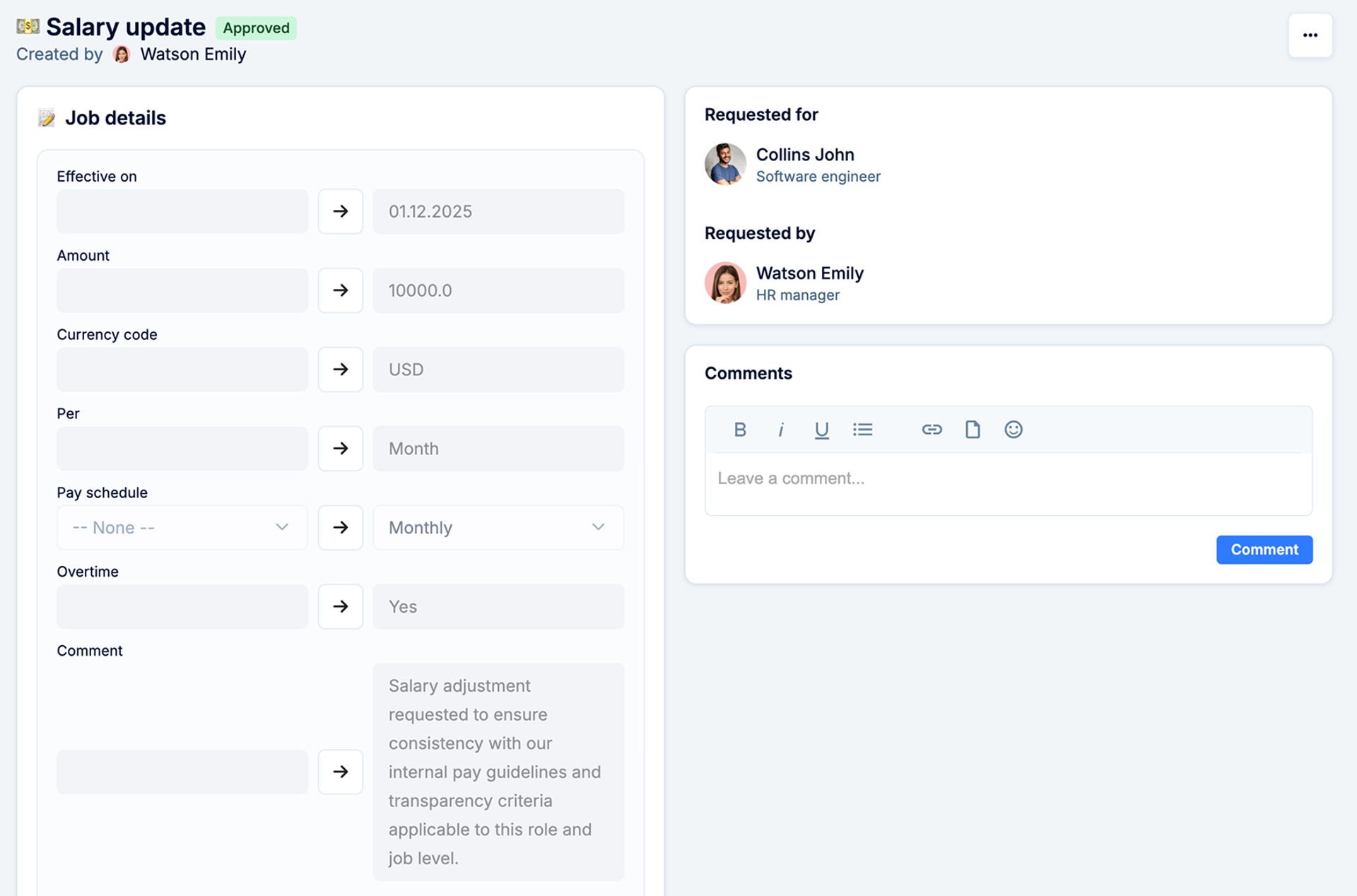
PeopleForce also maintains performance review history and compensation change logs, giving HR a clear, documented timeline of key employee events and salary decisions. This helps organisations demonstrate consistency and transparency in how compensation evolves over time, in line with the Directive’s requirements.
3. Give employees access to salary criteria and pay rules
The Directive requires employers to give employees clear, easy access to the criteria used to determine their pay — including job evaluation factors, pay-setting rules, and salary progression principles. Employees must be able to understand how their compensation is determined without barriers or delays.
How PeopleForce helps:
PeopleForce enables HR teams to turn their internal Knowledge Base into a dedicated Transparency Hub, where all pay-related rules, criteria, and policies are stored in a structured, accessible way.
- You can publish compensation criteria, role descriptions, job evaluation logic, and structured salary increase rules as Knowledge Base articles — and assign visibility to specific roles, departments, or employee groups to ensure compliant and targeted access.
- Announcements in the employee portal and role-base onboarding flows help guide employees to the right information, supporting clear and consistent internal communication around pay.

4. Prepare and submit gender pay gap reports
The Directive introduces recurring gender pay gap reporting, which requires HR teams to work with accurate, consistent, and well-structured compensation data.
How PeopleForce helps:
PeopleForce provides HR teams with the tools to collect, organise, and export the compensation and employee data needed to prepare gender pay gap reports.
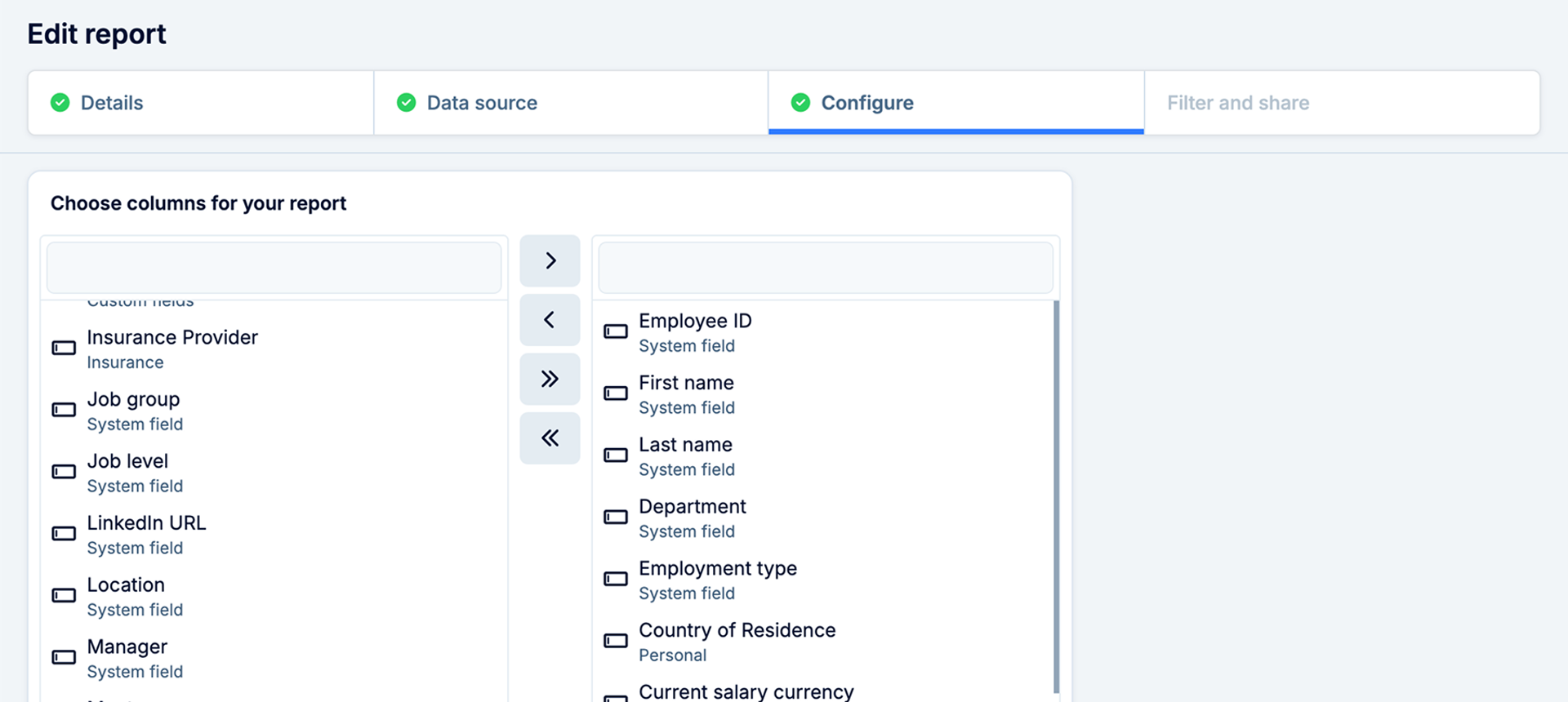
- With custom reports, compensation history, and payroll data exports, organisations can analyse salary and bonus data, identify trends, and prepare structured outputs for external reporting.
- HR teams can add any additional data points they require as custom fields, include them in custom reports, and export the results for deeper analysis or transformation into Directive-compliant formats.
- PeopleForce will also roll out HR analytics dashboards and flexible reporting templates to help organisations visualise and analyse their pay-gap data in line with emerging Directive requirements.
5. Share pay gap data with employees
The Directive requires employers to provide pay gap data proactively to employees and respond to authority requests within set deadlines.
How PeopleForce helps:
PeopleForce enables HR teams to share reports and pay-related information through targeted document distribution, announcements, and workflow-triggered notifications.

6. Conduct joint pay assessments when needed
If unjustified pay gaps exceed legal thresholds, companies must conduct a joint pay assessment with employee representatives.
How PeopleForce helps:
PeopleForce supports this process through tasks, to-do’s and workflows that help HR coordinate actions, gather documentation, and track remediation steps.
Dedicated assessment capabilities and oversight alerts will be introduced to help organisations identify issues early and support compliance with joint pay-assessment requirements.
What HR teams should start preparing already
The Directive will require new structures, processes, and data discipline across the organisation. These steps will help HR teams prepare early and avoid last-minute compliance pressure.
Practical steps to start now:
1. Build your job architecture.
UsePeopleForce Job Catalog to define job families, levels, and role criteria in a structured, consistent way.
2. Audit your current pay ranges
Export default salary reports, compensation history, or build custom reports in PeopleForce to analyse trends and prepare for pay transparency.

3. Review what compensation data you already have — and what’s missing
Identify fields you’ll need for future reporting (e.g., bonuses, allowances, job categories). Use custom fields in PeopleForce to store missing data, support future automations, and improve reporting quality.
4. Review data consistency across HRIS and payroll
Ensure titles, salary components, bonus fields, and job levels match across all systems used for compensation.5. Ustandaryzuj procesy podwyżek i premii.
5. Standardize salary raise and bonus processes
Use custom forms in PeopleForce to automate salary increase requests, bonus approvals, and compensation adjustments. This ensures correct approval flows, audit logs, and accurate updates to employee profiles — reducing risk and errors.
6. Set draft pay policies
Use the Knowledge Base in PeopleForce to document early versions of your pay philosophy, criteria, raise rules, and transparency practices.
7. Prepare communication guidelines
Add internal communication rules, FAQs, and process descriptions to your Knowledge Base, and assign them to the right teams or roles.
8. Choose tools that support reliable reporting and long-term transparency
PeopleForce already offers flexible custom reports, compensation history, and data exports to help HR teams prepare early. With upcoming analytics dashboards (beta), you’ll be able to track pay metrics more easily and standardise reporting over time.
A good practice will be to document the job evaluation process, for example as a short summary report, and centralise information such as salary ranges, pay-setting criteria, and rules for salary increases in one accessible place. The law does not impose a specific format, so a digital form is fully acceptable.
Our commitment to your compliance
At PeopleForce, we are fully committed to helping organisations meet the requirements of the EU Pay Transparency Directive in time and with confidence.
- We continuously monitor legal changes across all EU markets where our customers operate.
- We work with legal advisors and HR compensation expertsto ensure our product direction reflects the Directive’s expectations.
- We will deliver pay transparency and reporting features before June 2026, aligned with national implementations.
- We maintain a clear and realistic product roadmap, focused on compliance, without overpromising or compromising quality.
Our goal is to support HR teams at every step of this transition - with practical tools, relevant guidance, and transparency about what’s available now and what’s coming next.
To stay informed about upcoming compliance features and early access to beta releases, sign up for our newsletter to follow PeopleForce product updates.
This article is for informational purposes only and does not constitute legal advice. Before implementing any processes or policies related to the Directive, please consult with a qualified legal advisor in your organization or jurisdiction.


Recent updates
HR for every employee: meet the redesigned PeopleForce mobile app
Not every employee works behind a desk. The redesigned PeopleForce mobile app brings everyday HR to the device frontline employees already carry, with sign-in by mobile number and no corporate mailbox required.
How to calculate overtime automatically: night, weekend and holiday rates in one system
Set up overtime types once and let the system classify night, weekend and holiday hours, apply the right rate and send approved data to payroll.
A fresh feel for PeopleForce: UX updates you’ll notice
We’re rolling out a set of UX improvements designed to make PeopleForce feel lighter, calmer, and easier to use every day — for you and your employees.