
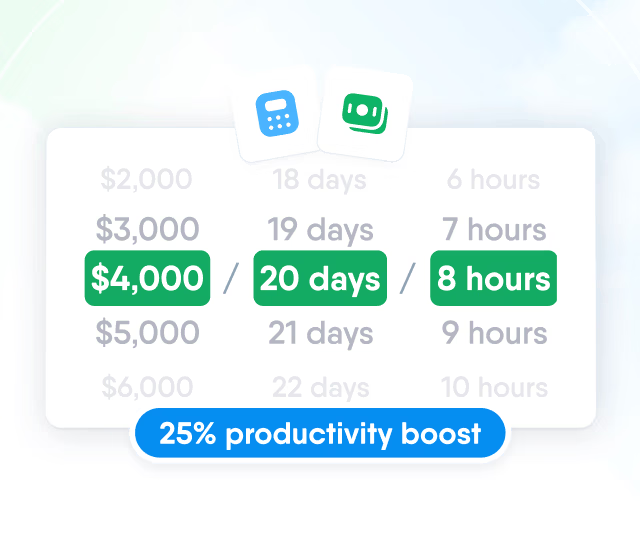
HR efficiency estimator
How does the HR efficiency estimator from PeopleForce work.
Calculate your impact



Absenteeism policy
What is absenteeism policy?
An absenteeism policy is a formal set of rules a company uses to manage situations when employees don’t show up to work without warning.
When an employee fails to appear, it can disrupt the entire team’s schedule: projects stall, colleagues take on extra work, and managers are forced to react quickly. The policy defines what qualifies as an absence, how it should be reported, how many absences are acceptable, and what happens if limits are exceeded.
At its core, it helps reduce the impact of unplanned or unexplained absences — often referred to as unscheduled absences or no-call/no-show incidents. These differ from planned leave, such as vacations or pre-arranged medical appointments, which are usually covered by a separate PTO or leave policy (though some companies combine them).
What a typical absenteeism policy covers:
- Reporting procedure — how and when an employee must notify their manager (e.g., calling in at least one hour before a shift begins)
- Acceptable absence threshold — the maximum number of unplanned days off permitted within a rolling period, such as a calendar year or 12-month window
- Documentation requirements — whether a medical certificate or other proof is needed, and from which point (e.g., after three consecutive sick days)
- Consequences of excessive absence — these are usually progressive: a verbal warning, followed by a written warning, then a formal performance improvement plan, and ultimately dismissal if the pattern continues
- Protections and exceptions — absences covered by law (disability leave, parental leave, jury duty) that cannot count against an employee's record
How PeopleForce helps manage an absenteeism policy
PeopleForce supports the practical enforcement and monitoring of absenteeism policies by centralizing attendance data, automating workflows, and providing visibility into absence trends.
Key capabilities include:
- Leave and time-off management. Track planned and unplanned absences in one system. Configure leave types (e.g., sick leave, unpaid leave) with rules, approval flows, and visibility for managers.
- Attendance tracking and reporting. Monitor absence frequency, duration, and patterns through dashboards and HR analytics. Identify recurring unscheduled absences or trends across teams, departments, or locations.
- Automated approval workflows. Set up structured request and approval processes to ensure employees report absences correctly and managers respond consistently.
- Document management. Store medical certificates or other required documentation directly in an employee’s profile to maintain compliance and audit readiness.
- Performance management tools. Link attendance concerns to structured feedback, 1:1 notes, or performance improvement plans (PIPs), ensuring documentation is centralized and traceable.
- Employee engagement and wellbeing insights. Use engagement surveys and feedback tools to detect burnout, morale issues, or workload imbalance that may contribute to higher absenteeism rates.
By combining leave management, analytics, documentation, and performance tracking in one platform, PeopleForce enables HR teams to enforce absenteeism policies consistently while also identifying underlying workforce challenges.
Why absenteeism policy matters in practice
A clearly written absenteeism policy protects both sides. Employers have documented grounds to act consistently and fairly when attendance becomes a recurring problem, which reduces the risk of wrongful termination claims. Employees, in turn, know exactly where they stand — what support is available, what is expected of them, and what the consequences are. That clarity alone can discourage avoidable absences.
It's also worth noting that high absenteeism rates are often a symptom of deeper issues, such as low morale, burnout, or poor working conditions. The U.S. Bureau of Labor Statistics tracks absence rates across industries and demographics, and its data consistently show that rates vary significantly by sector and role — a useful benchmark when setting policy thresholds. Progressive organizations therefore pair their absenteeism policy with return-to-work interviews and employee wellbeing programs, rather than relying on disciplinary measures alone. SHRM offers a widely referenced framework for drafting attendance policies that balance accountability with flexibility.


Let us show you what's possible
From Core HR to advanced workforce analytics — see the platform saving 80 hours a month for teams just like yours. Fully tailored to your workflow.