
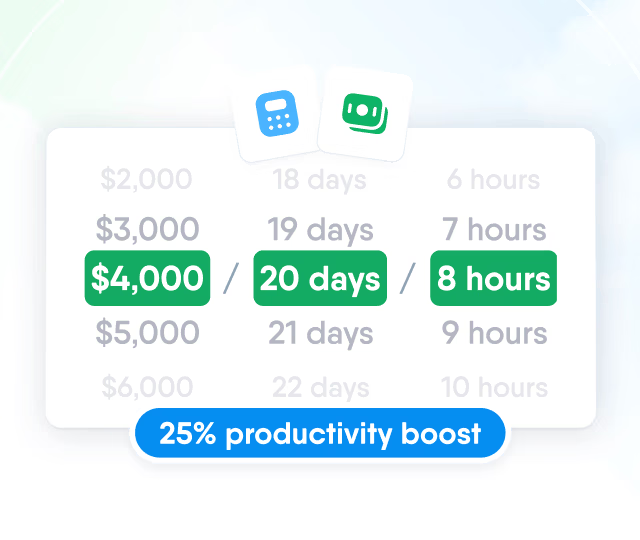
HR efficiency estimator
How does the HR efficiency estimator from PeopleForce work.
Calculate your impact



Sick leave pay
What is sick leave pay?
Sick leave pay is the money an employee receives for working days missed because of illness or injury, in place of their normal salary. Three things define it: who pays (the employer, a state fund, or both), how much of the salary is replaced, and for how many days. National law sets the floor, and the employer's policy can go above it.
Sick leave and sick leave pay are separate questions. The right to be absent is medical leave; the compensation for those days is sick leave pay. An employee can be legally absent and still receive nothing if the waiting period has not passed or the medical document is missing.
What sick leave pay is made of
Almost every national scheme combines the same five elements:
- Trigger document. A medical certificate, in most countries now issued electronically.
- Waiting days. The first days of absence, which may be unpaid or paid at a reduced rate.
- Employer-paid period. A fixed number of days paid directly from payroll.
- State-paid period. After that, a social insurance fund takes over.
- Replacement rate. A percentage of average earnings rather than the full salary, often tied to length of service.
Sick pay is not the same budget as paid time off
A common mistake is to treat sickness as one more balance inside paid time off. It behaves differently: it cannot be planned, it is verified by a third party, it is often partly funded outside the company, and it rarely carries over. Companies that merge the two end up with vacation balances that quietly absorb sickness and an absence management picture that no longer reflects reality.
Where sick leave pay goes wrong
The rules are rarely the problem. The handling is.
- Certificates arrive by messenger or email and never reach payroll in time, so the month closes with the wrong amount.
- Nobody can say how many sick days a person has already taken this year, which makes patterns invisible until they become a problem.
- Replacement rates that depend on length of service are recalculated by hand in a spreadsheet, and the error is discovered by the employee.
- The policy lives in someone's head rather than in the employee handbook, so every case is negotiated from scratch.
How to administer sick leave pay in PeopleForce
In Core HR leave tracking, sickness is a separate leave policy with its own settings: paid or unpaid, counted in working or calendar days, with a mandatory attachment so the medical certificate lands on the request rather than in a chat. Requests route to the manager, and when an approver is away the substitution chain moves them on to the next person instead of leaving them idle. Balances and the full absence history per employee are kept in one place, so payroll receives days that are already approved and documented.
On top of that, the reports library shows absence by department, location and period, with export to XLSX or CSV for the payroll provider. That turns sick leave pay from a monthly reconstruction into a routine calculation.


Let us show you what's possible
From Core HR to advanced workforce analytics — see the platform saving 80 hours a month for teams just like yours. Fully tailored to your workflow.