
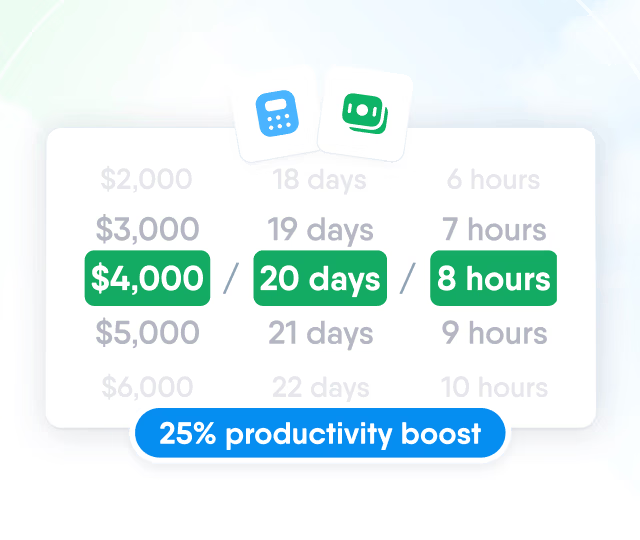
HR efficiency estimator
How does the HR efficiency estimator from PeopleForce work.
Calculate your impact



Skills gap
What is a skills gap?
A skills gap is the distance between the skills an organisation needs to deliver its plans and the skills it actually has. It exists at two levels: an individual gap between a person and the requirements of their role, and an organisational gap between the company's roadmap and the capability of its workforce.
A skills gap is not the same as a labour shortage. A shortage means the skill is scarce on the market; a gap means the company has people but not the capability. The first is solved by paying more or widening the search, the second usually by building the skill internally.
How to identify a skills gap
A gap that is only felt is not measurable. Four steps make it concrete:
- Define what each role must be able to do, using competency mapping rather than job titles.
- Record the current level of every person against those requirements, including the knowledge, skills and abilities they already bring from previous roles.
- Rank the gaps by business impact, not by how many people have them. A missing skill held by one person in a critical process is riskier than a common gap in a support function.
- Check the gap against the plan for the next twelve months through workforce planning, so you close what the business will need rather than what hurt last quarter.
Build, buy or borrow
There are only three ways to close a gap, and they differ in cost and speed. Building means upskilling the people you have, which is the cheapest option and the slowest. Buying means hiring the skill, which is fast and expensive, and carries the risk that the new hire leaves with the capability. Borrowing means contractors or partners, which fits a temporary peak but leaves no knowledge behind. Most companies need all three, applied deliberately rather than by default.
Why gap programmes fail
The analysis is rarely the weak point. The follow-through is.
- The skills inventory lives in a spreadsheet that is updated once and never again.
- A training needs analysis produces a course catalogue instead of a change in what people can do.
- Managers assess skills with no shared scale, so "good" means something different in every team.
- Learning is not tied to professional development goals, so it stays optional and quietly disappears under delivery pressure.
How PeopleForce helps you see the gap
Skills are stored on the employee profile in Core HR with four explicit levels, from interested through basic and proficient to expert, and colleagues can endorse a skill, so the record reflects more than self-assessment. Because skills are structured data rather than free text, you can search the company for a capability instead of asking around.
In Perform, competencies are attached to review cycles, so every review produces comparable evidence of where people stand. Development plans then turn that evidence into action items with due dates, and progress is calculated automatically from the items completed, which keeps the gap visible between reviews rather than only at the end of the year.


Let us show you what's possible
From Core HR to advanced workforce analytics — see the platform saving 80 hours a month for teams just like yours. Fully tailored to your workflow.