
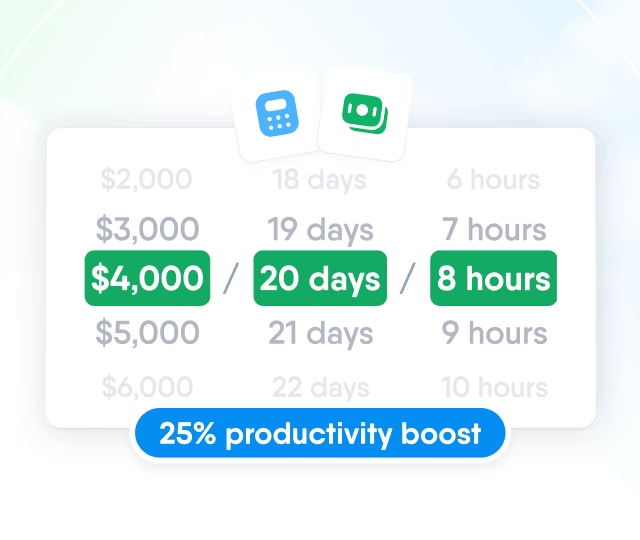
HR efficiency estimator
How does the HR efficiency estimator from PeopleForce work.
Calculate your impact



Onboarding 30-60-90 day plan
A 30-60-90 day plan sets out what a new hire is expected to learn, contribute and own at each of the first three months, so that onboarding has a definition of success rather than a checklist.
A 30-60-90 day plan is a written agreement about what someone new to a role is expected to achieve in their first, second and third month. It is used most often for new hires, and works just as well for an internal promotion or a transfer, where the person knows the company but not the job.
Its value is not the document. It is that writing it forces the manager to answer a question they usually postpone: what does good look like at day 90, and how would we both know. Without that, onboarding defaults to access requests and introductions, and the first real assessment of the hire happens during the probationary period review, when it is late to correct anything.
What belongs in each phase
The three phases are a progression from absorbing to producing to owning. The proportions shift with seniority: a junior specialist may be delivering real work by week three, while a department head spends the first month almost entirely on listening.
- Days 1 to 30, learn. Product, customers, systems, and the map of who decides what. Concrete outputs still exist at this stage: a written summary of how the process actually works, a list of questions the documentation does not answer, first small tasks completed end to end.
- Days 31 to 60, contribute. The person owns real work with support. This is where the first independent deliverable lands, where they start attending the meetings they will be accountable in, and where a first proposal for improving something they have observed is reasonable to expect.
- Days 61 to 90, own. Full scope of the role, no scaffolding. The success criteria here should look like the ordinary criteria for the job, because that is the point: at day 90 the plan stops and normal performance management takes over.
Who writes it and when
The hiring manager drafts it, because only they know the real scope, and the employee edits it in the first week, because a plan they did not shape is a list of instructions. The draft should exist before day one alongside the rest of preboarding, and be revised at the 30 and 60 day marks rather than filed away, since the first month usually reveals that at least one assumption in it was wrong.
The plan needs a review rhythm attached or it decays. A weekly one on one with the plan open in front of both people is the mechanism, and a buddy covers the questions the new hire will not bring to their manager.
The interview version
Candidates for senior and commercial roles are often asked to present a 30-60-90 day plan in a final interview. It is a reasonable exercise as long as everyone reads it correctly: with limited information about the company, the plan cannot be accurate, so what it actually shows is how the candidate structures ambiguity, what they choose to learn before acting and whether their first instinct is to change things or to understand them. A candidate who arrives with a detailed plan to restructure a team they have never met is telling you something useful, and it is not what they intended.
Where these plans go wrong
The most common failure is a plan made of activities rather than outcomes. Meet the team, read the documentation and shadow support calls are all things that can be completed by a person who is not learning anything, which makes them unusable as evidence. Every line should be checkable by someone else: not read the onboarding materials but explain our pricing logic back to the team without notes.
The second failure is scale. A plan with thirty items in month one guarantees that nothing is prioritised and that the employee will spend the month feeling behind. Three to five outcomes per phase is enough. The third is the plan written entirely by HR from a template, with no reference to this role, this team or this quarter, which everyone recognises as ceremonial and treats accordingly. And the last is the plan that is never reviewed at day 90, which quietly teaches the new hire that written commitments at this company are optional.
Running the first 90 days in PeopleForce
The plan is the thinking; the system is what makes it happen on schedule. In PeopleHR onboarding a workflow is built once per role and triggered by an employee event such as the hire date, and its actions cover most of what a 30-60-90 plan asks for: tasks with owners and due dates, forms, documents to sign, calendar events, welcome messages, courses and scheduled one to one meetings. Because the trigger is the date rather than someone remembering, the day 30 and day 60 checkpoints happen even in the weeks when the manager is busiest, which is exactly when they are otherwise skipped.
The 90 day evaluation can be automatic too. A lifecycle review cycle in PeoplePerform is configured with an offset in days from its trigger, so a review fires a set number of days after hire for every person a workflow applies it to, with self, manager and peer reviewers on their own templates. Probation end dates are held on the employee record, surface as events in the company calendar for the people whose role permits it, and can trigger workflows of their own, so the end of the trial period and the end of the plan line up instead of drifting apart.


Let us show you what's possible
From Core HR to advanced workforce analytics — see the platform saving 80 hours a month for teams just like yours. Fully tailored to your workflow.