
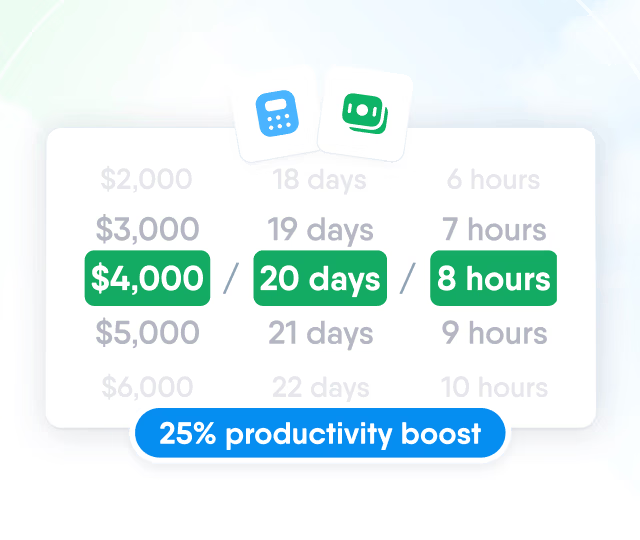
HR efficiency estimator
How does the HR efficiency estimator from PeopleForce work.
Calculate your impact



360-Degree Feedback
How 360-degree feedback works, what it is good for and how to avoid the common pitfalls
360-degree feedback is a performance assessment method in which an employee receives structured feedback from several directions at once: their manager, their peers, the people who report to them and, usually, themselves. Some versions add external voices such as clients or partners. The name refers to the full circle of perspectives, as opposed to the traditional top-down review in which only the manager rates the employee.
The method exists because a single manager sees only part of someone's work. Peers see how a person collaborates, direct reports see how they lead, and the employee's own view shows how accurately they read themselves. Put together, the picture is closer to how the person actually operates than any one rating could be.
How a 360-degree review works
- Define what is being assessed. The questionnaire is built on the behavioral competencies that matter for the role, such as communication, collaboration, decision-making or people leadership. The same questions go to every reviewer so answers can be compared.
- Select reviewers. Typically five to ten people: the manager, three to five peers, direct reports where they exist, and the employee for a self-evaluation. In many processes the employee nominates peers and the manager approves the list, which balances fairness and relevance.
- Collect feedback. Reviewers rate each competency on a scale and add written comments. Peer and upward feedback is usually anonymous or shown only in aggregate, so people answer honestly.
- Compile the report. Scores are grouped by reviewer type, so the employee can see where the manager, peers and direct reports agree and where they diverge from the self-rating. The gaps are often more informative than the averages.
- Debrief and plan. The manager or an HR partner walks through the report with the employee and agrees on two or three development priorities, which then move into an individual development plan and regular one-on-one meetings.
What 360-degree feedback is good for
Development, above all. The method shows blind spots: the manager who believes they delegate well while the team says otherwise, or the specialist who underrates skills everyone else sees. That is the input a development plan needs.
Leadership assessment. Upward feedback from direct reports is the only reliable way to see how someone manages, which makes 360 reviews a standard input for succession planning and leadership programs.
Reducing single-rater bias. One person's halo effect, recency bias or personal relationship carries less weight when it is one voice among eight.
Building a feedback culture. When giving and receiving structured feedback is routine, it becomes easier to do informally as well. A 360 process is often the first step toward continuous feedback.
Where it goes wrong
- Tying it directly to pay or promotion. When ratings decide bonuses, reviewers soften or trade favors and the data stops being honest. Most organizations keep 360 feedback for development and use the manager's assessment for compensation.
- Anonymity that is not real. With two direct reports, an "anonymous" upward review is anything but. Set a minimum number of responses before results are shown.
- Too many questions. A 60-item questionnaire for eight colleagues produces fatigue and rushed answers. Twenty to thirty focused items is enough.
- No follow-up. A report that is read once and filed teaches people that feedback has no consequences. The debrief and the development plan are the point of the exercise.
- Running it once. Repeating the cycle every twelve or eighteen months shows whether the development plan worked and keeps the habit alive.
360-degree feedback in PeopleForce
In PeopleForce Perform, a review cycle can include self, peer, upward and manager reviews scored against the competencies defined for the company. Employees nominate their peer reviewers and managers approve the nominations, reviewers get automatic reminders, and results are shown by reviewer type so gaps between self-rating and others' ratings are visible at a glance. Insights across cycles show how ratings change over time, and development actions agreed in the debrief can be tracked as action items in 1:1 meetings. Review cycles can also be triggered automatically at lifecycle milestones such as the end of probation.


Let us show you what's possible
From Core HR to advanced workforce analytics — see the platform saving 80 hours a month for teams just like yours. Fully tailored to your workflow.