
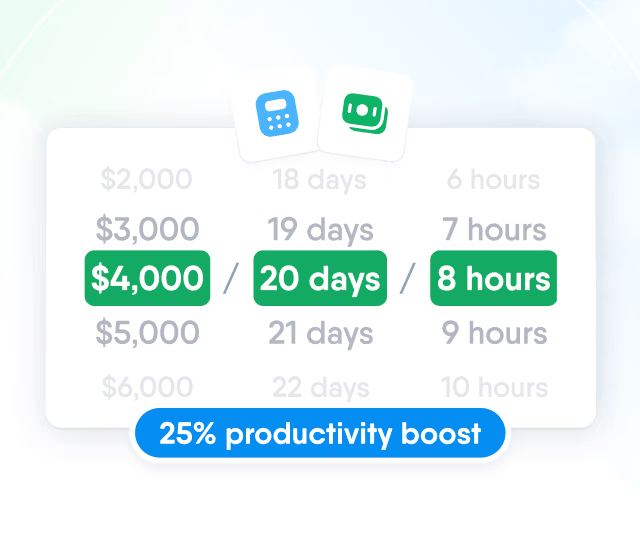
HR efficiency estimator
How does the HR efficiency estimator from PeopleForce work.
Calculate your impact



Individual development plan (IDP)
What an individual development plan contains, why it matters and how to build one
An individual development plan (IDP) is a written agreement between an employee and their manager about what the employee will learn or improve over a set period, why it matters and how progress will be checked. It lists a small number of development goals, the actions that will get the person there, the support the company will provide and the dates by which each step should be done. Unlike a performance goal, which describes an outcome for the business, a development goal describes growth for the person.
An IDP is not a performance improvement plan. The PIP addresses a gap between current performance and the minimum standard and carries consequences if it is not met. The IDP is forward-looking, applies to strong performers as much as anyone else and is owned by the employee rather than imposed on them.
What an individual development plan contains
- Current state. Strengths and gaps, usually drawn from the last performance review, 360-degree feedback or a competency assessment.
- Career direction. Where the employee wants to go: deeper in the current role, a move to a new specialty, a step into management, or readiness for a specific next position.
- Two to four development goals. Specific and measurable: "lead the design review for one cross-team project by Q3" rather than "improve leadership skills".
- Actions for each goal. A mix of on-the-job experience, learning from others and formal training. The common 70-20-10 rule of thumb puts most of the weight on stretch assignments and projects, some on mentoring and coaching, and the least on courses.
- Support and resources. Budget, time allocation, a mentor, access to a project or a tool.
- Milestones and review dates. When each action is due and when the plan as a whole is revisited, typically at each one-on-one and formally once a quarter.
- Success criteria. How the employee and manager will know the goal is reached.
Why IDPs matter
Retention. Lack of growth is one of the most cited reasons for leaving. A written plan with visible progress is concrete evidence that the company is investing in the person, which is the retention lever that costs least.
Turning feedback into action. Review results that are not translated into a plan are forgotten within weeks. The IDP is where the review's "areas for development" get owners, actions and dates.
Building the internal pipeline. Succession planning and internal mobility depend on people being prepared for roles before they open. IDPs are how that preparation is organized and tracked.
Better one-on-ones. A shared plan gives manager and employee a standing agenda beyond status updates and turns the manager's role from supervisor to coach.
How to build an individual development plan
- Start with the employee's own view. Ask them to draft the first version: what they want to be able to do in a year, what they are curious about, where they feel stuck. Ownership starts here.
- Add the manager's and the data's view. Bring in review scores, feedback and the competencies the role or the next role requires. Where the two views differ is where the most useful conversation happens.
- Pick a few goals, not many. Three goals with real actions beat ten aspirations. Tie each one to the career path the employee is on.
- Make actions concrete and mostly on the job. Assign a real project, a rotation, a mentoring pairing or a presentation to leadership, and attach a date to each.
- Book the check-ins in advance. Progress is reviewed at regular one-on-ones and the plan is updated, not rewritten, as circumstances change.
- Close the loop. When a goal is met, record it and connect it to what happened next: a new responsibility, a promotion, a role change. That is what makes the next IDP credible.
Development plans in PeopleForce
In PeopleForce Perform, development plans are a dedicated feature: a manager or HR creates a plan for an employee from a template or from scratch, chooses a plan type from the standard or custom list the company has defined, and adds action items with owners and due dates. The employee is notified when a plan is created, reminded a week before it is due and notified when it is marked completed, and plans are listed in company, team and personal views so HR can see coverage across the organization. Because the plan sits next to review results, competencies and 1:1 meetings in the same module, development goals can be drawn from the last review and checked at each 1:1 without switching tools.


Let us show you what's possible
From Core HR to advanced workforce analytics — see the platform saving 80 hours a month for teams just like yours. Fully tailored to your workflow.