
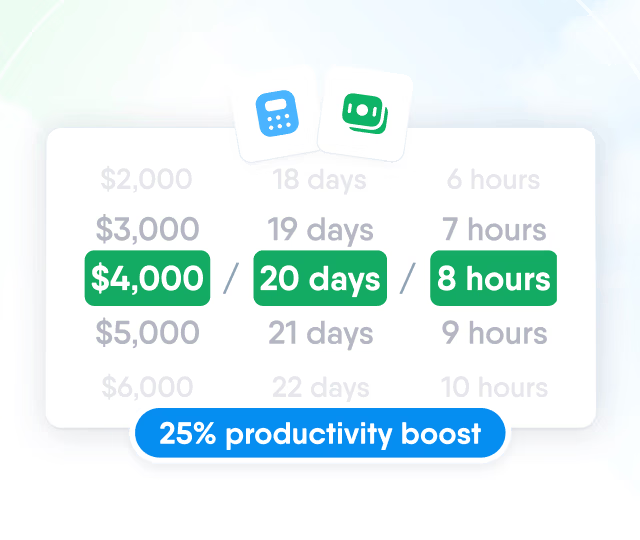
HR efficiency estimator
How does the HR efficiency estimator from PeopleForce work.
Calculate your impact



Annual leave
What annual leave is, how entitlement, accrual, and carryover work, how it differs from PTO, and how to manage it without spreadsheets
Annual leave is the paid time off an employee is entitled to take each year for rest and personal reasons, separate from public holidays, sick leave, and other special leave types. In most countries it is a statutory right with a legal minimum, and the employer may grant more by contract or policy. It is the leave type HR deals with most often, and getting its rules right matters for compliance, cost, and morale.
Annual leave vs. PTO vs. other leave
Annual leave is one specific category: paid vacation. Paid time off (PTO), common in the United States, is a single bank that combines vacation, sick days, and personal days. Sick leave, bereavement leave, parental leave, and a sabbatical are separate types with their own rules and are not deducted from the annual leave balance in most systems. Public holidays are also separate: if a holiday falls inside a vacation, it usually does not count against the entitlement.
How much annual leave employees get
Statutory minimums vary. The EU Working Time Directive requires at least four weeks of paid leave per year. Poland grants 20 working days for employees with under 10 years of total service and 26 days above that. Ukraine's Labour Code sets a basic annual leave of 24 calendar days. Argentina scales vacation by seniority, from 14 calendar days for up to five years of service to 35 days after 20 years. The United States has no federal minimum, and entitlement is entirely a matter of company policy, typically 10 to 20 days. On top of the legal floor, companies compete on extra days, seniority-based increases, and, less often, unlimited leave.
Accrual, carryover, and payout
- Accrual. Most policies build up entitlement gradually, per month or per pay period, so a new joiner earns leave as they work. Some grant the full year's balance on day one and prorate for partial years. Holiday accrual rules also define what happens during probation, unpaid leave, and part-time work.
- Carryover. Policies specify whether unused days roll into the next year, how many, and by when they must be used. Some countries require unused statutory leave to be carried over rather than lost; others allow a use-it-or-lose-it rule with notice.
- Payout. On termination, accrued but unused annual leave is paid out in most jurisdictions as part of final pay. During employment, cashing out leave is often restricted or prohibited to protect the right to actual rest.
- Negative balances. Companies decide whether to allow leave in advance of accrual and how to recover it if the employee leaves.
Why annual leave management matters
Untaken leave is a liability on the balance sheet and a warning sign for employee burnout; both grow quietly when balances are tracked by hand. Overlapping absences in a small team stall delivery, and approval by email leaves no audit trail. A clear absence management process with visible balances, a shared team calendar, and one place to request and approve leave solves most of this. It also gives HR the data to spot teams where nobody takes a break and to plan coverage around peak seasons.
Annual leave in PeopleForce
In PeopleForce leave tracking, annual leave runs on leave policies that HR configures once: accrual frequency, proration from the hire date, initial balance, carryover rules, and whether days can be used on demand. Policies are versioned, so a rule change can be applied from a chosen effective date and balances are recalculated automatically. Employees see their available and forecasted balance and request leave from the web, mobile, or Slack, managers approve in one click, and the system blocks a request that would push the balance negative unless the policy allows it. The leave balance and leave policy reports show current, calculated, and carried-over days across the company, and accrued leave policies are unassigned automatically when an employee is terminated, so final-pay calculations start from a clean number.


Let us show you what's possible
From Core HR to advanced workforce analytics — see the platform saving 80 hours a month for teams just like yours. Fully tailored to your workflow.