
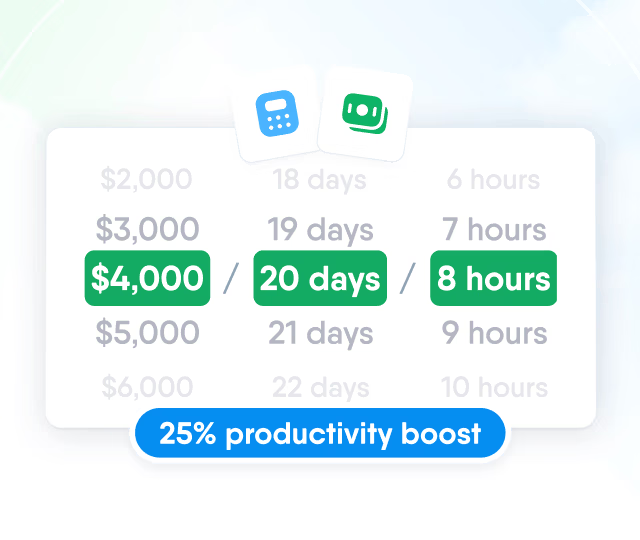
HR efficiency estimator
How does the HR efficiency estimator from PeopleForce work.
Calculate your impact



Pay period
A pay period is the recurring span of time for which an employee's work is measured and paid. It sets the rhythm of payroll, time tracking and leave accruals.
A pay period is the recurring span of time for which an employee's work is measured, calculated and paid. Each pay period ends with a pay date, when employees receive their wages for the hours or days worked within that window. The pay period defines the rhythm of payroll: how often you calculate gross wages, withhold taxes, apply deductions and issue a payslip.
Pay period vs pay date vs pay schedule
These three terms are often mixed up, but they describe different things. The pay period is the timeframe of work being paid for, for example 1 to 15 September. The pay date is the day the money reaches the employee, often several days after the period closes so payroll has time to process timesheets. The pay schedule is the overall pattern that repeats through the year, such as "biweekly on Fridays". A company can have one pay schedule for salaried staff and another for hourly employees.
Types of pay periods
Most companies use one of four models:
- Weekly (52 pay periods a year). Common for hourly, shift-based and blue-collar roles. Employees like the frequent cash flow; payroll teams process it 52 times a year.
- Biweekly (26 pay periods). Every other week, always on the same weekday. The most popular option in the US. Twice a year a month contains three pay dates, which complicates monthly budgeting and benefit deductions.
- Semimonthly (24 pay periods). Twice a month on fixed dates, typically the 15th and the last day. Easy to align with monthly benefits and accounting, but the pay date lands on different weekdays and overtime that straddles two periods needs extra attention.
- Monthly (12 pay periods). One payment per month. Cheapest to administer and the legal default in many European and Latin American countries, though employees wait longest between paychecks.
How pay periods work in practice
A typical cycle has four stages. First, employees log hours or attendance through time tracking or timesheets. Second, managers approve time, overtime and absences. Third, payroll calculates gross pay for the period, subtracts taxes and deductions and arrives at net pay. Fourth, wages are transferred on the pay date and a payslip is issued. Any unpaid leave, late start or termination that falls inside the period is prorated against the number of working days it contains.
Pay periods also matter beyond payroll. Paid time off often accrues per pay period, benefit premiums are deducted per period, and salary comparisons across roles depend on knowing whether a figure is hourly, monthly or annual.
Legal requirements by country
The maximum length of a pay period is regulated almost everywhere. In the US, each state sets minimum frequency rules, and many require at least semimonthly payment. In Poland, wages must be paid at least once a month, no later than the 10th of the following month. In Ukraine, salaries must be paid at least twice a month, with no more than 16 days between payments. In Argentina, monthly salaries are paid at the end of each month, while daily and hourly workers are paid weekly or every fortnight. Always check the labor laws of every country where you employ people before you settle on a schedule.
How to choose the right pay period
Start with legal minimums, then weigh four factors. Workforce mix: hourly and shift workers usually prefer weekly or biweekly pay, salaried staff are comfortable with monthly. Administrative cost: fewer pay runs mean less processing time and fewer errors. Cash flow: frequent pay smooths employee finances but requires tighter liquidity planning for the employer. Benefit alignment: semimonthly and monthly schedules match monthly insurance premiums and rent cycles more cleanly. Many multinational companies keep one global standard where the law allows and add local exceptions only where required.
Pay periods in PeopleForce
In PeopleForce Core HR, every compensation record is stored with its pay period, so a base salary can be recorded as hourly, monthly or yearly and compared consistently across teams and countries. PeopleForce Time collects timesheets, attendance and overtime for each period and exports approved hours, including paid and unpaid leave, straight to your payroll provider. That gives payroll clean data on the closing day of every period without chasing managers for approvals.


Let us show you what's possible
From Core HR to advanced workforce analytics — see the platform saving 80 hours a month for teams just like yours. Fully tailored to your workflow.