
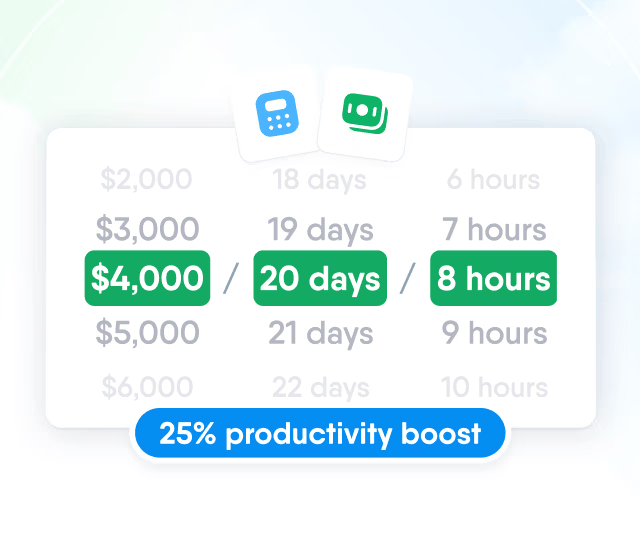
HR efficiency estimator
How does the HR efficiency estimator from PeopleForce work.
Calculate your impact



Payslip
A payslip is the document an employee receives each pay period showing gross pay, deductions and the net amount paid. It is proof of income and, in most countries, a legal requirement.
A payslip is a document an employer gives an employee every pay period, showing how the salary for that period was calculated: gross wages, each tax and deduction, and the net pay actually transferred. In the US it is usually called a pay stub or earnings statement; in the UK, Ireland, Australia and most of Europe the term payslip is standard. Whatever the name, it is the employee's written record of what they earned and what was withheld, and the employer's evidence that payroll was run correctly.
What a payslip includes
Formats vary by country and payroll provider, but a complete payslip typically contains:
- Identification: employer name and registration number, employee name, ID or payroll number, job title and department.
- Period and date: the pay period covered and the payment date.
- Earnings: base salary or hours worked multiplied by the hourly rate, overtime, bonuses, commissions, holiday pay and sick pay.
- Deductions: income tax, social security or pension contributions, health insurance, union dues, garnishments, salary advances and any voluntary deductions such as gym or meal plans.
- Employer contributions: often shown for transparency even though they are not deducted from the employee, for example employer social insurance or pension matching.
- Totals: gross pay, total deductions and net pay for the period, plus year-to-date figures.
- Balances: remaining paid time off, accrued leave or unused overtime, where the employer chooses to display them.
Why payslips matter
For employees, a payslip is proof of income needed for mortgages, rental agreements, loans, visa applications and tax returns. It also lets them verify that hours, bonuses and leave were paid correctly and catch mistakes early. For employers, payslips document compliance with minimum wage, overtime and tax withholding rules, and they are the first thing an inspector or auditor asks for in a wage dispute. Clear payslips also reduce the volume of "why is my salary different this month" questions to HR, which is why the deductions section should be readable, not just a list of codes.
Legal requirements by country
Most jurisdictions make an itemised payslip mandatory. In the UK, every worker has a statutory right to an itemised pay statement on or before payday. In Poland, employers must keep payroll records and hand over payslips or make them available on request, and electronic delivery is allowed. In Ukraine, article 110 of the Labour Code obliges the employer to inform the employee at each payment about the total amount, its components, deductions and the sum payable. In Argentina, articles 138 to 141 of the Labour Contract Law require a signed duplicate receipt with a detailed breakdown, and digital receipts are recognised when they meet the regulator's requirements. In the US there is no federal rule, but most states require a pay statement, on paper or electronically. Because rules differ, companies hiring across borders should treat payslip format as part of labor law compliance, not just a payroll setting.
Paper vs electronic payslips
Electronic payslips are now the default in most companies. They cost less to produce, reach remote and distributed employees instantly and are easier to archive for the retention periods that tax law requires, usually between three and ten years. The trade-offs are security and access: payslips contain salary, tax identifiers and bank details, so they must be stored with restricted permissions and delivered through an authenticated channel rather than plain email. Where law or a collective agreement requires the employee's signature, a qualified electronic signature replaces the wet signature on a paper duplicate.
Best practices for HR
Distribute payslips on or before the pay date, never after. Use consistent line names across the whole company so employees can compare months. Show year-to-date totals so people can reconcile with their annual tax statements. Keep payslips in the employee's personal file alongside contracts and amendments, so a salary history is available for audits, salary benchmarking and performance review discussions. Finally, add a short explanation of unusual items, such as a retroactive raise or a one-off deduction, in the same delivery.
Payslips in PeopleForce
PeopleForce Core HR includes a dedicated Payslips folder in each employee's document storage. Payroll or HR uploads the files generated by the payroll system, the employee sees only their own payslips in the self-service portal, and access rights control who else in the company can view them. When a jurisdiction requires acknowledgement, the folder can be configured so each payslip is sent for electronic signature, giving you a timestamped record without printing a single page. Overtime approved in PeopleForce Time can be flagged for payslip compensation rather than time off, so the hours that should appear on the next payslip are already tagged before payroll starts.


Let us show you what's possible
From Core HR to advanced workforce analytics — see the platform saving 80 hours a month for teams just like yours. Fully tailored to your workflow.