
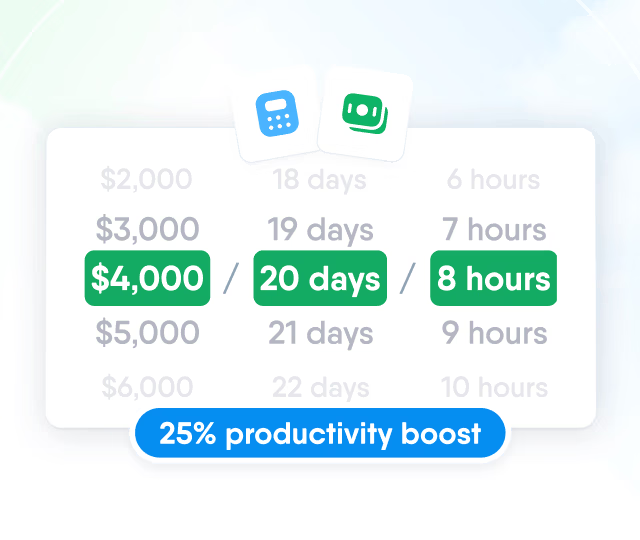
HR efficiency estimator
How does the HR efficiency estimator from PeopleForce work.
Calculate your impact



Screening tests
What are screening tests?
Screening tests are short assessments that candidates complete early in the hiring process to check whether they have the skills, knowledge or abilities a role requires. They help recruiters shortlist applicants on evidence rather than on CVs alone, and make the first stage of selection faster and fairer.
What are screening tests?
Screening tests are standardised assessments given to every applicant for a role at the same stage of the recruiting funnel. They usually come right after the application and before interviews. Every candidate answers the same questions under the same conditions, and the results are scored the same way, so the hiring team compares people on comparable data.
Types of screening tests
| Type | What it checks | Example |
|---|---|---|
| Job knowledge tests | Knowledge needed from day one | Accounting standards for a finance role |
| Skills tests | Practical, job-specific skills | An Excel task, a coding exercise, a writing sample |
| Cognitive ability tests | Reasoning and problem solving | Numerical or logical reasoning questions |
| Situational judgement tests | Behaviour in realistic work situations | Choosing the best response to an upset customer |
| Personality questionnaires | Work style and preferences | A Big Five-based questionnaire |
| Language tests | Level of a required language | A short written and listening test |
| Knockout questions | Must-have requirements | Right to work, licence, availability |
How to run screening tests
- Start from the job requirements. Test only what the role really needs, based on the job description.
- Choose the format. Single-choice and multiple-choice questions are scored automatically, open answers need a reviewer.
- Set a time limit. 20 to 40 minutes is usually enough for a first-stage test.
- Define the pass mark in advance so every candidate is judged against the same threshold.
- Combine results with other methods, such as structured interviews or an assessment centre.
Screening test example
A short screening test for a customer support role could include:
- a knockout question: “Can you work shifts, including weekends?”;
- three situational questions about handling complaints, scored automatically;
- one written task: reply to a customer email in under 10 minutes, scored by the hiring manager.
Screening tests and fairness in the UK
Under the Equality Act 2010, a test must not put candidates with a protected characteristic at a disadvantage without justification, and employers must make reasonable adjustments for disabled candidates, for example extra time or a different format. Test results are personal data under UK GDPR, so candidates should know how they are used and stored.
Screening tests in PeopleForce
In Recruit, candidate testing lets you build test templates with single-choice, multiple-choice and open questions, send them to candidates by link and set a time limit. You see whether the test was delivered, opened, started and finished, and closed questions are scored automatically, with the result shown as a percentage. Tests can also be sent automatically when a candidate reaches a pipeline stage.
FAQ
What is a screening test in recruitment?
A short, standardised assessment that all applicants take at the same stage to check whether they meet the core requirements of the role.
When should you use screening tests?
Early in the process, when you have many applicants and need to shortlist on evidence before spending time on interviews.
Are screening tests the same as background checks?
No. Screening tests check skills and abilities, while background checks verify facts about a candidate's history, such as employment or qualifications.


Let us show you what's possible
From Core HR to advanced workforce analytics — see the platform saving 80 hours a month for teams just like yours. Fully tailored to your workflow.