
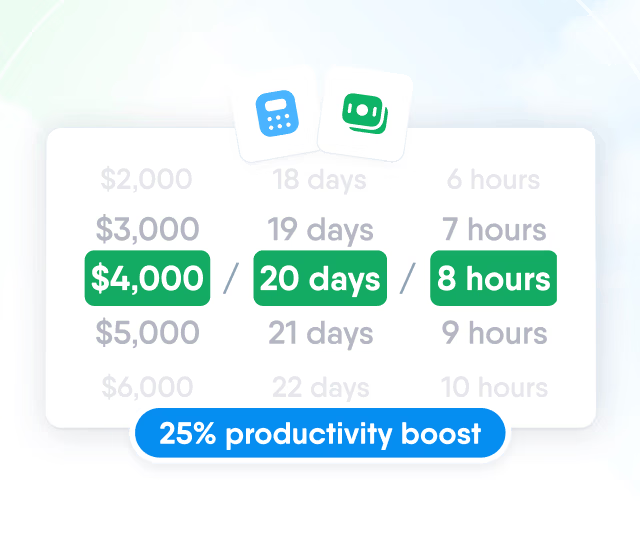
HR efficiency estimator
How does the HR efficiency estimator from PeopleForce work.
Calculate your impact



Involuntary termination
Involuntary termination is the ending of employment at the employer's initiative, covering dismissal for cause, performance exits, redundancy and contract expiry.
Involuntary termination is the ending of employment at the employer's initiative rather than the employee's. It is an umbrella term, and that is exactly where the confusion starts: a redundancy, a dismissal for gross misconduct and a contract that simply ran out all sit under it, while costing completely different amounts and requiring completely different paperwork.
Getting the type right is not an administrative nicety. It determines the notice owed, the severance owed, the documents that have to exist before the decision is communicated, and whether the company can defend the decision at all if it is challenged.
The types that sit under one label
- For cause. A conduct breach serious enough to end the relationship immediately, usually with no notice and no severance.
- Capability or performance. The person cannot meet the standard despite support. Requires evidence of that support, normally a performance improvement plan that genuinely ran.
- Redundancy or economic reasons. The role goes, not the person. Selection criteria and, above a headcount threshold, collective consultation obligations.
- End of a fixed-term contract. Often not treated as a dismissal at all, but repeated renewals can convert the relationship into a permanent one.
- Failure to pass probation. Shorter notice and a lower evidential bar, but not a period without any rules.
- Incapacity. Long-term inability to perform the role, hedged everywhere by protected periods and disability obligations.
Mutual agreement does not belong on this list even though HR systems often file it here. A negotiated exit is a third category: neither side dismissed nor resigned, both signed. Filing it as involuntary inflates your dismissal numbers and hides what actually happened.
Where the line with resignation blurs
On paper the distinction is simple: who initiated it. In practice the line moves. An employee who resigns because conditions were made intolerable may be able to argue constructive dismissal, and the fact that they wrote the resignation letter themselves does not settle it. Poland gives this an explicit statutory route, letting an employee terminate without notice where the employer has seriously breached its obligations, with compensation attached. Ukraine allows immediate termination at the employee's initiative where the employer has violated labour law, with severance payable. Argentina treats it as despido indirecto, reached by putting the employer on notice first and then treating the relationship as broken by the employer's own conduct.
The practical implication is that a resignation received right after a difficult meeting is not automatically a clean exit, and the conversation that preceded it is worth documenting.
The process, in the order it actually happens
Decide and document the reason before anything is communicated, because in most jurisdictions the reason you state is the one you are stuck with. Then work out notice: served, or paid in lieu, with the length driven by tenure. Poland tiers it at two weeks, one month or three months depending on service; Ukraine requires two months' written warning for redundancy; Argentina works on preaviso plus severance calculated from the best normal monthly remuneration and years of service.
Then the mechanical steps: final pay and accrued leave calculated to the correct date, statutory documents issued on the last day rather than a week later, system and building access revoked at the right moment, equipment returned, direct reports reassigned, and clients or handover owners told. Last, the team. An exit that nobody explains gets explained by everybody else, usually worse than the truth.
Timing is its own risk. A dismissal that lands two weeks after a discrimination complaint, a pregnancy announcement or a return from sick leave will be read in that light regardless of intent, and several jurisdictions convert that reading into an outright prohibition. Ukraine forbids employer-initiated dismissal during sick leave or vacation altogether.
Why the reason has to be a controlled list
Most companies cannot answer a basic question: how many people left for performance reasons last year, and in which teams. The reason is free text. Someone typed restructure, someone else typed org change, a third person left it blank, and three years of exits are now unanalysable.
A short controlled list of types, and a separate list of reasons under them, costs nothing to set up and is the difference between turnover reporting that means something and a number nobody trusts. Keep the list short enough that people pick accurately rather than choosing the first plausible entry.
Running an involuntary exit in PeopleForce
The termination form in Core HR enforces the point above: it will not submit without both a type of termination and a reason, each chosen from lists you maintain in settings, and it ships with Voluntary, Involuntary and Mutual agreement as defaults. The Termination breakdown report then groups exits by those values, so the question about performance exits by team has an answer. Deleting a value later does not rewrite history, which is why it is worth agreeing the list once rather than editing it every quarter.
The form also handles the parts that usually get missed. The last working day and the last day in the office are separate fields, so someone who stops attending before their formal end date is recorded accurately. Direct reports can be reassigned to a named manager or left unassigned from the termination date, and the form blocks you from selecting an offboarding workflow if the person has no manager set, which catches a broken reporting line before it becomes a problem. You choose whether unfinished onboarding tasks and pending workflows are cancelled, while the offboarding workflow itself keeps running. On the effective date a scheduled job deactivates the account, revokes access and integration tokens, and removes the Google Workspace user where that provisioning is on.
Two smaller things worth knowing. Marking someone eligible for rehire creates an applicant record in PeopleRecruit automatically, carrying across name, personal email, position and contact details, so a good redundancy leaver is in the talent pool rather than in a spreadsheet. And document templates expose the termination date, type and reason as variables, so exit paperwork is generated from the record instead of retyped, with a different document per termination type in accounts running the compliance module.


Let us show you what's possible
From Core HR to advanced workforce analytics — see the platform saving 80 hours a month for teams just like yours. Fully tailored to your workflow.