
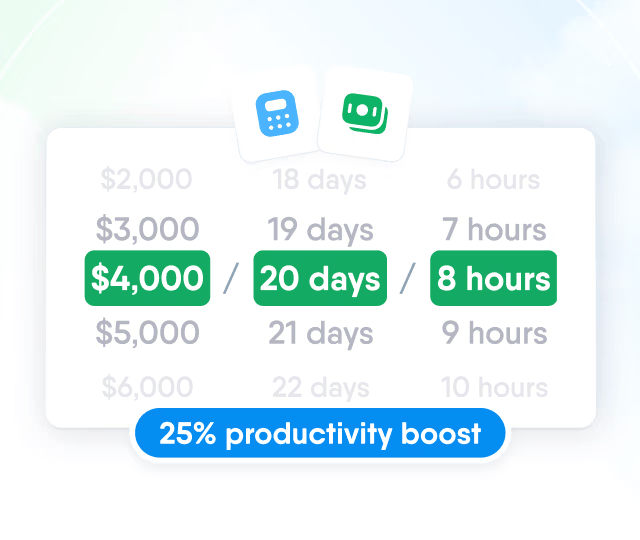
HR efficiency estimator
How does the HR efficiency estimator from PeopleForce work.
Calculate your impact



Offer letter
What an offer letter is, what it should include, how it differs from an employment contract, how to write one that candidates accept, and how to send and track offers from the recruiting pipeline
An offer letter (job offer letter) is the formal written document an employer sends a selected candidate to offer them a position and set out the key terms: job title, start date, compensation, working arrangement and any conditions the offer depends on. It closes the recruiting process and opens the employment relationship. In most countries the offer letter is not the employment contract itself but a summary of what the contract will contain, although once the candidate accepts it becomes binding on what it promises, so the wording deserves the same care as the contract.
What an offer letter includes
- Position. Job title, department, reporting manager, location and whether the role is on-site, hybrid or remote, ideally consistent with the job description the candidate applied to.
- Start date and contract type. Proposed first day, whether the employment is permanent or fixed-term, full-time or part-time, and the length of the probationary period.
- Compensation. Base salary or hourly rate with currency and pay frequency, sign-on bonus, variable pay or commission plan, equity where relevant, and a short summary of benefits such as health insurance, paid time off and learning budget.
- Conditions. Anything the offer depends on: a satisfactory background check, references, proof of the right to work, signing a confidentiality agreement.
- Deadline and next steps. The date by which the candidate should accept, how to accept, and what happens after acceptance: contract, preboarding documents, first-day logistics.
- Disclaimer. In at-will jurisdictions, a statement that the letter is not a contract for a fixed term; in others, a note that the final terms are governed by the employment contract.
Offer letter vs employment contract
The offer letter is a one-sided proposal that turns into an agreement when the candidate signs; the employment contract is the full legal document with duties, working time, leave, termination rules and restrictive covenants. In the United States the offer letter is often the only written document a new hire receives, which is why it carries the at-will disclaimer. In the European Union, Ukraine and Latin America a written contract or written statement of terms is required by law, so the offer letter comes first as a commitment on both sides and the contract follows before day one. Whatever the jurisdiction, the two documents must match: a salary or start date that differs between the letter and the contract is the most common source of first-week disputes.
How to write an offer letter that gets accepted
Move fast: candidates in active processes typically have competing offers within days, and the time between the final interview and the letter is where the best people are lost. Verbal offer first, written letter the same or next day. Use a template per role type so nothing is missed, but personalize the opening with why the team chose this person. Present the total package, not just base pay, and put the numbers in the letter rather than in a separate attachment. Give a clear acceptance deadline of three to five business days and be ready to negotiate: most declines are about compensation or title, and a structured negotiation window prevents ad hoc concessions. Track offer acceptance rate as a recruiting metric alongside time to hire; a rate below 80 percent usually points to a pay-benchmarking or process-speed problem rather than to candidates.
Offer letters in PeopleForce
In PeopleForce Recruit the offer is a step in the hiring pipeline rather than a document drafted in a text editor. Recruiters build offer templates once, with placeholders that are filled from the candidate and vacancy data when the letter is created, then preview both the email and the letter before sending. The candidate opens the offer online, reads the terms and accepts with a click that records the signing date, or declines with a reason that stays on the candidate profile; the application status changes to offer accepted automatically. Acceptance can trigger a hiring workflow in Core HR: the candidate becomes a hired employee, onboarding tasks are assigned, and the contract is generated from a document template and sent for electronic signature, so the terms in the offer flow into the employee record without retyping.


Let us show you what's possible
From Core HR to advanced workforce analytics — see the platform saving 80 hours a month for teams just like yours. Fully tailored to your workflow.