
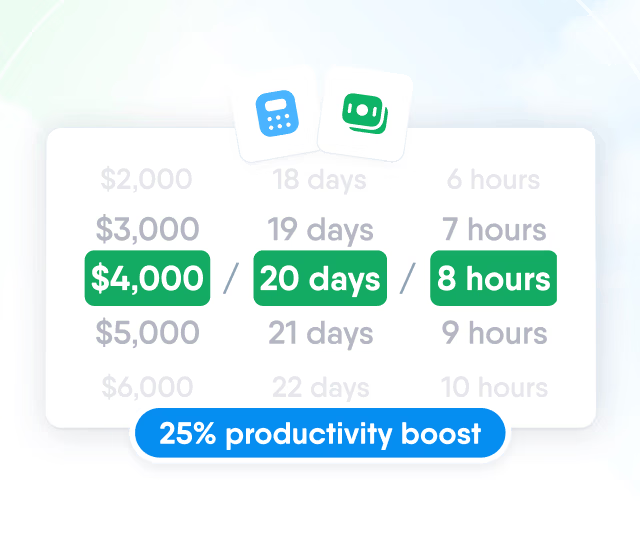
HR efficiency estimator
How does the HR efficiency estimator from PeopleForce work.
Calculate your impact



Severance pay
When severance is owed, how it is calculated, what a severance package usually contains, and how to handle it as part of a clean offboarding
Severance pay is compensation an employer provides to an employee whose employment is ended by the company rather than by the employee, typically in a layoff, a redundancy, or a restructuring. It is meant to bridge the gap between the last paycheque and the next job. Depending on the country, severance can be a legal entitlement, a contractual promise, or a voluntary payment the company makes in exchange for a signed release of claims.
Severance pay vs. notice pay and final pay
Three payments often arrive together at termination and are easy to confuse. Final pay is money already earned: salary up to the last day, accrued but unused annual leave, outstanding bonuses or commissions. Notice pay (pay in lieu of notice) compensates the employee for a notice period the employer chose not to have them work. Severance pay is on top of both: it is compensation for losing the job itself. Final pay is always owed; notice pay is owed wherever notice is required; severance depends on law, contract, and policy.
When severance is required
Rules vary widely. In the United States there is no federal severance requirement; it is a matter of contract and company policy, though the WARN Act requires 60 days' notice for large layoffs. In most of Europe and Latin America, statutory severance exists and is usually tied to the reason for dismissal and the employee's length of service. Ukraine's Labour Code requires at least one month's average salary when an employee is dismissed because of staff reductions or reorganisation. Poland requires a statutory severance payment of one to three months' pay for redundancies at employers with 20 or more staff, scaled by tenure. Argentina's Labour Contract Law sets dismissal compensation at one month's best salary per year of service, plus notice compensation. Severance is almost never owed when an employee resigns or is dismissed for serious misconduct.
How severance pay is calculated
The most common formula is a number of weeks or months of base salary per year of service, for example two weeks per year with a minimum and a cap. Some companies use a flat number of months by seniority level. Where the law sets a floor, the company formula applies on top of it or replaces it if more generous. The reference salary matters: some jurisdictions use base pay only, others use average earnings including variable pay over the preceding months. Tax treatment also differs by country and can change what the employee actually receives.
What a severance package usually includes
- The severance payment itself, as a lump sum or salary continuation.
- Continuation of health insurance or other employee benefits for a defined period.
- Treatment of equity, bonuses, and commissions that would otherwise vest or pay out later.
- Outplacement or career-transition support.
- An agreed reference and a communication plan.
- A separation agreement in which the employee releases claims and confirms obligations under any non-disclosure agreement or non-compete agreement.
How HR should handle severance
Write the policy down before you need it, so decisions in a difficult moment are consistent and explainable. Confirm the legal minimum for each jurisdiction and each termination type, then apply the company formula. Document the termination reason, the calculation, and the payment date; these are the first things a lawyer, auditor, or labour inspector will ask for. Deliver the news in person, issue the termination letter and agreement promptly, and run the rest of offboarding with the same care as onboarding: access, equipment, knowledge transfer, and an exit interview where appropriate.
Severance and offboarding in PeopleForce
In PeopleForce Core HR, a termination starts with a termination form that records the termination type and reason from lists the company defines, so voluntary and involuntary exits are separated from day one and the termination breakdown report shows why people leave. Approving the form can trigger an offboarding workflow with tasks for HR, IT, finance, and the manager, and termination documents such as the separation agreement can be generated from templates and signed with an electronic signature. The employee's base compensation history and remaining leave balances are on the same profile, which gives payroll the inputs for final pay and severance without chasing spreadsheets, and access to the system is revoked automatically the day after the last working day.


Let us show you what's possible
From Core HR to advanced workforce analytics — see the platform saving 80 hours a month for teams just like yours. Fully tailored to your workflow.