
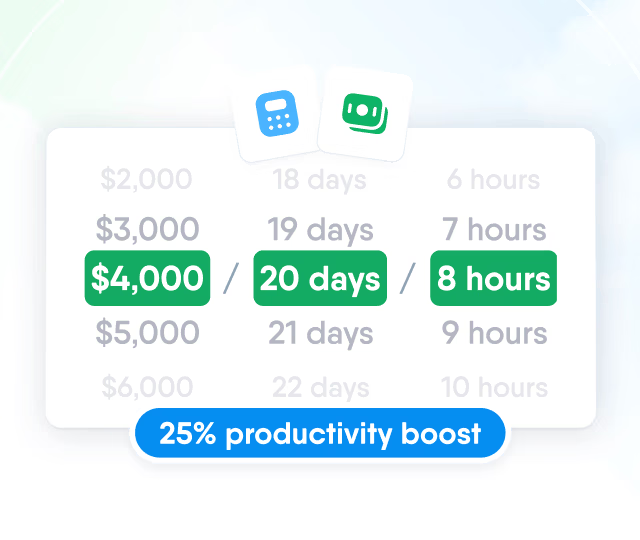
HR efficiency estimator
How does the HR efficiency estimator from PeopleForce work.
Calculate your impact



Time off in lieu (TOIL)
Time off in lieu (TOIL) is paid leave granted instead of overtime pay: an employee who works extra hours banks them and takes the equivalent time off later.
Time off in lieu (TOIL) is paid time away from work that an employee earns instead of extra pay for hours worked beyond their normal schedule. One hour of approved extra work becomes one hour of time off to be taken later, usually within an agreed window. The term is most common in the UK, Ireland and Australia, but the arrangement itself exists under different names almost everywhere: compensatory time off, comp time, banked hours, lieu days.
TOIL is not the same as flexitime. Flexitime lets people shift the boundaries of a standard working day within a settlement period. TOIL is compensation for genuine additional hours that would otherwise be paid as overtime, converted into rest instead of money.
How time off in lieu works
A working TOIL arrangement rests on five decisions, and most disputes come from leaving one of them unwritten:
- What counts. Only pre-approved hours beyond the contracted schedule, or also weekend call-outs, travel time and on-call hours.
- At what rate. Hour for hour is the norm, but many employers mirror their overtime premiums and grant 1.5 hours off for each hour worked on a rest day.
- Who approves. The extra hours and the day off are two separate approvals, and both belong in the system rather than in a manager's inbox.
- How long the balance lives. Typically three to six months. An unlimited window creates a liability nobody tracks and holidays nobody takes.
- What happens to unused hours. They expire, roll over, or are paid out on leaving. Saying nothing usually means paying out anyway, after an argument.
Balances also need a cap. When someone has banked 60 hours, that is no longer a benefit but a symptom of understaffing that workforce planning should have caught.
TOIL or overtime pay
Employees who want the money and employers who want a predictable payroll line both prefer overtime pay. TOIL wins when workload is seasonal: the same headcount absorbs the peak and recovers in the quiet weeks, without the cash cost. It also fits salaried professionals whose contracts do not pay overtime at all, where lieu days are the only realistic compensation for a launch weekend.
The trap is that time off in lieu is only a benefit if it is actually taken. Hours banked and never used are unpaid work with an accounting entry attached, and they quietly feed burnout and presenteeism. Give the choice to the employee where the law allows it, track the balance visibly, and treat a growing TOIL bank as a staffing problem rather than a saving.
What the law says
TOIL is regulated very differently across jurisdictions, so the policy has to follow local labor laws rather than a single global rule.
In the UK there is no statutory right to TOIL; it is a contractual arrangement, though the Working Time Regulations require compensatory rest when daily or weekly rest breaks are missed. In the US, the Fair Labor Standards Act prohibits comp time in place of overtime pay for non-exempt private-sector employees, while public-sector employers may grant it at 1.5 hours per overtime hour. In Poland, the Labour Code allows time off instead of overtime pay: one hour for one hour at the employee's written request, or 1.5 hours per hour when the employer grants it unilaterally, and the time must be used within the settlement period. In Ukraine, overtime cannot be compensated with a day off at all, only with double pay, while work on a day off may be compensated with another rest day by agreement. In Argentina, overtime is paid at a 50 % or 100 % premium, and compensatory rest days apply when the weekly rest period was not granted.
Where TOIL is allowed, get the agreement in writing, keep it in the employee handbook, and keep records: in most countries the burden of proving hours worked sits with the employer.
Tracking TOIL in PeopleForce
In PeopleTime the choice between lieu time and extra pay is a property of the overtime type itself. Each attendance policy holds its own overtime types, and every type has a compensation method of either time off or payslip, a compensation multiplier, and a code that labels the column in payroll exports. Types can be matched to the day the work happened (working day, non-working day, public holiday, paid leave) or to specific days of the week, and to a time window, so night work and Sunday work can carry different rules within one policy.
Employees submit overtime requests with entries per day, managers approve them along the route set in the policy, and approved hours flow into the timesheet alongside worked and break time. Requests can be filtered by compensation method, so it is easy to see how many hours are heading to payroll and how many are turning into future days off. Those days off are then requested and approved as ordinary absences in leave tracking, which means the team calendar shows them like any other leave, and HR analytics shows which teams keep generating extra hours long before anyone files a complaint.


Let us show you what's possible
From Core HR to advanced workforce analytics — see the platform saving 80 hours a month for teams just like yours. Fully tailored to your workflow.