
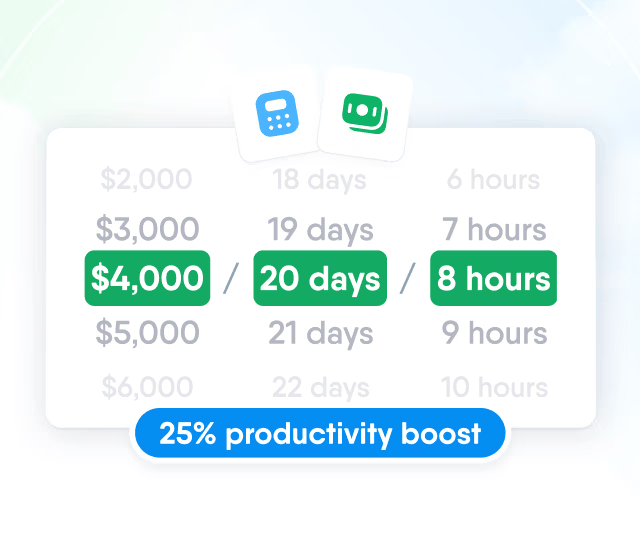
HR efficiency estimator
How does the HR efficiency estimator from PeopleForce work.
Calculate your impact



Presenteeism
Presenteeism is when employees are at work but unable to perform at their normal level because of illness, exhaustion or stress, producing a productivity loss that absence reports never show.
Presenteeism is being at work while not able to work properly: physically present or logged in, but performing well below normal because of illness, exhaustion, stress, personal crisis or disengagement. The employee is on the payroll and on the schedule, so nothing shows up in absence reports, which is exactly why it goes unmeasured for years.
It is the mirror image of absenteeism, and in most research it turns out to be the more expensive of the two. Absence is visible and gets covered; presenteeism quietly reduces output, raises error rates and, when the cause is infectious illness, spreads the problem across the team.
Why people come in anyway
- Money. Where sick pay is low, delayed or starts only after several days, coming in sick is a financial decision, not a cultural one.
- Job insecurity. Probation, a restructuring rumour, a contract up for renewal. Fear of being seen as replaceable keeps people at their desks.
- Workload and cover. Nobody else can do the job, or the work simply waits and doubles by Thursday. Common in small teams and in roles with no backup.
- Management signals. A manager who works through flu and mentions it sets the rule for everyone, whatever the policy says.
- Remote work. Working from bed feels like a compromise rather than sick leave, so the day gets logged as work and the recovery never happens.
- Presence-based metrics. Attendance bonuses and perfect-attendance awards pay people directly for showing up unwell.
Note the split in the research: illness presenteeism (working while sick) and what is sometimes called quiet or disengaged presence, closer to quiet quitting. They look similar in the data and need very different responses.
How to measure something invisible
There is no counter for presenteeism, so it is inferred from a combination of signals. Validated self-report instruments such as the WHO Health and Work Performance Questionnaire or the Stanford Presenteeism Scale ask people directly how much their condition affected their work, and are usually run anonymously alongside an engagement survey.
The HR data gives a second angle. Suspiciously low sickness absence in a team where burnout indicators are rising. Unused leave balances piling up. Regular work outside scheduled hours, or leave that is booked and then cancelled. A gap between hours logged and output delivered. None of these is proof on its own, and none of them belongs in an individual performance conversation; they are team-level signals about workload and policy.
What actually reduces it
Make recovery affordable and easy. Paid sick days from day one, a simple way to report absence without a medical certificate for short illnesses, and no requirement to justify a one-day recovery to three different people. Remove attendance bonuses and any metric that rewards presence over results, since these pay directly for the behaviour you are trying to stop.
Fix the cover problem. If one person's absence stops the process, that is a workforce planning issue: cross-train, document, and name a deputy for each critical role. Ask managers to model it, including sending people home and taking their own sick days visibly. Enforce leave: an untaken balance is not loyalty. And treat chronic conditions and mental health as an adjustment question rather than an absence question, because reduced hours or changed duties keep far more value than a half-working full week.
Spotting the signals in PeopleForce
The starting point is honest absence data. In leave tracking you configure sick leave as its own policy with its own approval route, notice rules and paid or unpaid status, so reporting a sick day takes a minute and does not require a negotiation. Balances, accruals and carryover are visible per person, which makes the accumulating unused leave that so often precedes burnout easy to see rather than a surprise in December.
The second signal comes from people themselves. PeoplePulse runs anonymous pulse surveys and eNPS on a regular cadence, which is where questions about workload, energy and whether people feel able to take a day off belong. Regular one-on-ones in PeoplePerform give managers a structured place to notice a change before it becomes a resignation. And HR analytics puts absence, leave utilisation, overtime from PeopleTime and turnover side by side, which is where the pattern of a team that never calls in sick and never takes leave finally becomes visible.


Let us show you what's possible
From Core HR to advanced workforce analytics — see the platform saving 80 hours a month for teams just like yours. Fully tailored to your workflow.