
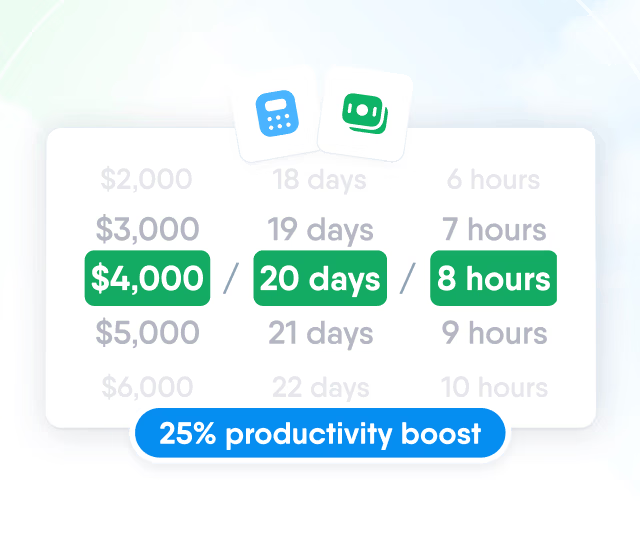
HR efficiency estimator
How does the HR efficiency estimator from PeopleForce work.
Calculate your impact



Workforce Management
Workforce management definition, components, and what WFM software should do
Workforce management (WFM) is the set of processes a company uses to make sure the right number of people with the right skills are working at the right time, and that their working time is tracked, paid and compliant. It covers demand forecasting, scheduling, time and attendance, absence management, overtime control and workforce analytics.
The term comes from operations-heavy environments such as contact centers, retail, logistics and manufacturing, where labor is the main cost and coverage gaps are immediately visible. Today WFM is a standard part of HR management systems for companies of any type, because every organization has to answer the same questions: who is working, how many hours, at what cost, and is it enough.
What workforce management includes
- Demand forecasting. Estimating how much work is coming (orders, tickets, projects, seasonal peaks) and translating it into the hours and roles needed.
- Scheduling. Building work schedules and shift patterns that match the forecast while respecting contracts, flexible working hours and rest-time rules.
- Time and attendance. Recording actual hours worked through clock-in, timesheets or timers, and comparing them with expected hours. See time tracking.
- Absence and leave management. Tracking vacation, sick leave and other absences so that schedules stay realistic. See absence management and time off tracking.
- Overtime and compliance. Controlling overtime, breaks and maximum working hours in line with labor laws and internal policies.
- Payroll input. Passing approved hours, overtime and absences to payroll without manual re-entry.
- Workforce analytics. Measuring utilization, labor cost, absenteeism and productivity to adjust plans. See utilization analysis and HR analytics.
Workforce management vs. workforce planning vs. HRM
These terms overlap but work on different horizons. Workforce planning is strategic: it asks what headcount and skills the company will need in one to three years. Workforce management is operational: it asks who covers next week and whether last month's hours were correct. Human capital management and HRM are the umbrella: hiring, development, compensation and engagement across the whole employee lifecycle, with WFM as one of the modules inside.
Why companies invest in workforce management
Labor cost under control. Overstaffing burns budget, understaffing burns people. Matching schedules to actual demand removes both, and visible overtime data shows where the plan is failing.
Accurate pay. When hours are recorded once and approved by a manager, payroll gets correct data. Fewer corrections, fewer disputes, fewer retroactive payments.
Compliance by design. Working-time limits, mandatory breaks and overtime rules are enforced in the schedule and the timesheet rather than checked after the fact.
Fairer conditions for employees. Predictable schedules, transparent balances and a clear record of hours worked reduce friction between teams and managers and support well-being.
Better decisions. Utilization and absence data show which teams are stretched, where project hours go and when to hire, long before it shows up in turnover.
What to look for in workforce management software
- One record of working time. Timesheets, clock-in, project hours and leave in a single system, so expected hours, actual hours and absences are always compared against the same data.
- Approval flows. Timesheets and overtime requests go to the manager, not to HR, and the approval is logged.
- Work patterns. Support for full-time, part-time, compressed and hourly arrangements with expected hours calculated automatically.
- Self-service. Employees log time, request leave and see balances themselves through employee self-service, ideally on mobile.
- Reporting and exports. Utilization, billable vs. non-billable hours, overtime and absence reports, plus clean exports to payroll.
- Integrations. Connection to payroll, project tools and messengers so data is entered once.
Workforce management in PeopleForce
PeopleForce Time covers the operational side of WFM: employees clock in or log timesheets, including from the mobile app, and managers approve them along with overtime requests. Expected hours are calculated from each person's working pattern, so exceeded hours are flagged automatically and approved leave and holidays are excluded. Project time tracking separates billable and non-billable hours and costs. Leave management keeps balances current, and HR analytics shows headcount, leave balances and turnover in one place. All of this runs on the same employee data as Core HR, so there is no second system to reconcile.


Let us show you what's possible
From Core HR to advanced workforce analytics — see the platform saving 80 hours a month for teams just like yours. Fully tailored to your workflow.