
HR efficiency estimator
How does the HR efficiency estimator from PeopleForce work.
Calculate your impact



Pay Review Process: A Step-by-Step Guide for HR Teams

Most resignations citing “better opportunity” were pay problems that went unaddressed for too long. By the time an employee hands in their notice, the pay review that could have kept them didn’t happen, or happened too late to matter.
According to the CIPD's Good Work Index 2025, only 52% of UK employees feel they're paid appropriately for the work they do and achieve. That leaves a gap for people who feel they're not paid fairly.
For HR teams, that gap is where the pressure sits: the exit you did not see coming, the counter-offer you cannot match, and the ongoing cost of replacing talent.
Running a pay review is how you decide which side of that line your team sits on. Get it right, and it's your strongest retention lever. Get it wrong, and you find out at the exit interview.
This guide walks you through the pay review process: objectives, market data, modelling, and the conversations that follow.
Pay Review Process at a Glance
- A pay review is a structured employer-led process for assessing whether employee pay remains fair, competitive and affordable, followed by a decision on whether to change it.
- Most organisations run one at least annually, with off-cycle reviews when the market moves, a role changes materially, or the law shifts.
- A sound pay review process includes setting objectives, data collection, benchmarking, budget modelling, moderating for fairness, communicating the outcome, and documenting decisions.
- Live market data is the spine of a fair increase, and it matters most at role level, because a company-wide budget hides very different pressures across roles, locations and seniority.
- A fairness and consistency check, run after the modelling, catches inconsistent outcomes and manager bias before decisions are finalised.
What is a pay review?
A pay review is a formal process an employer uses to assess whether employee pay remains appropriate compared to market rates, internal pay structures, business affordability, role responsibilities and, where relevant, performance. It runs on a set cycle, usually once a year, and applies across a team or the whole organisation.
A pay review focuses on pay decisions within the wider compensation package. It runs on a set cycle, usually once a year, and applies across a team or the whole organisation. But this does not automatically mean every employee receives a pay rise.
How to run a pay review, step by step
A pay review works best as a controlled sequence, with each stage narrowing the decision before individual outcomes are approved. The process below is the one I would run for most SMB and mid-market employers:
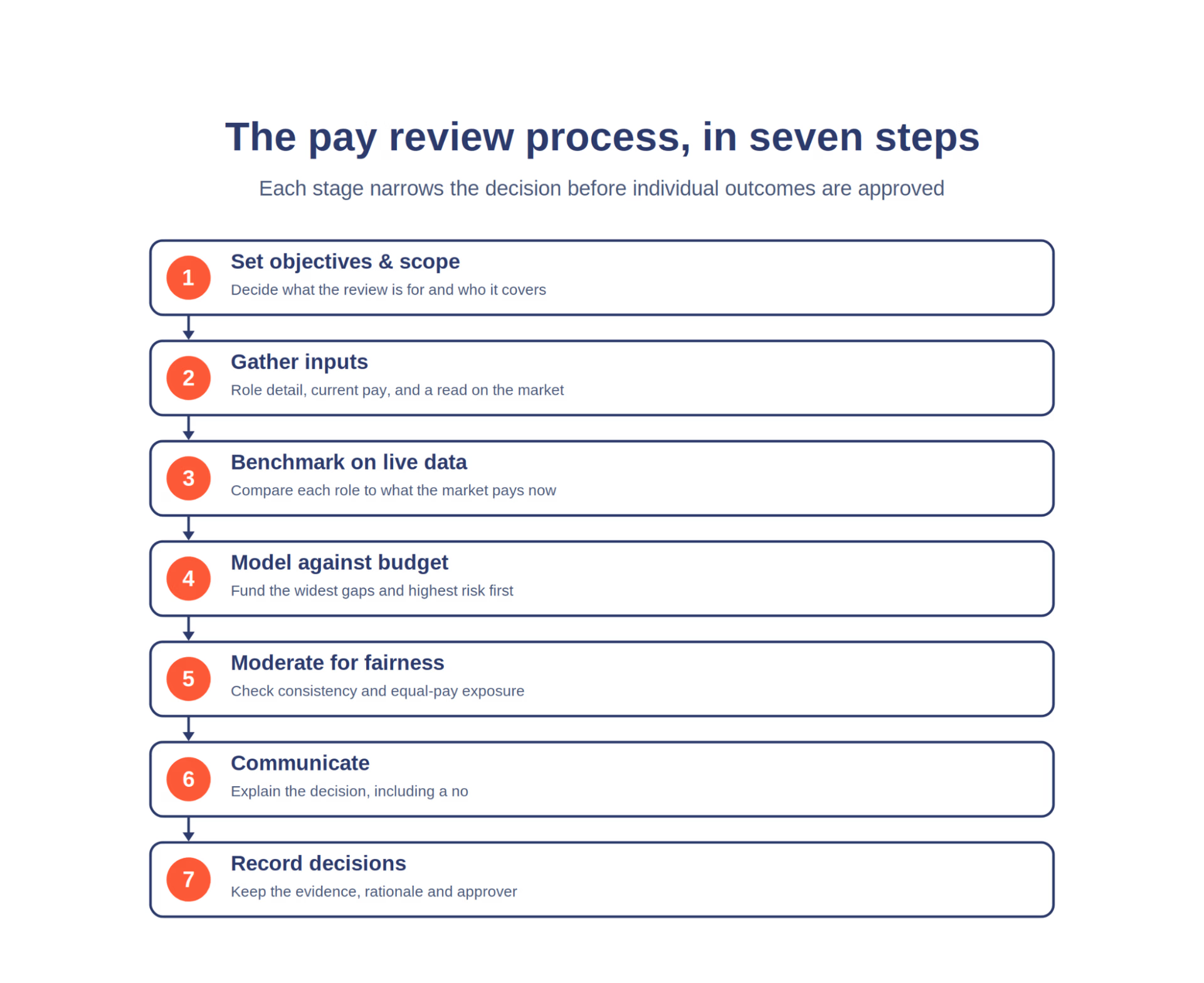
Step 1. Set the objectives and scope
Start by deciding what the pay review is trying to achieve and who is included, before any numbers appear.
Be specific about the objective. Are you reviewing base pay across the whole organisation, correcting known market gaps to slow attrition, rewarding performance, responding to a minimum wage rise, or allocating a fixed budget as fairly as possible?
Each objective leads somewhere different: a retention-driven review leans on market data, a performance-driven one leans on your appraisal outputs. Naming the priority upfront saves an argument later about what the review was meant to solve.
At this stage, set:
- The employee population in scope and any groups explicitly excluded
- The budget envelope and the effective date of any pay changes
- Who makes the decisions and who holds final approval
- Any contractual entitlements, collective agreements or pay policies that constrain the outcome
Acas guidance on pay rises is clear that a contractual entitlement must be honoured when the agreed criteria are met. Check those obligations before modelling anything.
Step 2. Gather your inputs based on role and market context
The job comes first here, because a title tells you little. A team leader running a night shift of thirty is a different role, and at a different rate, from a team leader with two direct reports. Start with an up-to-date job description and note what has changed since the last review.
At minimum, gather:
- Current salary and working pattern for each employee in scope
- Job title, level or seniority, and location
- The date and size of the last pay increase
- Existing pay ranges or salary bands
- Performance data, where your pay policy links it to the outcome
- The total budget, confirmed by finance
Data quality matters here more than data volume. So resolve any discrepancies before the numbers become recommendations. Role clarity at this stage is what makes benchmark comparisons accurate.
Step 3. Benchmark salary against live market data
Benchmarking shows where current pay sits against what the market is paying for comparable work right now. Match roles on the work being done, seniority level, location, and sector context, or the number you get will reflect the wrong market entirely.
The market does not move evenly across all roles. Operational, technical and hard-to-fill positions often shift faster than the company-wide average, which is exactly why a single headline figure across the whole workforce gives you a false sense of security.
Live advertised rates are the most current signal available, though not a perfect one. Around one in four UK job adverts still show no salary at all, based on HR Datahub's analysis of 2.8 million UK job adverts, so visibility varies by sector and seniority.
Even so, advertised pay is what candidates actually see when they weigh up whether to look elsewhere, and getting it wrong feeds straight into the real cost of losing an employee.
Step 4. Model pay increases against the company's budget
Pay modelling turns the market evidence into an affordable set of proposed pay changes. Market reality and financial reality rarely line up the first time; moving everyone to the median usually costs more than the pot holds, which is normal. The goal is to spend a fixed budget where it does the most good.
Start with the total budget, then test how different decisions affect payroll cost and the spread of increases. A useful measure here is the compa-ratio:
Compa-Ratio = (Current Pay ÷ Market Midpoint) × 100
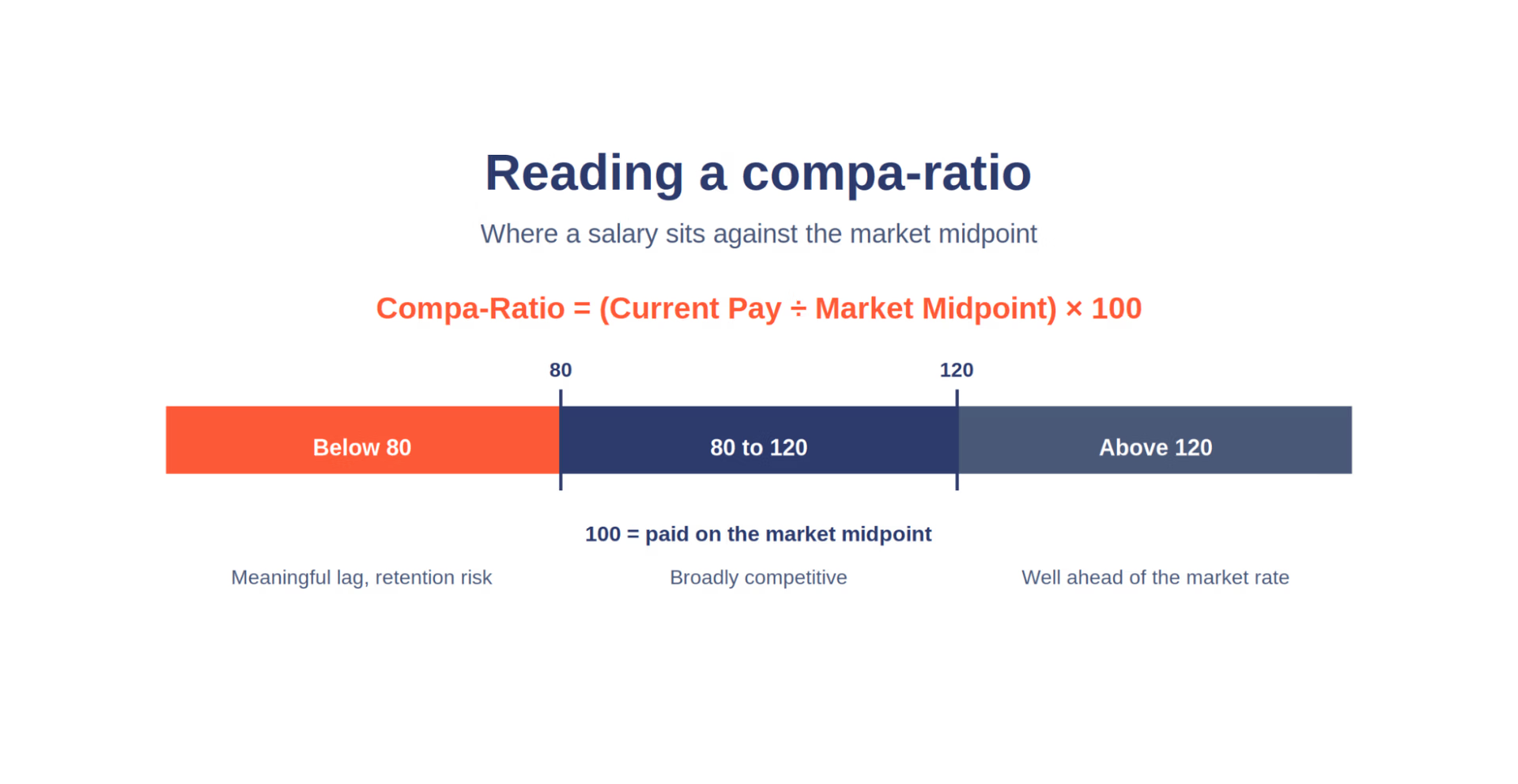
A compa-ratio of 100 means an employee sits on the market midpoint. Below 80 signals a meaningful lag; above 120 means pay is well ahead of the competitive rate. Run it across every role in scope and the pressure points show up before moderation begins.
It’s best to fund the widest market gaps and highest attrition risk first, then performance-based increases, before allocating increases to everyone’s pay. Where a gap cannot be closed in one cycle, make the trade-off explicit: what gets corrected now, what goes into a phased plan, and where retention has to be protected some other way.
Step 5. Moderate for fairness and consistency
Moderation is the step many teams fold into the calculation, and the one that catches problems a spreadsheet will not. Line managers rate and rank differently, so two people doing the same job to the same standard can end up with different increases for no good reason.
Review the proposed increases by:
- Role and seniority level, to catch outliers within comparable groups
- Manager, to find where discretion has produced very different outcomes for similar people
- Location, where pay is not location-adjusted by design
- Any employee group where a pattern of lower increases appears without an evidence trail
Where performance forms part of the decision, apply the criteria consistently and against documented evidence, the same discipline a wider HR audit for an SMB would expect.
The most important check is that employees in the same role and level are treated the same, and that the pattern holds up across gender and other protected characteristics. Also, that nobody falls below the National Minimum Wage floor after the review.
Step 6. Communicate the review outcome
Communication is where good decisions get undone. An increase delivered with no context reads as an employee’s entitlement or an afterthought; the same increase, explained, reads as recognition.
Managers should understand the process before they hold any pay conversation. Give them:
- The decision and the effective date
- The reasoning they are authorised to share
- Clear boundaries on what they should not improvise
A manager saying "HR wouldn't let me give you more" undermines the process and their own credibility at the same time. Keep the message grounded in the factors the organisation weighed, not the outcome alone.
Where pay changes, the changes to main employment terms must be confirmed in writing within one month. Where pay does not change, give a clear and honest reason the employee can understand and accept.
Step 7. Record and document the decisions
Documentation creates a clear record of how each pay decision was reached and who approved it. For each person in scope, document:
- The market evidence used at the benchmarking stage
- Proposed outcomes for each employee in scope
- Approval history and reasons for any exceptions
- The written communications sent to employees
If a decision is disputed, that record is what you point to. It also makes next year easier: you can see which gaps were deferred on purpose and whether those calls still hold, so you build on last year's logic instead of starting from scratch.
Clear records also put you ahead of tightening pay transparency rules, including the EU Pay Transparency Directive, which expects employers to show how pay is set and how it progresses.
Common Mistakes when running a pay review process
Most avoidable problems come from the same handful of choices:
- Benchmarking against stale data: A salary survey from eighteen months ago describes a market that no longer exists. Increases built on it look generous on paper and still lose you people.
- Starting with manager recommendations: Managers bring useful context, but collecting preferred increases before setting the rules bakes in inconsistency and makes moderation harder.
- Using one market figure for every role: Company-wide trends are fine for setting a budget. Individual roles still need checking against the labour market that actually competes for those skills.
- Treating the budget as the answer: A budget tells you what you can spend. It does not tell you where the money should go or which gaps carry the most retention risk.
- Skipping the explanation: Employees judge the process partly through the conversation they get. A reasonable decision still lands badly when the manager cannot explain how it was reached.
Frequently Asked Questions
What is the difference between a pay review and a pay rise?
A pay review is the assessment process; a pay rise is one possible outcome of it. A review can end with no increases, and pay rises also happen off-cycle, after a promotion, a contractual increase or a market correction.
What data do you need for a pay review?
Pay review data needs a clear reference date, not just the right fields. Take an agreed snapshot of salaries, role data, pay ranges, budget and market benchmarks so every manager works from the same version.
How do you make a pay review fair?
A pay review is made fair by agreeing the decision criteria before names and proposed increases enter the conversation. Record what qualifies for an exception, who approves it, and what evidence is required, so unusual outcomes are consistent and explainable.
How do you handle off-cycle pay reviews?
Off-cycle pay reviews should be reserved for defined triggers: a substantial role change, a hard-to-fill role moving in the market, a minimum wage change, or a material inconsistency that cannot wait. Define which situations qualify in advance, so reopening pay stays consistent enough for moderation to hold.
Run your next pay review with confidence
The strongest pay reviews leave a trail from evidence to decision. You know what the organisation was trying to achieve, which market and internal data informed the outcome, where budget constraints forced a compromise, and why exceptions were approved.
Before the next pay review cycle starts, write down the decision rules before anyone proposes an increase. Anchor every call to current market evidence, and moderate before you communicate. That one step raises the quality of everything that follows, because every recommendation then has a clear standard to be tested against.
David Whitfield is the CEO and co-founder of HR Datahub, a salary benchmarking platform that draws data from over 40 million live job postings to help HR teams make confident, data-driven pay decisions they can stand behind. With more than 20 years of experience in HR and Reward, he is passionate about empowering organisations to make smart, defensible decisions more quickly and easily than ever before.


One login. Every HR tool you'll need.
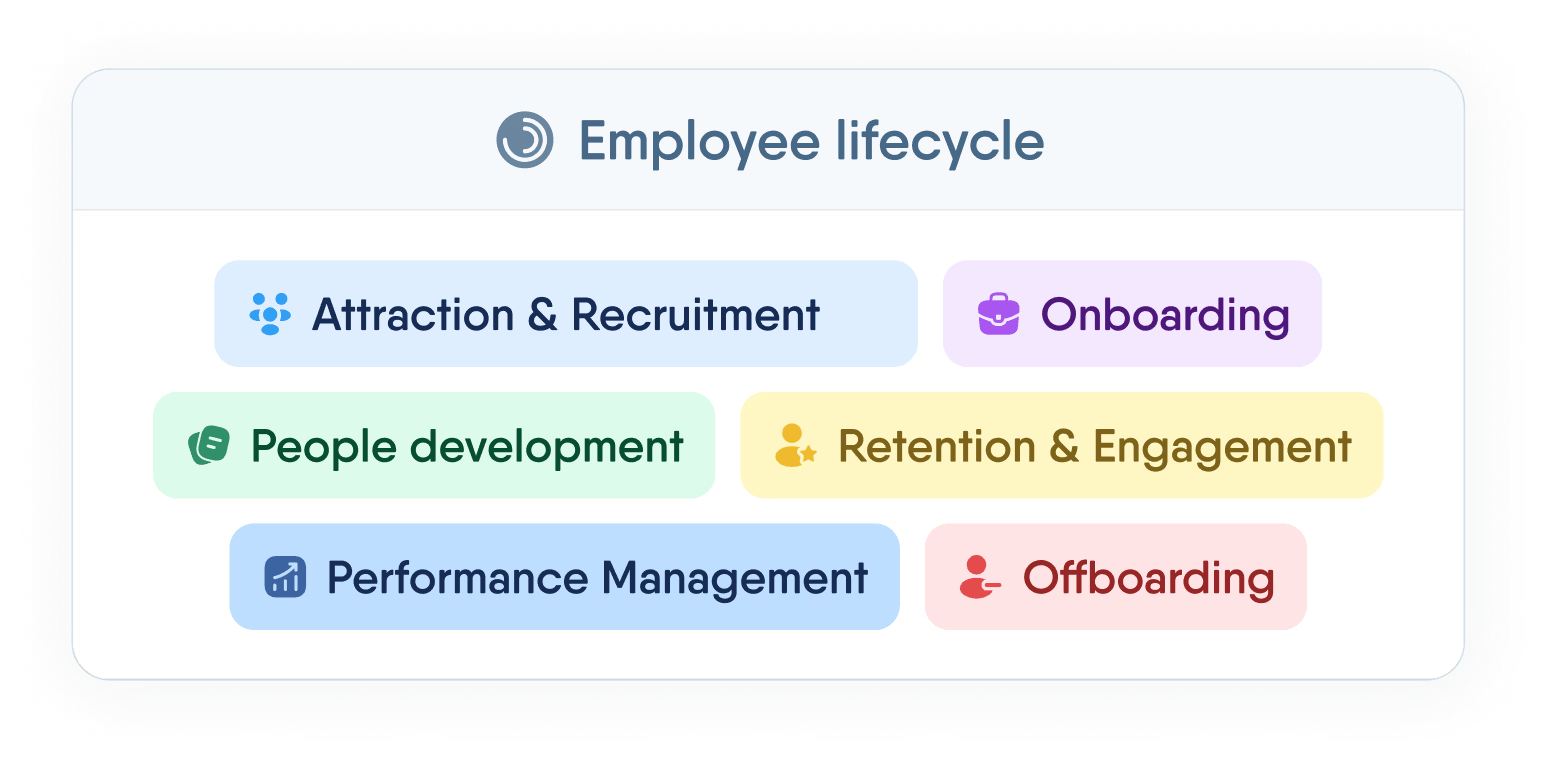
Manage the full employee lifecycle — from first interview to final offboarding — without switching tabs or losing data.
Recent articles
Overtime automation: from manual tracking to payroll-ready hours
Automate overtime tracking: classify night, weekend and holiday hours, apply the right rate, route approvals and export payroll-ready data.
PeopleForce and BPiON Join Forces — for Seamless HR Collaboration with Payroll
PeopleForce and BPiON streamline HR and payroll with seamless Enova integration, reducing errors, automating workflows, and saving time.
How does the HR efficiency estimator from PeopleForce work
A transparent breakdown of the PeopleForce HR Efficiency Estimator methodology