
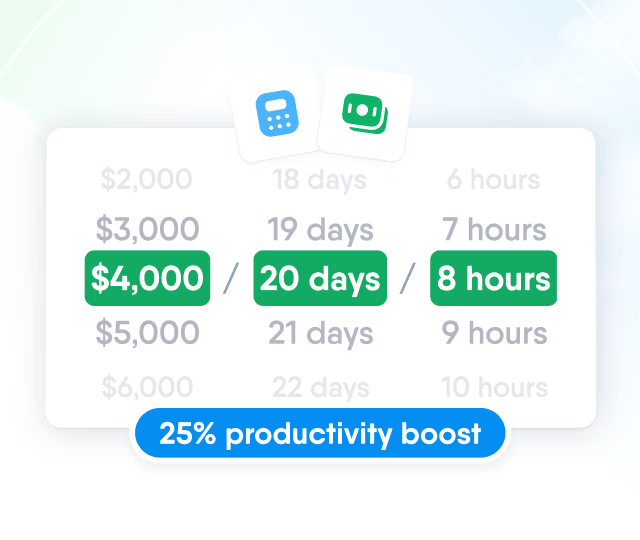
HR efficiency estimator
How does the HR efficiency estimator from PeopleForce work.
Calculate your impact



Compliance training
What compliance training covers, which types companies need, how to organise it and how to keep proof that people were trained
What is compliance training?
Compliance training is mandatory training that teaches employees the laws, regulations and internal policies that apply to their work. It covers topics such as health and safety, data protection and anti-harassment rules, and it usually has to be completed by a deadline and repeated at set intervals.
It has two jobs. The first is to prevent harm: accidents, data leaks, fines. The second is to give the company proof that people were trained, which is what an inspector, auditor or court asks for after something goes wrong. That is why record keeping matters as much as the content, and why the work is shared between HR compliance and the learning and development team.
Types of compliance training
| Topic | Who takes it | How often |
|---|---|---|
| Health and safety | All employees, with extra modules for higher-risk roles | On joining, then when risks change and periodically |
| Fire safety and first aid | All employees; fire wardens and first-aiders in more depth | On joining, then regularly |
| Data protection and information security | Everyone who handles personal or confidential data | On joining, then usually yearly |
| Anti-harassment and equal treatment | All employees and, separately, managers | On joining, then periodically |
| Anti-bribery, conflicts of interest and the code of conduct | All employees; finance, sales and procurement in more depth | On joining and when the policy changes |
| Role-specific licences and certificates | People in regulated roles | Before the certificate expires |
How to run compliance training
- List what is required for each role, location and legal entity, and who owns each requirement.
- Assign by rule, not by list: everyone in a department, site or position gets the course automatically, including new hires during the onboarding process.
- Set a deadline and, for recurring topics, a validity period after which the course is assigned again.
- Send reminders before the deadline and escalate overdue cases to managers.
- Check understanding with a test and a pass mark, not only a page to read and confirm.
- Keep the evidence: who completed which version of the course, when and with what score.
- Update the content when the law or the policy changes, and assign it again.
Compliance training and UK law
In the UK, health and safety training is a legal duty. Section 2 of the Health and Safety at Work etc. Act 1974 requires employers to provide the information, instruction and training needed to keep employees safe. Regulation 13 of the Management of Health and Safety at Work Regulations 1999 sets the timing: on recruitment and when risks change, repeated periodically where appropriate and held during working hours. Fire safety, data protection and harassment prevention bring their own training expectations. For all of them the practical test is the same: can the employer show who was trained, on what and when.
Compliance training in PeopleForce
In PeopleForce Learn, mandatory courses are assigned through training groups built on HR data: department, location, position, employment type or legal entity. New hires who match the rules can be enrolled automatically, so nobody maintains lists by hand. Each course can have a deadline and a validity period in months. The next cycle opens 30 days before a completion expires by default, and earlier completions stay in the person's history. Reminders go out in the app and by email three days before the deadline, on the day and weekly after it. Courses combine text, video, tests and SCORM packages, so existing compliance content can be reused.
Frequently asked questions
Is compliance training mandatory for all employees?
The core topics, such as health and safety and data protection, apply to everyone. Other courses depend on the role: managers, finance staff or people working with hazardous equipment get additional modules. The employer decides the exact list based on the law and its own risk assessment.
How often should compliance training be repeated?
It depends on the topic and the law behind it. Many companies repeat data protection and security courses yearly and refresh safety training when risks, equipment or rules change. A validity period on each course makes renewals automatic instead of relying on someone's calendar.


Let us show you what's possible
From Core HR to advanced workforce analytics — see the platform saving 80 hours a month for teams just like yours. Fully tailored to your workflow.