
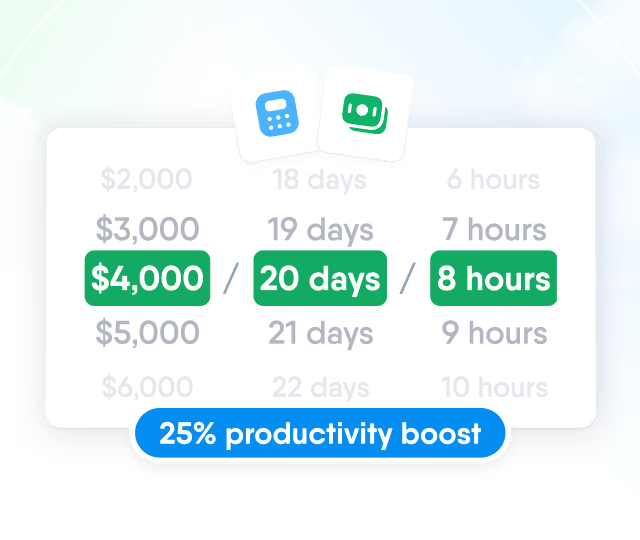
HR efficiency estimator
How does the HR efficiency estimator from PeopleForce work.
Calculate your impact



Candidate experience
What candidate experience is, the stages it spans from job ad to onboarding, why it affects hiring results and employer reputation, how to improve and measure it, and how a recruiting system removes the friction
Candidate experience is the sum of every impression a job seeker forms about a company during the hiring process, from the first time they see the job ad to the day they get an offer or a rejection, and often beyond it. It covers how easy it was to apply, how quickly and honestly the company communicated, how the interviews felt, whether feedback ever arrived and how the outcome was delivered. Unlike most of recruiting, it is measured from the candidate's side of the table, and most candidates go through it without being hired, which is why it shapes the employer brand far more than any careers page copy.
Stages of the candidate experience
- Attraction. The job description, salary transparency, the career site and what people find when they look the company up on review sites and social media.
- Application. How long the form takes, whether it works on a phone, whether the candidate has to retype a CV they just uploaded, and whether they get a confirmation.
- Screening and interviews. Response time, scheduling friction, how many rounds, whether interviewers have read the profile, whether questions are consistent and relevant, and how tests and assignments are scoped and paid.
- Decision. The offer, its speed and clarity, or the rejection: whether it comes at all, how personal it is and whether it includes feedback.
- Transition. For hired candidates, the gap between acceptance and day one and how preboarding and onboarding honor what was promised in the process; for others, whether the relationship is kept alive in a talent pool.
Why candidate experience matters
The direct effect is on the funnel: long applications lose a large share of applicants before they finish, slow processes lose the strongest candidates to faster competitors, and a poor final interview or a delayed offer shows up as a lower offer acceptance rate. The indirect effect is reputational. Rejected candidates talk about the process to peers, on review sites and in professional communities, and in a tight labor market a company's reputation as a place to interview travels faster than its reputation as a place to work. Candidates are also frequently customers or future customers, and a rude rejection or silence after three interviews costs revenue as well as talent. Finally, the experience predicts what the company is like inside: a hiring process that is disorganized, slow to decide and vague about pay tells the candidate exactly what the first year will be like, and the best ones act on that information.
How to improve candidate experience
Publish the salary range and the steps of the process in the job ad, so candidates know what they are signing up for. Cut the application to what you need to decide on a first screen; everything else can be collected later. Commit to response times and keep them: acknowledge every application, tell candidates when they will hear back, and tell them when a decision slips. Train interviewers on structured interviewing so every candidate gets the same questions and every scorecard is filled in the same day. Limit take-home tasks in scope and compensate long ones. Reject with a real message and, where possible, a sentence of feedback; a rejection that arrives within a week beats a warm one that arrives after a month. Measure it: send a short candidate experience survey after the final decision, track time to hire, offer acceptance rate, application drop-off and candidate NPS, and review the numbers by vacancy and hiring manager, because the variance between managers is usually where the problem sits.
Candidate experience in PeopleForce
PeopleForce Recruit removes most of the friction candidates complain about. The built-in career site publishes vacancies with an application form where the company chooses exactly which fields to ask for, and applications land in the pipeline the moment they are submitted, with an automatic confirmation to the candidate. Every stage in the pipeline can trigger an email from a template, so candidates hear from the company when they move forward, when they are put on hold and when they are declined, and disqualification reasons are recorded rather than left as silence. Interviewers submit scorecards against the same criteria for every candidate, hiring managers see feedback in one place instead of in email threads, and the recruiter sees how long each candidate has been waiting at each stage. Offers go out from a template with the numbers already filled in, and candidates accept online in one click. GDPR consent requests and data retention settings handle personal data of unsuccessful applicants, and candidates who were strong but not selected stay in talent pools for the next vacancy, so a good experience turns into a second chance rather than a lost contact.


Let us show you what's possible
From Core HR to advanced workforce analytics — see the platform saving 80 hours a month for teams just like yours. Fully tailored to your workflow.