
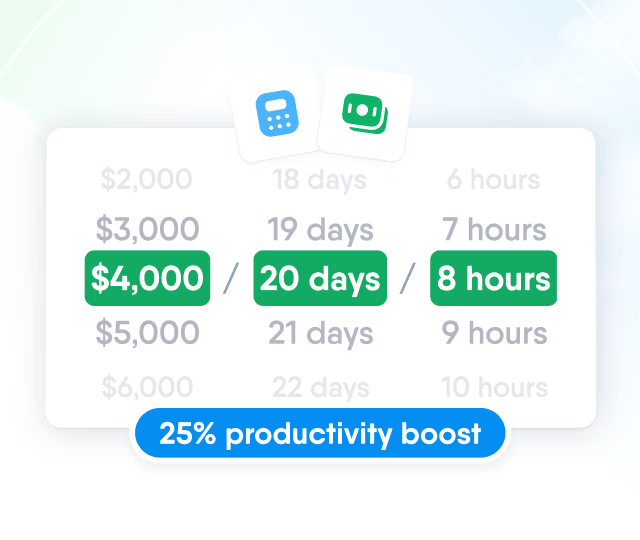
HR efficiency estimator
How does the HR efficiency estimator from PeopleForce work.
Calculate your impact



SBI feedback model
What the SBI model is, how its three steps keep feedback factual, and how to use it for praise, corrective feedback and performance reviews
What is the SBI feedback model?
The SBI feedback model structures feedback in three steps: Situation, Behavior, Impact. The person giving feedback names when and where something happened, describes what the other person did or said, and explains what followed. The model was developed by the Center for Creative Leadership.
Its purpose is to keep feedback on facts. SBI removes labels such as ‘careless’ or ‘proactive’ and leaves an observation the person can recognise and act on. That is why it is the usual starting point for continuous feedback between reviews and for building a feedback culture.
The three steps of SBI
| Step | Question it answers | Weak | Strong |
|---|---|---|---|
| Situation | When and where did it happen? | ‘You are always late with reports.’ | ‘On Monday's planning call…’ |
| Behavior | What did the person do or say? | ‘You were unprepared.’ | ‘…you presented the figures for the wrong quarter…’ |
| Impact | What followed, and for whom? | ‘It looked bad.’ | ‘…so we postponed the budget decision by a week.’ |
Examples of SBI feedback
- Praise: ‘In yesterday's client demo (situation) you answered the question about data migration with the client's own numbers (behavior). They agreed to a pilot before the call ended (impact).’
- Corrective: ‘In the last two sprint reviews (situation) you joined ten minutes late without warning (behavior). We had to repeat the first decisions and ran over by a quarter of an hour (impact).’
- Upward: ‘At Friday's team meeting (situation) you announced the new on-call rota and moved on without taking questions (behavior). Three people came to me afterwards unsure whether it applies to them (impact).’
How to give feedback with SBI
- Give it within a few days, while both of you remember the details.
- Stay with one situation. ‘Always’ and ‘never’ are not situations.
- Describe what a camera would have recorded: actions and words, not motives or character.
- State the impact on the team, the client or the result, and on you if that is relevant.
- Stop and ask for the person's view. Some teams add a fourth step, Intent, and ask what the person meant to achieve.
- Agree one next step and when you will come back to it.
- Use the same structure for praise, so people know exactly what to repeat.
SBI and formal procedures in the UK
SBI feedback is an everyday management tool, not a disciplinary step. Formal action in the UK follows the Acas Code of Practice on disciplinary and grievance procedures, which has its own stages. Dated SBI notes still matter: they show that a person knew what was expected and had time to change before a performance improvement plan or a written warning. Notes about a named person are personal data, so they belong in a system with access control, not in private files.
The SBI model in PeopleForce
In PeopleForce Perform, SBI is one of four starter feedback frameworks used by AI Writing Coach, next to STAR, GROW and Radical Candor. When the coach is switched on for a review cycle with the SBI framework, a reviewer presses ‘Check my draft’ and sees under each answer a score out of five and what to sharpen: a label with no example, an example with no consequence or an impact with no behaviour behind it. The coach replies in the reviewer's own language, never rewrites the answer and shows its suggestions only to the reviewer. Between reviews, employees give and request feedback in Perform, and every record stays in the person's profile for the next 1:1 or review.
Frequently asked questions
What is the difference between SBI and STAR?
SBI has three steps and describes one observed behaviour and its effect, which suits quick feedback. The STAR method has four steps and adds the task the person was given and the result they achieved, which suits interviews and review answers about a larger piece of work.
Can SBI be used for positive feedback?
Yes, and it should be. Praise built on a situation, a behaviour and its impact tells the person exactly what worked and why it mattered, which makes the behaviour more likely to be repeated than a general ‘well done’.


Let us show you what's possible
From Core HR to advanced workforce analytics — see the platform saving 80 hours a month for teams just like yours. Fully tailored to your workflow.