
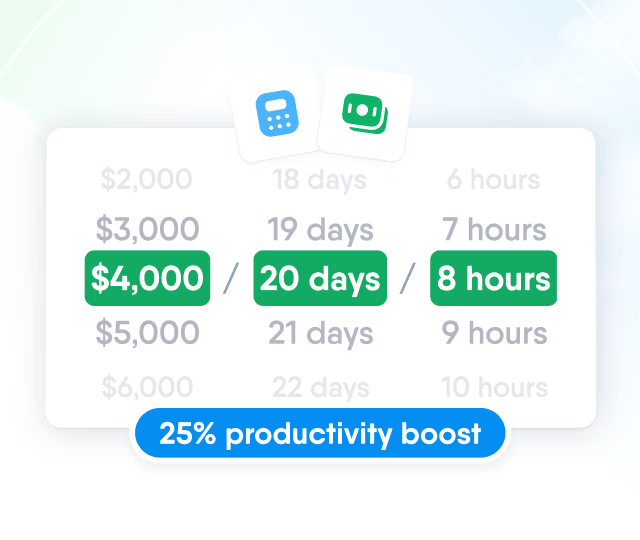
HR efficiency estimator
How does the HR efficiency estimator from PeopleForce work.
Calculate your impact



STAR method
What the STAR method is, how interviewers and candidates use it, and how the same four steps make performance feedback specific
What is the STAR method?
The STAR method is a way to structure an answer or a piece of feedback in four steps: Situation, Task, Action, Result. It turns a general statement such as ‘I am good with difficult clients’ into a concrete example of what a person did and what came of it.
HR uses it in two places. In hiring, STAR is the standard format for questions and answers in a behavioural interview. In performance management, reviewers use the same four steps to write feedback about a specific piece of work instead of a general impression.
The four steps of STAR
| Step | What it covers | In an interview | In feedback |
|---|---|---|---|
| Situation | The context: project, period, constraints | ‘Tell me about a time a project was at risk of missing its deadline.’ | ‘In the March release, two weeks before the deadline…’ |
| Task | What the person was responsible for | ‘What was your role?’ | ‘…you owned the migration of the billing module.’ |
| Action | What this person did, in the first person singular | ‘What exactly did you do?’ | ‘You split the work into three stages and agreed a change freeze with support.’ |
| Result | What changed, with numbers where possible | ‘How did it end? What would you do differently?’ | ‘The release went out on time and support tickets fell by a third.’ |
The STAR method in interviews
An interviewer prepares one STAR question for each competency the role needs and asks every candidate the same set, which is what makes it a structured interview. Answers are scored on an interview scorecard straight after the conversation. Typical questions:
- ‘Tell me about a time you disagreed with your manager. What did you do?’
- ‘Describe a situation in which you had to learn something quickly.’
- ‘Give an example of a mistake you made and how you put it right.’
Two follow-ups do most of the work. When the answer is told in ‘we’, ask what the candidate personally did. When the story ends without an outcome, ask for the result and what they learned. Candidates who prepare five or six stories in advance usually need one to two minutes per answer, most of it on the action and the result.
The STAR method in performance feedback
In a performance review, STAR makes a comment specific enough to act on. The task is the step reviewers skip most often, and without it the reader cannot tell whether the person went beyond their remit or simply met it.
- Vague: ‘Anna is a great team player and always delivers.’
- STAR: ‘During the warehouse move in the second quarter (situation), Anna was responsible for the stock count (task). She built a count schedule by zone and trained four temporary workers (action). The count finished two days early with a variance under 0.5% (result).’
STAR suits achievements and review answers, where the task and the result matter. For short everyday feedback about a single behaviour, the SBI feedback model is quicker.
STAR questions and UK law
STAR questions are about past behaviour at work, which keeps an interview on job-related ground. The Equality Act 2010 prohibits discrimination on nine protected characteristics, so the situations an interviewer asks about should not lead into family plans, religion or age. Section 60 of the Act also restricts questions about health before a job offer is made. Asking every candidate the same STAR questions and keeping the scored notes is a practical way to show the decision was based on evidence.
The STAR method in PeopleForce
In PeopleForce Perform, AI Writing Coach checks a reviewer's draft against the feedback framework chosen for the review cycle. STAR is one of four starter frameworks created with every account, next to SBI, GROW and Radical Candor, and each of them can be edited. The reviewer presses ‘Check my draft’ and gets a score out of five and a list of what to sharpen under each answer: for STAR, typically a missing task, an answer written entirely in ‘we’ or a result with no evidence. The coach never rewrites the text, and only the reviewer sees its suggestions. On the hiring side, interviewers in Recruit record their assessment in interview scorecards.
Frequently asked questions
What is the difference between STAR and SBI?
STAR has four steps and includes the task the person was given and the result they achieved, so it fits interviews and review answers. SBI has three steps (situation, behaviour, impact) and fits quick feedback on one observed behaviour.
How long should a STAR answer be?
One to two minutes in an interview, or three to five sentences in writing. Keep the situation and the task to a sentence each and spend the rest on the action and the result.


Let us show you what's possible
From Core HR to advanced workforce analytics — see the platform saving 80 hours a month for teams just like yours. Fully tailored to your workflow.