




 2026-10-16
Compensation components in PeopleForce: a complete guide

Most companies start in PeopleForce with something plain: a base compensation amount, the date it takes effect, a currency. That's entirely enough while compensation means one amount each pay period.
Then the first sales commission appears, and it's different every month. Or a night-shift allowance that has to be calculated from the hours worked. Or a payment made in error last month that has to be held back from the next one. And the question arises: how do you describe all of this inside the system, so that it doesn't end up in a separate spreadsheet outside it?
The answer in PeopleForce is compensation components: a directory of the kinds of compensation your company recognises, each with its own rules inside. This article explains every concept, shows the setup step by step, and describes what happens to an account when it's upgraded to this setting.
Part 1. The vocabulary
What a component is
A component is one kind of compensation, described once for the whole company: "Quarterly performance bonus", "Once-off referral bonus", "Monthly remote work allowance". Inside the component you set rules. PeopleForce then fills them in automatically every time you assign that component to a particular person. In short: the component holds the shared rules, and each person's record holds only their amount and dates.
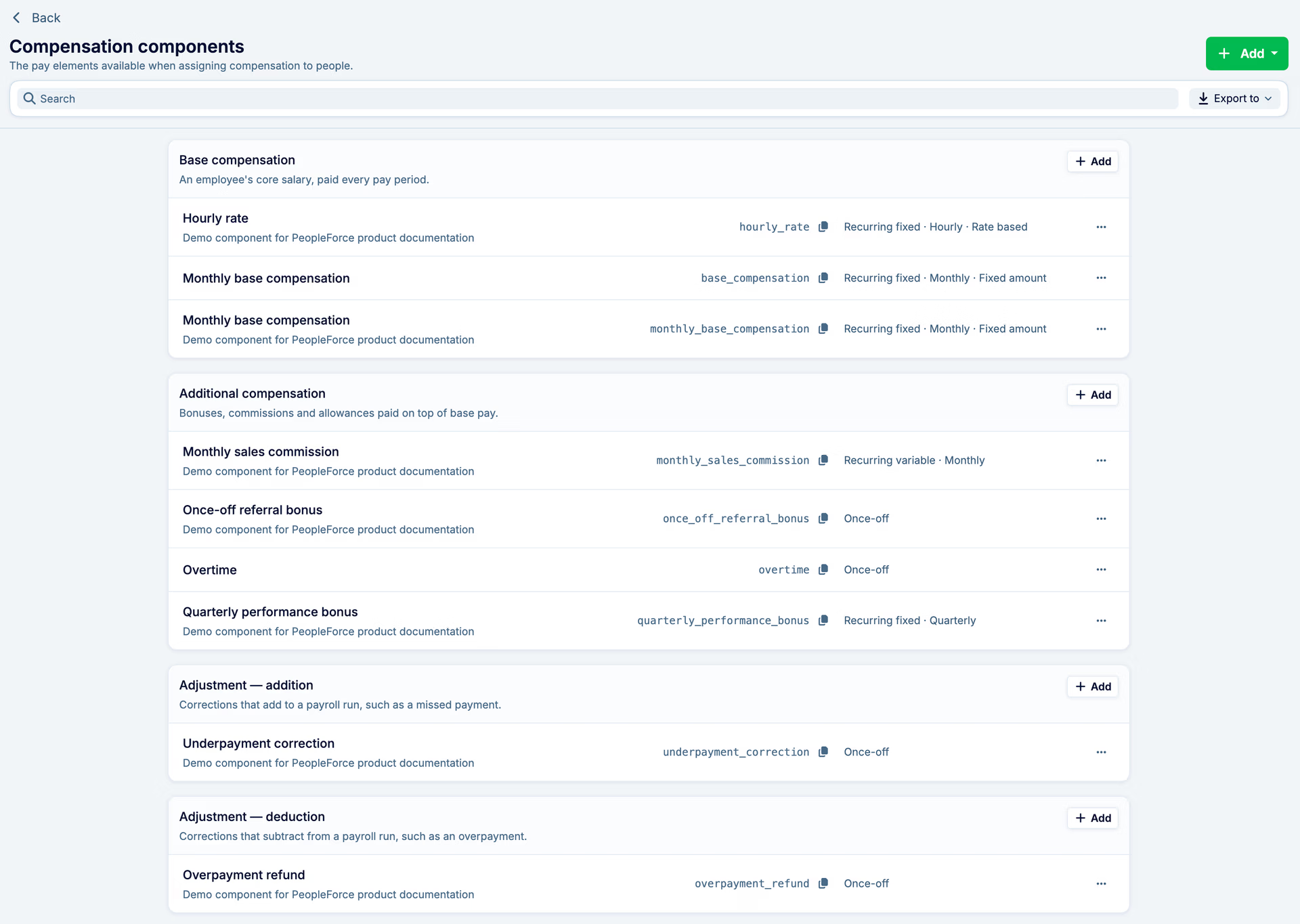
The directory lives under Settings → Payroll → Compensation components.
The four categories
The directory is divided into four sections. The section you create a component in decides its category, and you can't change the category later.
Category | What belongs in it |
|---|---|
Base compensation | The core compensation of an employee or contractor, paid every pay period |
Additional compensation | Bonuses, commissions and allowances paid on top of base compensation |
Adjustment — addition | Corrections that add to a pay period, such as a missed payment |
Adjustment — deduction | Corrections that subtract from a pay period, such as an overpayment |
An empty section is still shown, with its own add button, so all four categories are always in view.
The three payout types
Payout type | What it means | Where the amount sits |
|---|---|---|
Once-off | A single payment: a signing bonus, one-time support | In the record itself |
Recurring fixed | The same amount every period: a monthly fuel allowance | In the record itself |
Recurring variable | Repeats, but the amount differs each time: commission, a variable bonus | In each period's entry, not in the entitlement itself |
Base compensation is always recurring fixed, so that choice isn't offered there. Adjustments can be once-off or recurring fixed.
Recurring variable compensation is made of two kinds of records, and it helps to keep them apart from the start:
Entitlement | Entry | |
|---|---|---|
What it records | The fact that a person receives this kind of compensation, from which date and how often | The amount earned for one specific period |
Amount | None. The dialog has no amount field | Yes, with a currency |
How many | One for the whole arrangement | One per earning period |
Dialog | New recurring variable compensation | New entry |
Example | "Anna receives a monthly sales commission from 1 March" | "Commission for March: 1,250" |
Limits | Component and frequency are fixed; dates can't be moved beyond entries already made | Must fall within the entitlement's window and the person's employment, not in the future, not overlapping another entry |
Frequencies
For recurring compensation, the frequency is set on the component.
- Base compensation: hourly, daily, weekly, monthly, yearly.
- Additional compensation and adjustments: daily, monthly, quarterly, half-yearly, yearly.
The calculation method
This field sits on a base compensation component. It tells people paid a fixed amount apart from people paid a rate: it says whether the amount in the record is fixed compensation or a rate per unit of time. The field doesn't change the amount stored in the record. It tells PeopleForce how to interpret that amount when compensation is calculated. Which options you get depends on the frequency you chose.
Rate based: the amount is treated as a rate and multiplied by the units worked, so $25/hour × 160h = $4,000. Available for hourly and daily frequency.
Fixed amount: the same amount is taken each period, whatever the number of working days in it. $2,000/month is $2,000 in February and in March alike. Available for weekly, monthly and yearly frequency.
Calendar working days based: an annual amount is allocated by the actual working days of each period, so the months come out different. $60,000/year gives roughly $4,600 in February and $5,300 in March. Available for yearly frequency, alongside fixed amount.
These examples only show how the method reads the amount. Setting up a component doesn't calculate or pay anything by itself.
The code
Every component has a short, unique Code. It's used in exports, in history imports and in the API. That makes it a stable identifier for a kind of compensation, even if someone later renames the component. If you leave the field empty, PeopleForce generates a code for you. The generator skips letters outside the basic Latin alphabet, so for names in other alphabets it's worth entering your own code.
Part 2. Building the directory
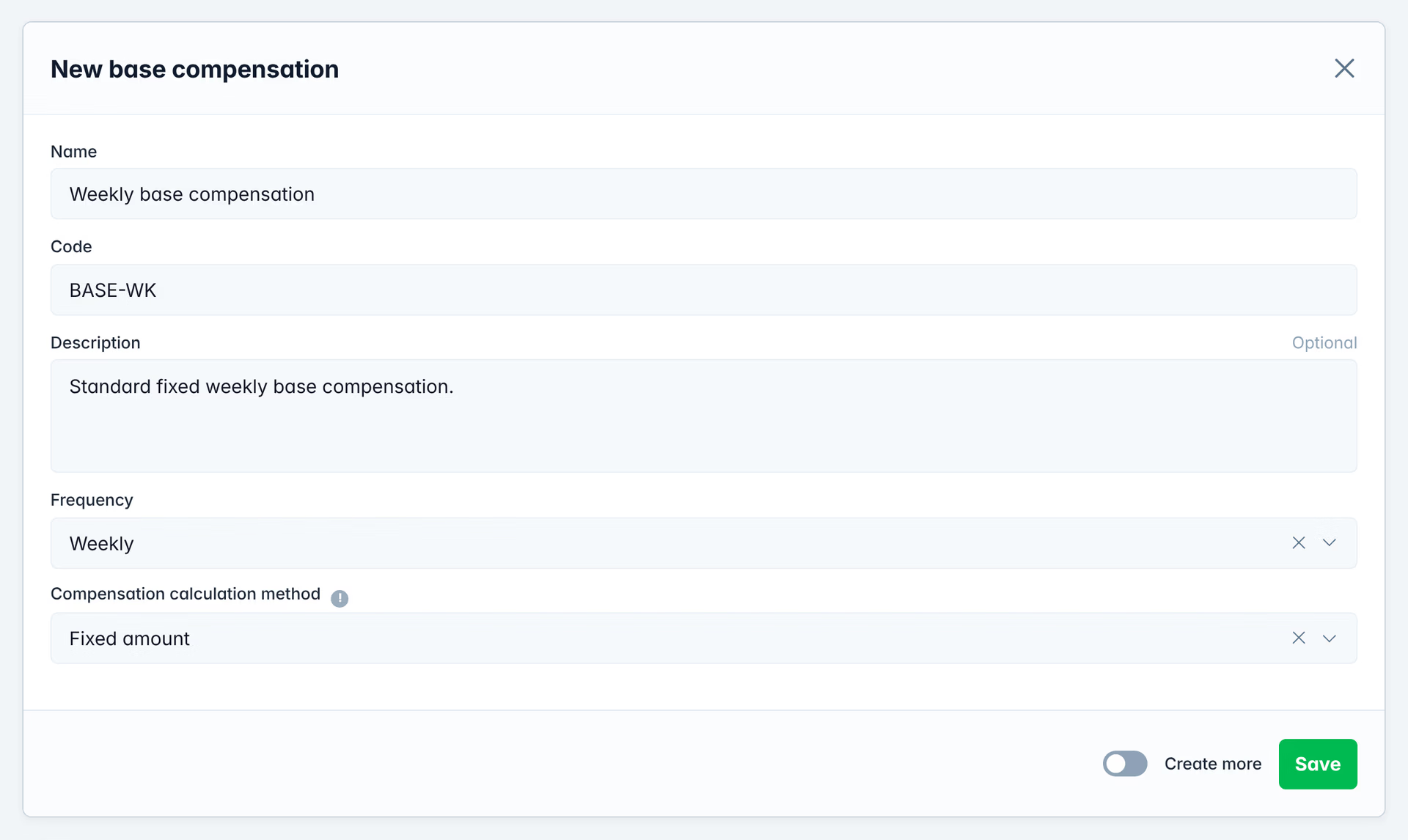
- Open Settings → Payroll → Compensation components.
- Click Add in the section you need. The section sets the category.
- Enter the Name. This is what colleagues will see in selection lists.
- Code is optional: leave it empty and PeopleForce generates one, or enter your own if you reconcile exports with finance.
- Description is optional. It's shown under the name in the list.
- Fill in the remaining fields for the section. Additional compensation and adjustments need the Payout type, plus the Frequency if they're recurring. Base compensation needs the Frequency and the Compensation calculation method.
- Save.
What can be changed later. You can always change the name, the code and the description. The payout type, the frequency and the calculation method are fixed when a component is created, and that's deliberate: compensation already assigned to people depends on them, so they can't be changed retroactively. The component shows them as a read-only summary, with the reason explained. If you need a different variant, you create a new component.
Deleting a component hides it from every selection list but cancels nothing already assigned. Active compensation stays in people's records until its term ends.
Search at the top of the page looks at both the name and the code, and you can export the directory to CSV or Excel. Step-by-step details: Set up and manage compensation components.
Part 3. Assigning compensation to a person
All of this happens in the employee's record, on its compensation tabs.
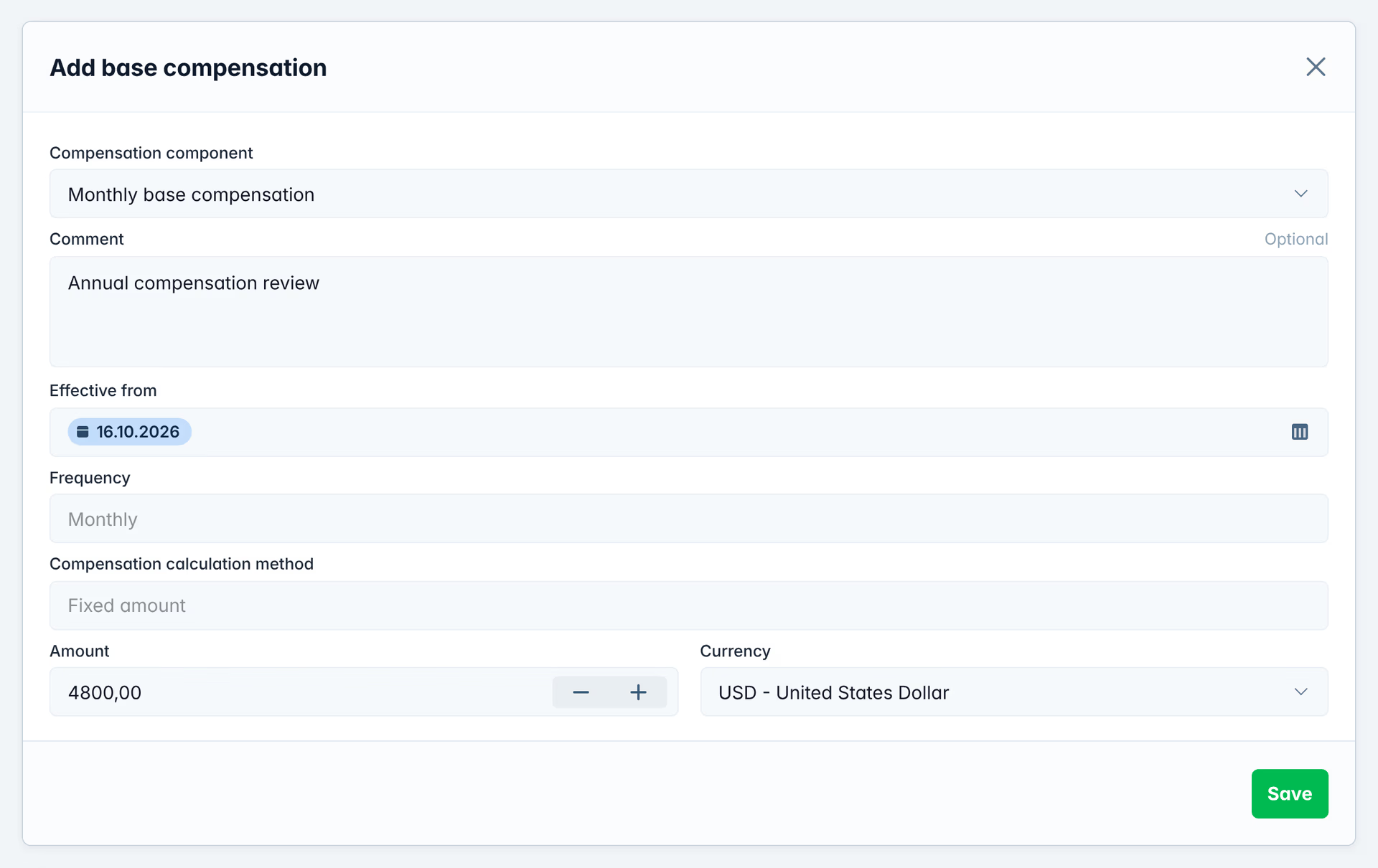
Base compensation
Open the Base compensation tab, add a record and choose a base compensation component. The frequency and the calculation method come from the component and are shown as read-only fields. Then fill in Effective from, the Amount, the Currency and, if you need one, a Comment.
Once-off and recurring fixed additional compensation
The Additional compensation tab holds three lists, one per payout type: Once-off payout type, Recurring fixed payout type and Recurring variable payout type. Each has its own add button. You choose the component, the payout type and frequency fill in automatically, and then you set the dates, the amount and the currency. Only recurring compensation asks for an end date. If you leave it empty, the compensation continues indefinitely.
The list is filtered twice: by the section's payout type and by category. A component set up for base compensation or for adjustments won't appear in this list, whatever its payout type.
Recurring variable: the entitlement first, the amounts after
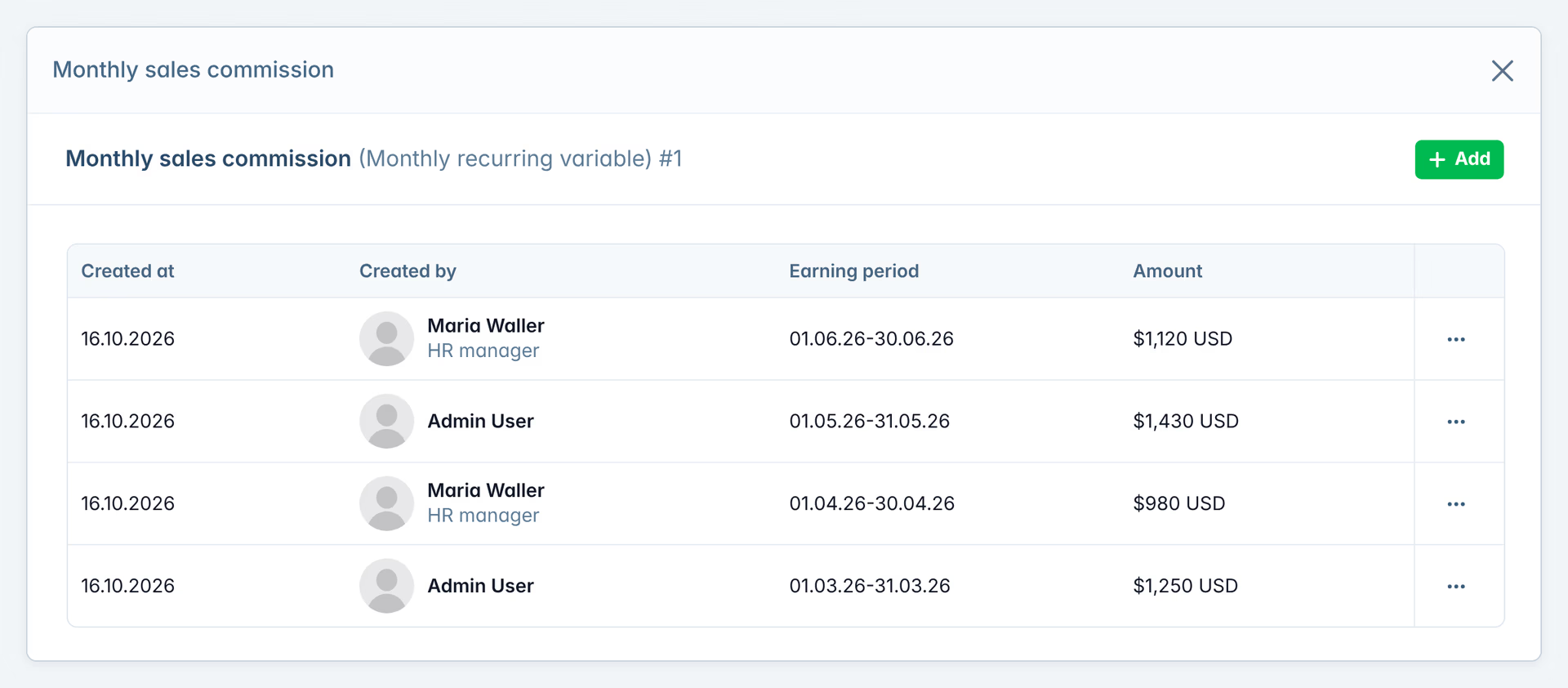
This is where confusion arises most often. First you create an entitlement ("this person receives commission every month, starting from this date"). It has no amount: it records the arrangement, not the size of each payment. Then, for each earning period, you add an entry with the amount earned. The table in Part 1 sums up the difference.
Step-by-step details: Set up and manage compensation components.
Adjustments
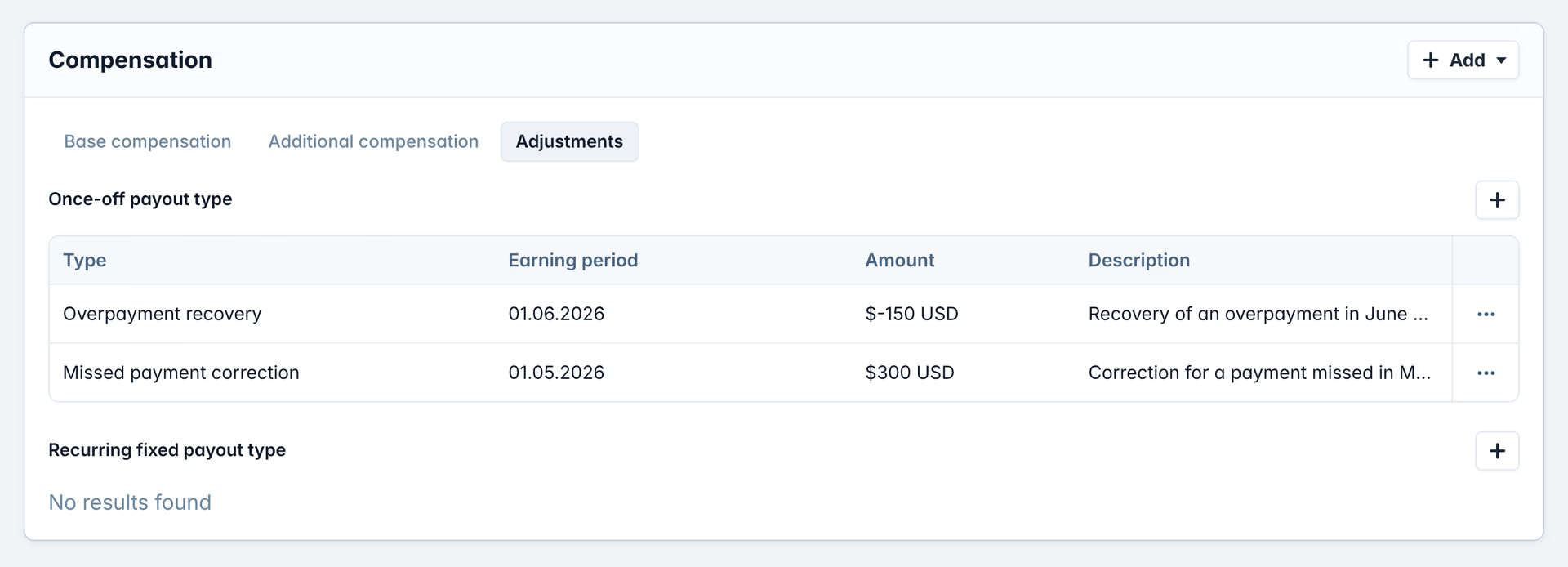
The Adjustments tab holds amounts that aren't regular compensation, such as an underpayment from a past period or the recovery of an overpayment. A deduction is shown as a negative amount.
A once-off adjustment asks for an earning period. A recurring one asks for the start and end dates it applies between.
What is set once you save
Once a record is saved, you can't swap its component, in additional compensation or in an adjustment. If you picked the wrong one, delete the record and create it again. On a recurring variable entitlement, the component and the frequency are fixed in the same way, and its dates can't be moved beyond the entries already made.
Part 4. What sits around it
Requests to change someone's compensation
Anyone whose role has the Compensation permission with edit rights can change a person's compensation directly in their record. Most managers don't have that permission, so the product gives them a second route: a People data change request.
The administrator prepares this form in advance in the settings. They decide which compensation fields appear on it, which are mandatory, and which roles can use it. The manager opens the Requests section and chooses the form and the person, or starts from the person's record through Actions → Request information change. They then fill in the new amount and the date it takes effect, and submit.
A few details that matter:
- Until the request is approved, nothing changes in the person's record. The same form defines the approval chain. If approval is switched off on it, the change applies as soon as the request is submitted.
- Approval follows the person the request is about, not the person who submitted it.
- An approved change adds a new row to the compensation history rather than overwriting the previous one. A mistake is therefore corrected with a new request, not by editing the old one.
- You can't submit such a request about yourself. Your own name is excluded from the list.
- The Effective from date matters more than the approval date. It decides which pay period the change lands in, and it can be in the future.
- Recurring variable additional compensation and adjustments can't be requested through the form yet. Those components aren't shown in the form's list. Until then, create them directly in the person's record. Support in forms (and in the API) is planned for Q4 2026.
- People data change requests require the Professional plan and the Core HR module.
What changes under Compensation components: in the compensation block, the separate payout type and frequency fields are replaced by a field for choosing a component. The payout type, frequency and calculation method come from it and can't be edited. The requester sees fewer fields, and the approver sees clearly named compensation.
Who sees the amounts
Access to compensation is controlled by the Compensation permission under Settings → Roles & permissions: some roles can view amounts, others can also edit them. Amounts in the base and additional compensation tables can also be masked, so they show as asterisks until someone clicks the eye icon.
Importing history
You can upload compensation history from a file. The kind of compensation goes in the Compensation component code column. If a code isn't in the directory, that row is rejected with an error. The import doesn't create components, so a typo in the file won't add a stray record to the directory.
Part 5. Upgrading to compensation components
Note (October 2026): this part is for accounts that still use the earlier setting: the Compensation page with its Compensation types and Pay schedules tabs, where the payout type and frequency are entered on each record separately. PeopleForce is upgrading these accounts; there's no separate toggle in the settings, and no downtime is expected. If you'd like to upgrade earlier, ask your Customer Success manager, who will arrange it with the PeopleForce product team. For the full list of changes and how to prepare, see Compensation settings upgrade: what changes and how to prepare.
If you only keep base compensation
This is the most common case: people's records hold base compensation, and there are no bonuses or allowances in the system. For an account like this, the upgrade is almost invisible.
PeopleForce creates base components for the frequencies you actually use. An account with monthly base compensation gets a single Monthly base compensation component. Every existing record is attached to it, including the history of raises.
What changes on screen: the base compensation dialog gains a field for choosing a component. At first it holds a single option, and the frequency and calculation method come from it. You don't have to enter anything again. The one exception: if base compensation is kept in a custom field rather than in the base compensation block, those amounts and currencies are not transferred automatically. In that case, contact your Customer Success manager before the upgrade.
Some things only compensation components have: the Adjustments tab; the four categories, whose filtering keeps a base compensation component out of the list of bonuses; the payout type and frequency carried by the component itself rather than typed into every record; and a unique code on each component.
If you already keep bonuses and allowances
During the upgrade, PeopleForce checks which combinations of "compensation type + payout type + frequency" you actually use, and creates a separate component for each one. A compensation type that was once-off for some people and monthly for others becomes two components. That's expected, and it matches how the type was actually used.
All existing records are re-attached to the new components, and compensation history is kept in full. Archived compensation types are carried over too, with their status kept. All forms that contain compensation blocks are upgraded along with the data. PeopleForce also automatically creates a ready-made Overtime component (Additional compensation category, Once-off payout type). Requests that were already submitted and awaiting approval at the time of the upgrade are rewritten to the new components, so they don't need to be submitted again.
One piece of advice for the first day: these component names are built mechanically, for example "Monthly Bonus" or "Once-off Bonus". Go into the directory and rename them to match your own terminology. You can change the name, the code and the description at any time.
What will look different
A few fields from the earlier setting have no counterpart in the new one:
The Pay schedule field on a base compensation record. It was removed because it took no part in calculations: it was stored and displayed, but it didn't set the payment date. In most cases it was used to record how often people are paid. Pay frequency is now set up in Payroll cycles in the Payroll module. If you use the field for your own records, copy its values before the upgrade.
The Overtime checkbox on a base compensation record. The checkbox is replaced by a ready-made Overtime component, which PeopleForce creates automatically during the upgrade. Overtime is then recorded as compensation, with an amount and a period, and it shows up in compensation history. To track overtime hours and special hours themselves, use attendance policies in the Time module.
Two columns in the Base compensation history report, Pay schedule and Overtime, are gone because the fields no longer exist. On screen, the report looks the same; only the exported file differs.
For accounts with their own integration:
- Reading the list: use /compensation_components instead of /compensation_types.
- Creating additional compensation: use /employees/{employee_id}/additional_compensations with compensation_component_id instead of compensation_type_id. Requests with the old field will be rejected.
- API version: API v1 doesn't support components, so please move to v3.
- IDs will change: each old compensation type is converted into one or more components with new IDs. For example, "Bonus" may become "Once-off Bonus" and "Monthly Bonus". Existing employee records are moved over automatically, but any IDs saved in your integration might need to be re-mapped.
- Not yet in the API: recurring variable additional compensation and adjustments. They're planned for Q4 2026.
Please forward this section to whoever is responsible for the integration on your side. If you need help with the integration, contact your Customer Success manager or PeopleForce support.
If you'd like to see how your directory will look after the upgrade, write to your Customer Success manager. We'll go through it together, at whatever pace suits you.


Recent updates
HR for every employee: meet the redesigned PeopleForce mobile app
Not every employee works behind a desk. The redesigned PeopleForce mobile app brings everyday HR to the device frontline employees already carry, with sign-in by mobile number and no corporate mailbox required.
How to calculate overtime automatically: night, weekend and holiday rates in one system
Set up overtime types once and let the system classify night, weekend and holiday hours, apply the right rate and send approved data to payroll.
A fresh feel for PeopleForce: UX updates you’ll notice
We’re rolling out a set of UX improvements designed to make PeopleForce feel lighter, calmer, and easier to use every day — for you and your employees.