
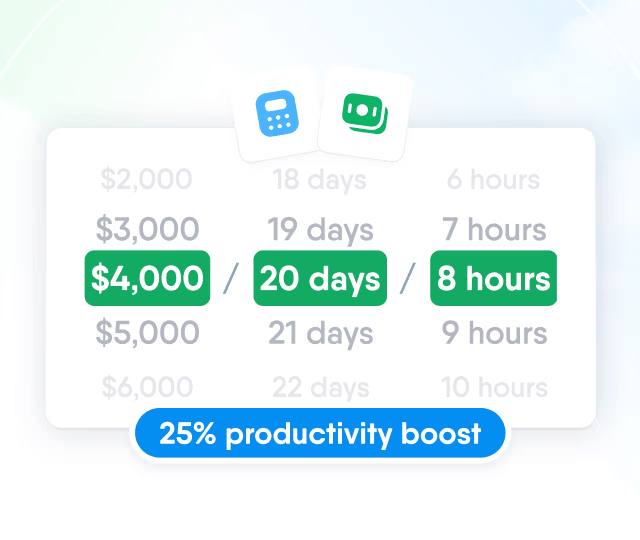
HR efficiency estimator
How does the HR efficiency estimator from PeopleForce work.
Calculate your impact



Employee relations
What employee relations is, what it covers from grievances to investigations and policy, why it matters for retention and legal risk, what good practice looks like and how HR tools support it
Employee relations (ER) is the area of HR that manages the relationship between the employer and its employees, both collectively and one person at a time: workplace conflict, grievances and complaints, disciplinary matters, investigations, policy interpretation, and the everyday work of keeping communication between managers and their teams honest and fair. The term grew out of industrial relations, which dealt mainly with unions and collective bargaining; today employee relations covers every employee, unionized or not, and its goal is a workplace where people are treated consistently, problems surface early and are handled according to a known process rather than through escalation or attrition.
What employee relations covers
- Conflict and grievances. Disputes between colleagues or between an employee and a manager, formal complaints about treatment, pay or working conditions, and the procedure for hearing and resolving them.
- Disciplinary matters. Handling misconduct and underperformance through disciplinary procedures that are documented, proportionate and applied the same way to everyone.
- Investigations. Looking into allegations of harassment, bullying, discrimination or breaches of the code of conduct, including whistleblowing reports, with a fair hearing for all parties.
- Policy and compliance. Writing and interpreting the employee handbook and making sure decisions on leave, flexible working, accommodations and terminations follow labor law and internal rules.
- Collective relations. Where unions or works councils exist, consultation, negotiation and information duties; where they do not, employee representatives, forums and engagement surveys play the same role.
- Manager support. Coaching managers on difficult conversations, performance concerns and how to respond to a complaint, since most employee relations problems begin and end with the direct manager.
Why employee relations matters
Unresolved conflict is the hidden cost behind many turnover figures: people rarely leave over a single incident, they leave because an incident was ignored. Consistent handling of complaints and discipline is also the main defense against legal claims for unfair dismissal or discrimination, which turn on whether the employer followed its own process and treated comparable cases alike. Positive employee relations show up in engagement scores, in the willingness to report problems before they grow and in a feedback culture where managers hear about issues from their teams rather than from HR. Employee relations and employee engagement are related but distinct: engagement measures how people feel about their work, employee relations is the set of practices that determines whether they are treated fairly when something goes wrong.
Good practice in employee relations
Write the process down before you need it: how to raise a grievance, who hears it, in what timeframe, and how to appeal. Keep a record of every case with dates, evidence and the decision, because inconsistency is discovered by comparing files. Separate the roles of investigator and decision maker in serious cases. Act early on small signals, such as a drop in eNPS in one team or a manager whose reports keep asking for transfers, rather than waiting for a formal complaint. Train managers, because the quality of employee relations in a company is roughly the quality of its average manager's one-on-one meetings. Track a few metrics: number and type of cases, time to resolution, outcomes by manager and department, and repeat cases involving the same person, which usually indicate the first resolution did not hold.
Employee relations in PeopleForce
PeopleForce gives HR the early-warning system and the records that employee relations depends on. Pulse surveys and eNPS run on a schedule and break results down by department and manager, so a team where sentiment is falling is visible before anyone files a complaint, and anonymous responses give people a channel to raise concerns they would not raise in person. Structured one-on-one meetings in PeopleForce Perform keep an agenda and notes for every manager-employee conversation, so a performance concern has a history when it becomes a formal matter. Request forms and workflows in Core HR route policy questions, flexible working and leave requests through a defined approval chain, and documents such as warnings, acknowledgements and outcome letters are generated from templates, signed electronically and stored on the employee's profile with restricted access. When a case does end in termination, the termination form captures the type and reason, and the reasons feed the turnover analysis in HR analytics, closing the loop between individual cases and the pattern behind them.


Let us show you what's possible
From Core HR to advanced workforce analytics — see the platform saving 80 hours a month for teams just like yours. Fully tailored to your workflow.