
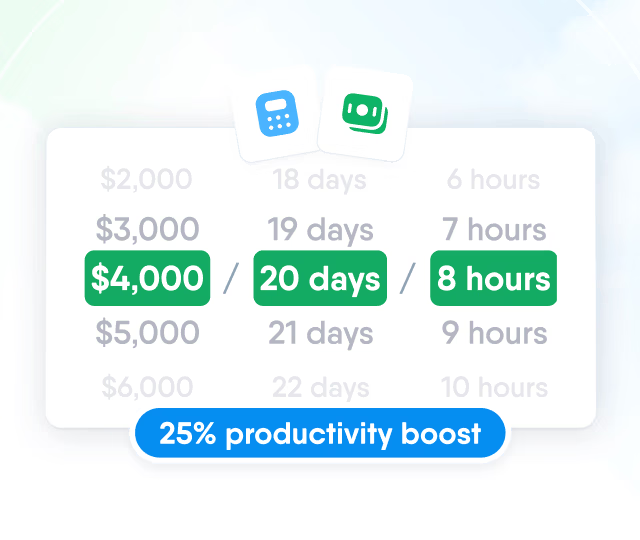
HR efficiency estimator
How does the HR efficiency estimator from PeopleForce work.
Calculate your impact



Employment contract: types, essential terms and how to put one in place

An employment contract is an agreement under which an employee performs work in a defined role under the employer's direction, and the employer pays wages and provides working conditions. It can be permanent, fixed-term or tied to a specific task. In Ukraine it is normally concluded in writing, on paper or electronically; in the UK a contract can exist without a document, but the employer must give a written statement of the main terms.
For a short employment contract definition, see the glossary.
Types of employment contracts
| Type | Ukraine | United Kingdom |
|---|---|---|
| Permanent | Open-ended contract, the default under the Labour Code | Permanent contract, the most common arrangement |
| Fixed-term | Needs a reason; wider grounds allowed under martial law | After 4 years of successive fixed-term contracts the employee usually becomes permanent |
| For a specific task | Ends when the work is complete | Covered by fixed-term rules (ends on a specified event) |
| Variable hours | Contract with non-fixed working hours (Art. 21-1) | Zero-hours contract: no guaranteed minimum hours |
In Ukraine, a fixed-term contract without a reason is risky: if the work is ongoing, a court can treat the contract as permanent. Under martial law, Law No. 2136-IX allows fixed-term contracts for the duration of martial law or to cover an absent employee. In the UK, fixed-term employees must not be treated less favourably than comparable permanent staff.
Essential terms
Without these terms a contract is hard to rely on in a dispute:
The parties: the employer's legal name and the employee's name.
Place of work, or the arrangement: office, hybrid, remote.
Job title and duties, or a reference to the job description.
Start date, and for a fixed-term contract the end date or event.
Pay: amount, structure and pay dates.
Working hours: days, hours, full or part time.
Holiday entitlement and notice periods.
Ukraine. A probation period can last up to three months, or one month for manual workers; in some cases, with trade union agreement, up to six months (Art. 27 of the Labour Code).
United Kingdom. Employers must give employees and workers a written statement of employment particulars on or before their first day. There is no statutory maximum for probation; one to six months is common practice. From 1 January 2027, under the Employment Rights Act 2025, employees can claim unfair dismissal after six months' service, so probation periods longer than six months lose much of their purpose. Zero-hours workers will also gain a right to be offered guaranteed hours during 2027.
Terms that do not hold
In Ukraine, terms that leave the employee worse off than the Labour Code are void, such as annual leave under 24 calendar days. In the UK, a contract cannot take away statutory rights such as the minimum 5.6 weeks of paid holiday or the National Minimum Wage, even if the employee signed it.
How to put an employment contract in place
Collect documents. In Ukraine: passport or ID card, tax number and military registration document. In the UK: proof of the right to work, checked before employment starts.
Prepare the contract from the company template with the terms of this role.
Sign it on paper or electronically. In Ukraine an electronic contract needs a qualified electronic signature from both parties.
Complete the formalities. In Ukraine: an employment order and a notice to the tax service before the person starts work. In the UK: payroll registration with HMRC and, where required, workplace pension enrolment.
Introduce the policies: internal rules, job description, health and safety.
Employment contract or contractor agreement
A contractor agreement covers a specific result: build a website, run a training session. The contractor organises the work, is not bound by internal rules and gets no paid leave from the client. If the person works fixed hours, performs an ongoing role and reports to a manager, it is employment in substance, whatever the paperwork says. Ukrainian inspectors and UK tribunals and HMRC all look at these signs. More on working with independent contractors in the glossary.
Employment contracts in PeopleForce
In Core HR, the contract is generated from a document template that pulls data from the employee profile: name, job title, start date, pay. It can be signed online with e-signature, with no printing or scanning, and the signed document is stored in the employee profile alongside the history of roles and changes to terms.
Hiring can be set up as an automated workflow: the contract is generated at the right step, and the people responsible get tasks for the remaining formalities and policy acknowledgements.
Frequently asked questions
What types of employment contracts are there?
Permanent, fixed-term and task-based contracts, plus arrangements with variable hours: contracts with non-fixed working time in Ukraine and zero-hours contracts in the UK.
Does an employment contract have to be in writing?
In Ukraine it is normally concluded in writing, on paper or with a qualified electronic signature. In the UK a contract can be verbal, but the employer must give a written statement of the main terms by the first day of work.
How long can probation last?
In Ukraine, up to three months (one month for manual workers), and in some cases up to six. In the UK there is no legal maximum; one to six months is typical.
Can an employment contract be signed remotely?
Yes. Both parties sign electronically; in Ukraine this requires a qualified electronic signature.
What happens if someone works without a contract?
In Ukraine, admitting someone to work without a contract and a tax notice counts as undeclared employment and leads to fines. In the UK, the person still has employment rights, and failing to give a written statement can lead to an extra award at an employment tribunal.
The PeopleForce editorial team creates and refines content on people management, recruiting, team development and HR technology. Every article goes through an editorial review for accuracy, relevance and clarity. We rely on verified sources, industry research, hands-on experience and PeopleForce’s own analytics, including anonymized data, to give HR professionals, managers and business owners useful, reliable information.


One login. Every HR tool you'll need.
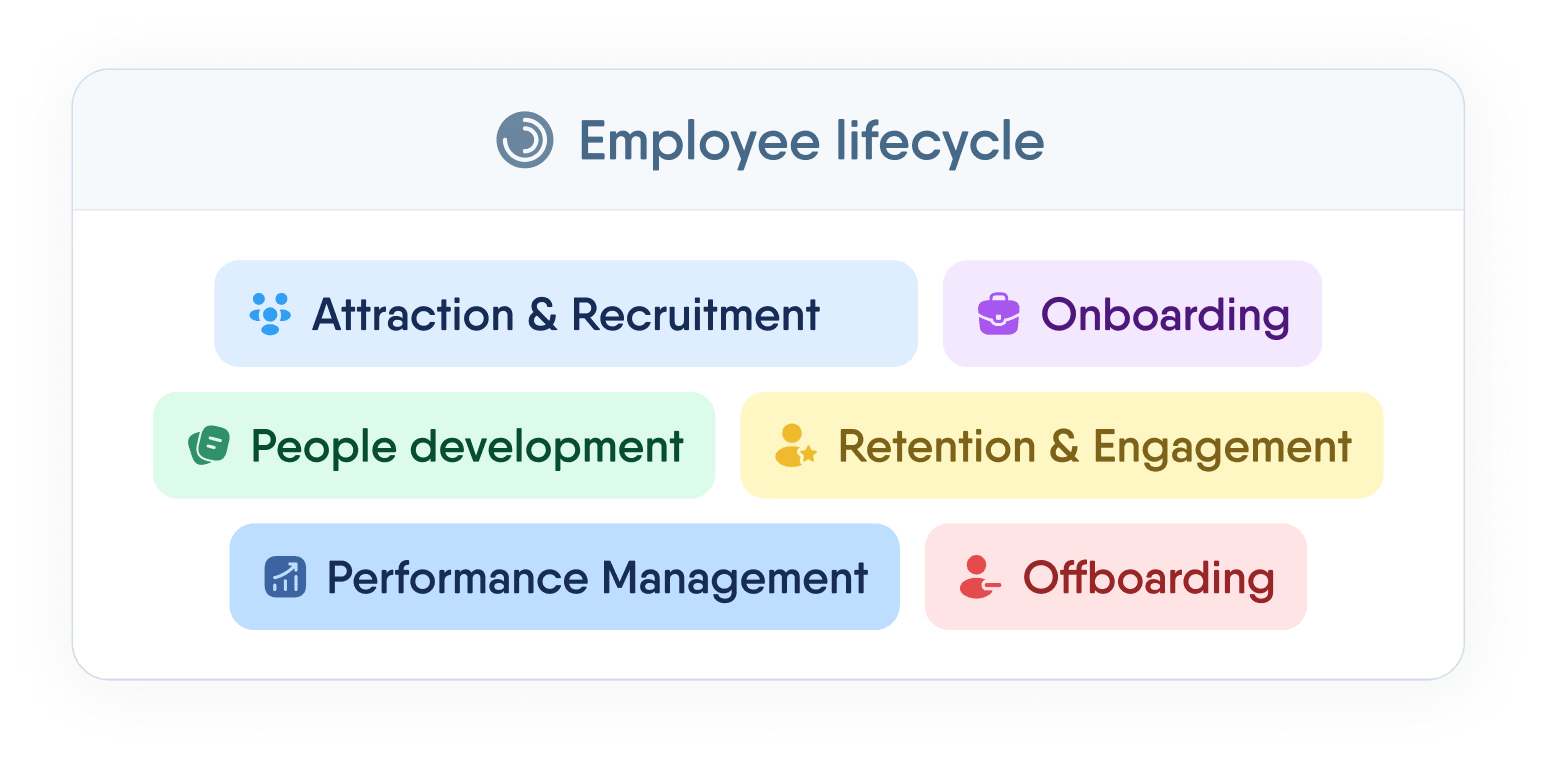
Manage the full employee lifecycle — from first interview to final offboarding — without switching tabs or losing data.
Recent articles
 2026-11-26
New starter checklist: documents and checks for every new hire in the UK
What a UK employer must do before and after a new hire's first day: right to work check, written statement, HMRC registration, pension and induction.
2026-11-24Irregular working hours: who qualifies, how to set them up and how to compensate
What irregular working hours are, which roles they apply to, how to set them up and compensate them, and how they differ from overtime.
2026-11-20Connecting Claude or ChatGPT to your HR data in PeopleForce
How HR teams and managers connect Claude or ChatGPT to PeopleForce over MCP, five tasks it handles today, and what the assistant cannot see.