
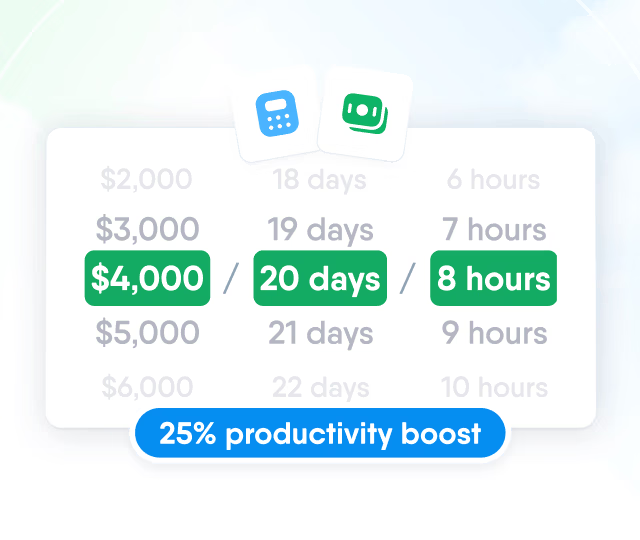
HR efficiency estimator
How does the HR efficiency estimator from PeopleForce work.
Calculate your impact



Irregular working hours: who qualifies, how to set them up and how to compensate

Irregular working hours (in Ukraine, ненормований робочий день) are a special regime in which an employee works beyond normal hours when needed and is compensated with extra leave rather than overtime pay: up to 7 calendar days a year under Article 8 of the Law on Leave. The regime applies only to roles where workload is hard to fit into fixed hours, such as managers, staff whose work involves travel, and people who organise their own time. The UK has a close equivalent in Working Time Regulations: unmeasured working time.
For a short definition of overtime, see the glossary.
Who qualifies for irregular working hours
In Ukraine, the list of roles with irregular working hours is set in the collective agreement, or by an employer order if there is none. Ministry of Labour recommendations name three groups:
managers and their deputies, including heads of departments;
specialists whose working time cannot be precisely recorded, for example roles with frequent travel;
employees who split their working day into parts at their own discretion.
The regime is attached to the role. If an employee moves to a role that is not on the list, the regime and the extra leave end.
In the UK, Regulation 20 of the Working Time Regulations 1998 covers workers whose working time is not measured or predetermined, or can be set by the worker: typically managing executives and others with autonomous decision-making. They are exempt from the 48-hour average weekly limit, rest break rules and night work limits.
How to set up irregular working hours
Approve the list of roles in the collective agreement or by order.
Set the extra leave for each role, up to 7 calendar days.
Reflect the regime in the employment contract or acknowledge the order with the employee.
Keep recording working time as for everyone else. The regime does not cancel the timesheet.
In the UK, employers still need to keep records showing that working-time limits are met for everyone else, and many record hours for executives too. More on how hours are recorded in our timesheet glossary entry, and on contract terms in our article on employment contracts.
Irregular working hours vs overtime
| Irregular working hours (Ukraine) | Overtime (Ukraine) | Unmeasured working time (UK) | |
|---|---|---|---|
| What it is | A special regime for listed roles | Work beyond normal hours at the employer's request | Roles whose working time is not measured or set in advance |
| How it is set up | Role list in the collective agreement | An order to work overtime | Follows from the nature of the role |
| Compensation | Up to 7 calendar days of extra leave | Double pay (Art. 106 of the Labour Code) | No statutory overtime pay; contract terms apply |
| Limits | Only occasional work beyond normal hours | 4 hours over two days, 120 hours a year; not applied under martial law (Law No. 2136-IX) | Exempt from the 48-hour weekly limit |
Irregular working hours do not allow an employer to keep someone beyond normal hours every day. They cover occasional situations: closing a report, a client meeting, an urgent incident. If extra work becomes regular, in Ukraine it is overtime and must be paid at double rate. For how to track and pay it, see our guide to overtime rules and automation.
Weekends and public holidays
In Ukraine, the regime covers working days only. Work on a day off or a public holiday is arranged separately and compensated with double pay or another day off. In the UK, there is no statutory premium for weekend work; it depends on the contract, as long as pay stays at or above the National Minimum Wage.
Extra leave: how it accrues
In Ukraine, extra leave for irregular working hours is granted every year, together with or separately from the main annual leave. It depends on how long the employee actually worked under the regime: for part of a year, it is calculated proportionally.
Example: the collective agreement gives a sales manager 7 days of extra leave. The employee held the role for six months and then moved to a role without irregular hours. For that period they are entitled to a proportional share: 3.5 days. It is worth fixing the rounding rule in the collective agreement.
Irregular working hours in PeopleForce
In Time, working hours are recorded for every employee, including those on irregular hours: the timesheet shows how many hours someone worked beyond the norm and how often. If extra work becomes regular, it shows up in the data. Overtime is submitted as a request that the manager approves.
Extra leave for irregular working hours is set up as a separate leave type in leave tracking in Core HR, with its own entitlement, accrual rules and a balance the employee sees in their profile.
Frequently asked questions
Who is entitled to irregular working hours in Ukraine?
Employees in roles listed in the collective agreement: usually managers, staff whose work involves travel and people who organise their own working time.
Is extra work under irregular hours paid?
Not as overtime: it is compensated with up to 7 calendar days of extra leave. If extra work becomes regular or falls on days off, it is paid under the rules for overtime and weekend work.
Is there an equivalent in the UK?
Yes, unmeasured working time under Regulation 20 of the Working Time Regulations. It covers roles with autonomous control over their hours, which are exempt from the 48-hour weekly limit.
How are irregular working hours different from flexible working?
Irregular hours allow occasional work beyond normal hours. Flexible working hours only change when the working day starts and ends; the total stays within the norm.
The PeopleForce editorial team creates and refines content on people management, recruiting, team development and HR technology. Every article goes through an editorial review for accuracy, relevance and clarity. We rely on verified sources, industry research, hands-on experience and PeopleForce’s own analytics, including anonymized data, to give HR professionals, managers and business owners useful, reliable information.


One login. Every HR tool you'll need.
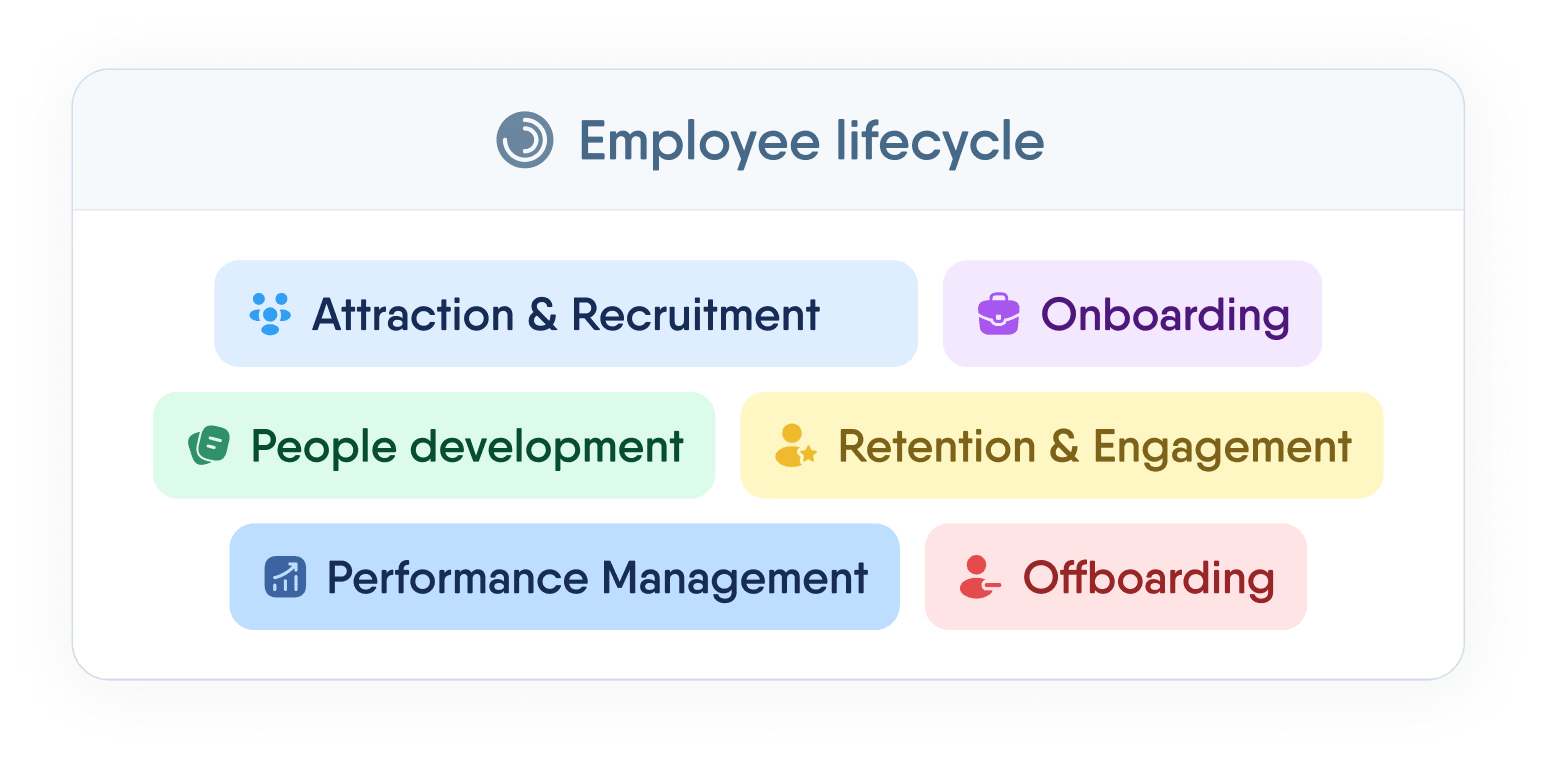
Manage the full employee lifecycle — from first interview to final offboarding — without switching tabs or losing data.
Recent articles
 2026-11-26
New starter checklist: documents and checks for every new hire in the UK
What a UK employer must do before and after a new hire's first day: right to work check, written statement, HMRC registration, pension and induction.
2026-11-20Connecting Claude or ChatGPT to your HR data in PeopleForce
How HR teams and managers connect Claude or ChatGPT to PeopleForce over MCP, five tasks it handles today, and what the assistant cannot see.
2026-11-19Employment contract: types, essential terms and how to put one in place
Types of employment contracts, essential terms, probation, how to sign a contract and how it differs from a contractor agreement, in Ukraine and the UK.