
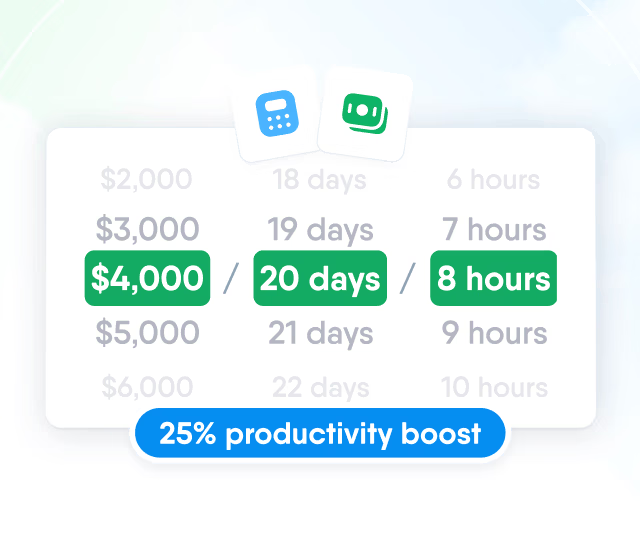
HR efficiency estimator
How does the HR efficiency estimator from PeopleForce work.
Calculate your impact



High-potential employee (HiPo)
Capacity for a bigger role, not a reward for the current one. How HiPos are identified, developed, and lost.
A high-potential employee, usually shortened to HiPo, is someone judged capable of performing successfully at a significantly higher or broader level of responsibility than their current role. Potential is a forecast, not a reward for past work, which is why strong current performance on its own does not make someone a HiPo.
Potential is not the same as performance
The most common mistake in talent reviews is treating a top performance review score as evidence of potential. A specialist who is excellent and wants to stay excellent in the same craft is a high performer, and losing them would hurt, but that does not make them a candidate for a broader role. Most frameworks separate three things: ability, meaning cognitive and technical capability measured against the core competencies of the next level rather than the current one; aspiration, meaning whether the person actually wants more responsibility; and engagement, meaning whether they are likely to stay. All three have to be present. Labelling someone a HiPo who has no wish to manage people is how organisations build a pipeline that refuses to move.
How HiPos are identified
Identification should be a structured process with more than one voice in the room:
- A performance record across several cycles, not one strong quarter.
- An assessment against the behaviours the next level demands, using competency mapping instead of general impressions.
- Input from more than one manager, so the rating survives a change of line manager.
- Evidence from continuous feedback gathered through the year rather than recalled in the meeting itself.
- A calibration discussion where managers defend their nominations against a shared standard.
- An explicit conversation with the person about what they want next.
The nine-box grid and what it is good for
Most talent reviews plot people on a nine-box grid, with performance on one axis and potential on the other. Its real value is not the placement itself but the conversation it forces among managers who have to justify where they put someone. PeopleForce supports nine-box ratings inside performance reviews in PeoplePerform, so the grid is built from actual review data rather than a spreadsheet assembled the night before the talent meeting, and the same place holds goals, review cycles and feedback history for everyone on it. HR analytics then shows whether the people you rated high potential two years ago are still there and still rated that way, which is the only honest test of whether the process works.
Developing and keeping HiPos
A HiPo designation with no development plan behind it is a retention risk rather than a benefit, because the qualities that make someone high potential also make them easy to hire away. Development works best through stretch assignments with real consequences, mentoring from someone two levels up, exposure to decisions outside their own function, and deliberate upskilling against the competencies of the target role rather than generic training. Career path clarity matters as much as the programme itself: a high-potential employee who cannot see the next step will find one somewhere else.
Should you tell people they are a HiPo
Practice is split and both options carry a cost. Telling people raises expectations the organisation then has to meet, and creates visible disappointment among those not named. Not telling them forfeits the retention benefit, since someone unaware of the investment being made in them weighs an external offer without it. A workable middle ground is to talk concretely with each individual about development and readiness for specific future roles, without publishing a list or using the label at all. Whichever route you take, treat the status as temporary and review it every cycle. A meaningful share of people rated high potential in one year no longer hold the rating two years later, and treating the list as permanent is how professional development budget ends up on the wrong people.


Let us show you what's possible
From Core HR to advanced workforce analytics — see the platform saving 80 hours a month for teams just like yours. Fully tailored to your workflow.