
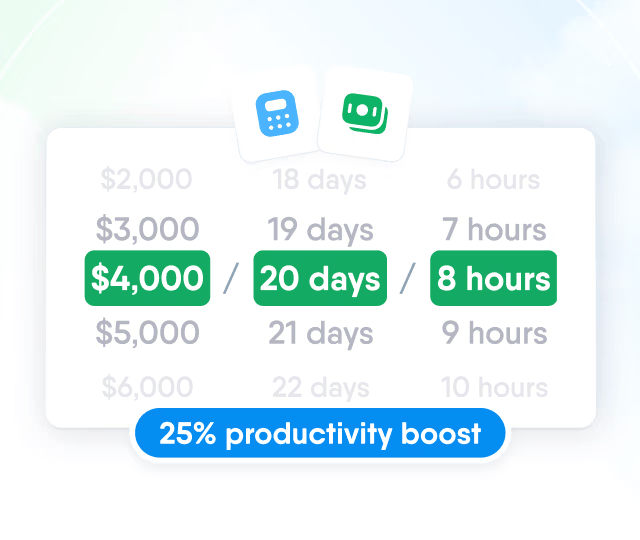
HR efficiency estimator
How does the HR efficiency estimator from PeopleForce work.
Calculate your impact



HR automation
Using software to run repetitive HR tasks by rule instead of by hand, from onboarding checklists to document signatures.
HR automation is the use of software to carry out repetitive people operations tasks without manual involvement from the HR team. Instead of a specialist remembering to send a probation reminder, prepare an employment certificate or chase a signature, a predefined rule does it at the right moment. Automation does not replace HR judgement: it removes the mechanical part of HR processes so that decisions, conversations and analysis get the time they deserve.
Which processes get automated first
The best candidates are high-volume, rule-based and low-risk. In most companies the list looks like this:
- Hiring. Candidate status changes, interview invitations, rejection letters and reminders for the hiring process.
- Onboarding and offboarding. Task checklists for the manager, IT and the new hire, generated at the moment the start date is confirmed. The same logic works in reverse during offboarding.
- Documents. Contracts, annexes and certificates built from a template with employee data pulled from the employee database, then routed for signature.
- Time off. Approval chains, balance recalculation and notifications to the team, which is where time off tracking stops being a spreadsheet exercise.
- Performance and development. Review cycles that open on schedule and feedback requests that go out without anyone assembling a list of participants.
How an automation rule is built
Every automated HR workflow is made of three parts. A trigger decides when the rule fires: a change to an employee record, an event such as a hire or a termination, a fixed date, a recurring schedule, or a manual launch by an HR manager. A condition narrows the audience, for example only employees in one location, department or employment type. An action is what actually happens: an email, an assigned task, a form to fill in, a generated document, a signature request, a calendar invite, a training course, a feedback request, or a webhook that passes data to another system.
Actions can also be scheduled relative to the trigger, which is what makes automation useful for anything with a timeline. A rule can send a document three days before the start date, open a review on the ninetieth day of the probationary period, or remind a manager a week before a contract expires.
What HR teams gain
The obvious benefit is time, but the durable ones are about quality. Automated processes run the same way for every employee, which removes the variability that makes employee experience depend on who happened to handle the case. Data stays in one place instead of being retyped between a spreadsheet, an email thread and a payroll file, so HR analytics finally has a clean source. And because each step is logged, compliance questions have an answer that does not depend on anyone's memory.
How to roll it out without breaking things
Start by mapping the process as it actually runs today, including the informal steps people do out of habit. Automate the most repetitive path first and deliberately leave exceptions manual: a rule that tries to cover every edge case becomes harder to maintain than the process it replaced. Assign an owner for each workflow, review it once a quarter, and check what employees receive from the outside, because automation that floods inboxes with notifications is quickly ignored.
HR automation in PeopleForce
In PeopleForce workflows you build these rules visually: pick a trigger (an attribute change, an event, a date, a recurring schedule or a manual start), define who it applies to, and chain actions such as tasks, emails, forms, generated documents, courses and feedback requests, each scheduled before, on or after the trigger date. Documents move straight into electronic signature, employee requests arrive through structured request forms instead of chat messages, and every completed step stays on the employee record.


Let us show you what's possible
From Core HR to advanced workforce analytics — see the platform saving 80 hours a month for teams just like yours. Fully tailored to your workflow.