
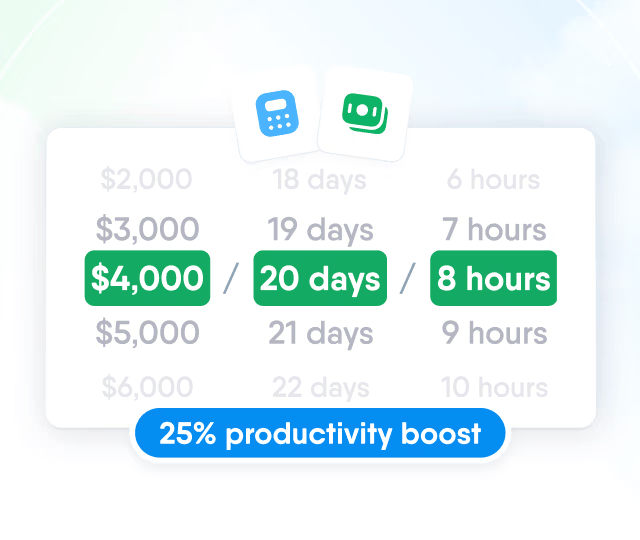
HR efficiency estimator
How does the HR efficiency estimator from PeopleForce work.
Calculate your impact



Skills matrix
What a skills matrix is, what it contains, how teams use it for risk, staffing, training, hiring and succession, how to build and keep one current, and how competency assessments in HR software replace the spreadsheet
A skills matrix (also called a competency matrix or skills inventory) is a table that maps the people in a team or company against the skills the work requires and shows, for each pair, the level the person has reached and often the level the role needs. Rows are employees, columns are skills, and each cell holds a rating on a simple scale, for example 0 for none, 1 for basic, 2 for independent, 3 for expert and able to teach. Read across, the matrix shows what one person can do; read down, it shows how many people can do one thing. That second view is what makes it useful: it exposes single points of failure, skills nobody has yet, and where training money will change something.
What a skills matrix contains
- Skills and competencies. Technical skills (a programming language, a machine, a piece of software), functional skills (forecasting, contract negotiation), certifications and licenses, and behavioral competencies such as stakeholder management. Most teams keep it to 10 to 25 items that actually differentiate performance.
- Proficiency scale. A short scale with written definitions for each level, so that a 2 from one manager means the same as a 2 from another. Four or five levels is usually enough.
- Required level per role. The target level for each skill in each job description or job level, which turns the matrix from a description into a gap analysis.
- Interest or willingness. An optional flag showing whether the person wants to develop the skill, which separates development plans people will follow from those they will not.
- Evidence and date. Who assessed the level, on what basis and when, because ratings age quickly.
What a skills matrix is used for
Risk and coverage. A column with a single 3 and a row of zeros is a person the company cannot afford to lose, and the matrix shows it before the resignation does. Resource planning. Managers staff projects from the matrix instead of from memory of who did something similar last year. Training and development. The gap between current and required levels becomes the content of individual development plans and the priority list for the L&D budget; it also tells you who can mentor whom. Hiring. A gap that cannot be closed internally in time becomes a requisition with a precise skills list. Career paths and pay. When levels are tied to job grades, the matrix shows an employee what separates them from the next level, and it gives succession planning an evidence base beyond a manager's opinion. Compliance. In regulated or safety-critical work, the matrix doubles as the record that only qualified people are assigned to certain tasks.
How to build and maintain one
Start from the work, not from a generic competency library: list the skills that the team's next twelve months of goals actually require. Define the scale in behavioral terms, with an example for each level. Have employees self-assess first, then managers review, and settle disagreements in a conversation rather than by averaging. Set the required level per role with the hiring manager and HR together, and resist marking everything as expert. Review the matrix on a fixed cadence, typically with each performance review cycle, and after every hire, departure or completed training. A matrix that lives in a spreadsheet is usually accurate for the month it was built and wrong within a year; one that is connected to the employee record, reviews and learning history stays current because the events that change it are recorded anyway.
Skills matrix in PeopleForce
In PeopleForce Perform the skills matrix is built from competencies rather than kept in a separate file. HR defines competencies at three levels, corporate for everyone, department for a division and position for a specific role, each with a description and the observable indicators that show it, and assigns weights so that a performance score can be calculated from them. Competencies are then rated inside review cycles by the employee, the manager and, where configured, peers, so the levels in the matrix come from a documented assessment with a date rather than from a one-off exercise. The results feed development plans with action items and due-date reminders, and licenses and certifications on the employee profile carry expiry alerts, so the compliance side of the matrix updates itself. Because competencies sit on the same record as position, department and manager, HR can compare current levels with what a position requires across the whole company, spot the skills held by only one person and plan hiring, training and succession from live data.


Let us show you what's possible
From Core HR to advanced workforce analytics — see the platform saving 80 hours a month for teams just like yours. Fully tailored to your workflow.