
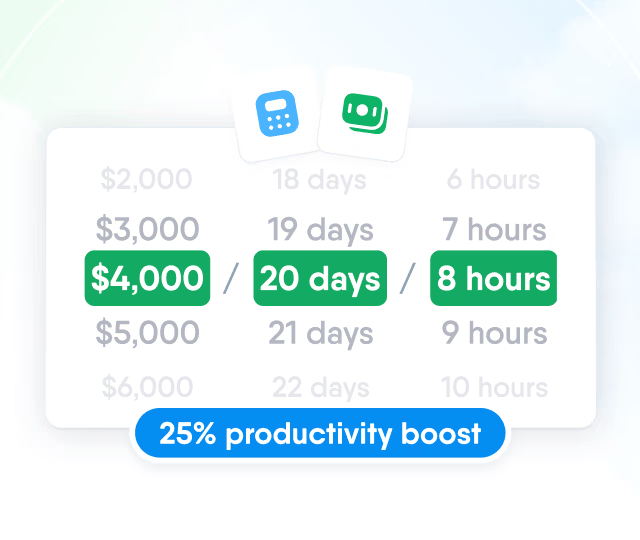
HR efficiency estimator
How does the HR efficiency estimator from PeopleForce work.
Calculate your impact



Talent Management
What talent management covers, why it matters and how to build the process
Talent management is the coordinated set of HR practices for attracting, developing, engaging and retaining the people a company needs to reach its goals. It connects processes that are often run separately, so that hiring decisions, performance reviews, learning plans, succession and compensation all draw on the same view of what the business needs and what each employee can do.
The term is deliberately broad. Recruitment brings people in, performance management tracks how they do, professional development helps them grow and a retention strategy keeps them. Talent management is the layer that makes these work as one system rather than four departments with four spreadsheets.
The components of talent management
- Workforce planning. Deciding which roles and skills the company will need and when, so that talent acquisition fills real gaps rather than reacting to resignations.
- Attraction and hiring. Building an employer brand and a hiring process that select for the competencies the strategy depends on.
- Onboarding. Turning a new hire into a productive employee quickly, with clear expectations from the first week.
- Performance management. Setting goals, giving continuous feedback and running reviews that produce usable data about strengths and gaps.
- Learning and development. Closing the skills gap through training, mentoring, job rotation and individual development plans.
- Career and succession planning. Mapping career paths and preparing successors for critical roles through succession planning.
- Engagement and retention. Measuring how people feel about their work, acting on the results and removing the reasons good people leave.
- Compensation and recognition. Paying competitively and rewarding the behavior the company wants to see more of.
Talent management vs. HR management
HR management covers everything an employer has to do: contracts, payroll, compliance, records, policies. Talent management is the strategic subset focused on capability: do we have the right people, are they growing, will they stay. An HR team can run flawless payroll and still have no idea who could replace the head of engineering next year. Talent management is the discipline that answers that question before it becomes urgent.
Why talent management matters
Lower cost of turnover. Replacing an employee costs a large fraction of their annual salary once recruiting, onboarding and lost productivity are added up. A company that develops and promotes internally hires less often and loses less knowledge.
Faster response to change. When skills, performance and career interests are documented in one place, reorganizations, new product lines and sudden departures can be staffed from the inside within days.
Better decisions about people. Promotions, raises and development budgets based on review data and competency assessments are more defensible than decisions based on who is most visible to leadership.
Stronger engagement. Employees who see a path, get regular feedback and are developed deliberately report higher engagement and stay longer.
How to build a talent management process
- Define the competencies that matter. A shared competency framework gives hiring, reviews and development the same vocabulary.
- Identify critical roles. Not every position needs a succession plan. Start with the roles whose vacancy would stop the business.
- Run reviews that produce data. Structured review cycles with self, manager and peer input, scored against competencies, are the raw material for every other talent decision.
- Turn results into development plans. Each review should end with a plan the employee and manager own, revisited in regular one-on-ones.
- Measure and adjust. Track internal promotion rate, regretted attrition, time to fill critical roles and engagement scores, and change the process where the numbers say it is not working.
Talent management in PeopleForce
PeopleForce Perform covers the performance side: review cycles with self, peer, upward and manager reviews scored against competencies, OKRs for goal alignment, and 1:1 meetings with action items to follow up on development plans. PeopleForce Pulse measures engagement through recurring surveys and eNPS, broken down by department, location and tenure. Recruit handles hiring against the same job profiles, and every result lands on the employee profile in Core HR, so the history of reviews, goals, surveys and career moves stays in one record.


Let us show you what's possible
From Core HR to advanced workforce analytics — see the platform saving 80 hours a month for teams just like yours. Fully tailored to your workflow.