
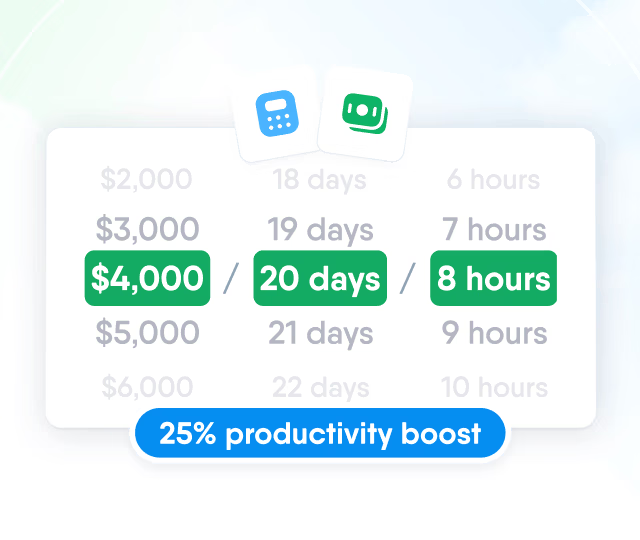
HR efficiency estimator
How does the HR efficiency estimator from PeopleForce work.
Calculate your impact



Holiday pay and annual leave: how to calculate it in Ukraine and the UK

Holiday pay follows one principle almost everywhere: an employee on annual leave should not lose income. How that principle is applied differs a lot. In Ukraine, holiday pay is average daily earnings over the last 12 months multiplied by calendar days of leave, paid at least three days before the holiday starts. In the UK, workers get 5.6 weeks of statutory leave paid at their normal rate, with a 52-week average for variable pay.
This guide sets out both systems side by side: entitlement, how to calculate holiday pay, payment in lieu of untaken leave, deadlines and the most common mistakes.
Key facts
Ukraine: at least 24 calendar days a year. Holiday pay = average daily pay × calendar days, paid at least 3 days before the leave.
UK: 5.6 weeks a year (28 days for a five-day week), which can include bank holidays. Paid at the normal rate on the usual payday.
Payment in lieu: in both countries, mainly on leaving. In Ukraine, days above 24 actually taken can also be paid out on request.
Irregular hours (UK): holiday accrues at 12.07% of hours worked, and rolled-up holiday pay is allowed.
Holiday pay in Ukraine
The formula is average daily pay × number of calendar days of leave. Average daily pay is earnings for the 12 calendar months before the month the leave starts, divided by the calendar days in that period (Cabinet of Ministers Resolution No. 100).
Example. An employee takes 14 calendar days of leave. Over 12 months they earned UAH 360,000 across 365 calendar days. Average daily pay: 360,000 ÷ 365 = UAH 986.30. Holiday pay: 986.30 × 14 = UAH 13,808.20 before tax.
Entitlement
Type of leave | Length | Who is entitled |
|---|---|---|
Annual basic leave | At least 24 calendar days | All employees |
Annual leave for minors | 31 calendar days | Employees under 18 |
Annual leave for people with disabilities | 30 days (groups I and II), 26 days (group III) | With the relevant status |
Additional leave for irregular hours | Up to 7 calendar days | Roles listed in the collective agreement |
Additional leave for hazardous work | Up to 35 calendar days | Based on workplace certification |
Social leave for parents | 10 calendar days, up to 17 in some cases | Employees with two or more children under 15 and other categories |
Annual leave is earned per working year, counted from the start date, not per calendar year. This is the most common reason balances in HR records and employees' expectations diverge.
What goes into the calculation
Days of childcare leave and suspended employment are excluded from the reference period, while sick days and maternity leave days stay in. Under martial law, public holidays are not excluded from the period and do not extend leave.
Included | Excluded |
|---|---|
Basic salary | One-off payments (anniversaries, inventions) |
Allowances and supplements | Financial assistance, including for health |
Production bonuses | Payment in lieu of untaken leave |
Annual performance bonus | Severance pay |
Sick pay | Dividends, holiday vouchers |
Pay for periods of retained average earnings (previous holiday pay, business trips) | Income for excluded days |
Payment in lieu and deadlines in Ukraine
On dismissal, compensation is paid for all unused annual and additional leave and unused social leave for parents, whatever the reason for leaving (Article 83 of the Labour Code), on the last working day. Without dismissal, only the part of annual leave above 24 calendar days actually taken can be paid out, and only at the employee's request. Holiday pay itself must be paid at least three days before the leave starts; if it is late, the employee can ask to move the leave.
Holiday pay in the UK
Under the Working Time Regulations 1998, almost all workers are entitled to 5.6 weeks of paid leave a year, capped at 28 days. For someone working five days a week that is 28 days, which can include the eight bank holidays in England and Wales. Many employers offer more as contractual leave.
Holiday pay is a week's normal pay for each week of leave. For workers with fixed hours and pay, that is simply their usual salary. For variable pay, the employer uses the average of the last 52 paid weeks. For the four weeks of EU-derived leave, normal pay must include regular overtime, commission and other payments linked to the work, so that the worker is not discouraged from taking holiday.
For irregular-hours and part-year workers, holiday for leave years starting on or after 1 April 2024 accrues at 12.07% of hours worked in each pay period. Employers can also choose rolled-up holiday pay: an uplift of 12.07% on each payslip instead of paying holiday when it is taken, shown as a separate line.
Payment in lieu of untaken statutory holiday is only allowed when employment ends. Workers can carry over up to 1.6 weeks if the contract allows it, and the four weeks of EU leave can be carried over if the worker could not take them because of sickness, family leave or because the employer did not give them a reasonable chance to take them.
Ukraine vs UK at a glance
Rule | Ukraine | United Kingdom |
|---|---|---|
Minimum entitlement | 24 calendar days | 5.6 weeks (28 days for a five-day week) |
Counting | Calendar days | Working days or hours |
How pay is calculated | Average daily pay over 12 months × calendar days | A week's normal pay; 52-week average for variable pay |
When it is paid | At least 3 days before the leave | On the usual payday |
Payment in lieu while employed | Only days above 24 actually taken | Not allowed for statutory leave |
Payment on leaving | All unused days, on the last working day | Accrued untaken leave, in the final pay |
Worked examples
Example 1. Ukraine, standard case
An employee takes 24 calendar days of annual leave. Earnings for the reference period: UAH 480,000 over 365 days, with no excluded days.
- Average daily pay: 480,000 ÷ 365 = UAH 1,315.07.
- Holiday pay: 1,315.07 × 24 = UAH 31,561.68 before tax.
Example 2. Ukraine, unpaid leave and financial assistance in the period
An employee takes 14 days. Earnings for 12 months: UAH 300,000, including UAH 8,000 sick pay and UAH 5,000 health assistance. Of the 365 days, 10 were unpaid leave.
- Remove financial assistance: 300,000 − 5,000 = UAH 295,000. Sick pay stays.
- Days: 365 − 10 = 355.
- Average daily pay: 295,000 ÷ 355 = UAH 830.99.
- Holiday pay: 830.99 × 14 = UAH 11,633.86.
Example 3. Ukraine, compensation on dismissal
An employee leaves with 17 unused days. Earnings for the 12 months before the month of dismissal: UAH 390,000 over 365 days.
- Average daily pay: 390,000 ÷ 365 = UAH 1,068.49.
- Compensation: 1,068.49 × 17 = UAH 18,164.33 before tax.
Example 4. UK, variable pay
A warehouse worker on a five-day week earns £500 basic plus regular overtime. Over the last 52 paid weeks, total pay was £31,200. They take one week of holiday.
- Average weekly pay: £31,200 ÷ 52 = £600.
- Holiday pay for one week: £600, not just the £500 basic.
Example 5. UK, payment in lieu on leaving
An employee earning £30,000 a year on a five-day week leaves on 30 June, half way through the leave year. They are entitled to 28 days a year and have taken 8.
- Accrued leave: 28 × 6/12 = 14 days. Untaken: 14 − 8 = 6 days.
- Daily rate: £30,000 ÷ 260 working days = £115.38.
- Payment in lieu: £115.38 × 6 = £692.28.
Five common holiday pay mistakes
Ukraine: including financial assistance and other one-off payments in average earnings.
Ukraine: excluding sick days from the period, although for holiday pay they stay in.
Ukraine: paying compensation without dismissal for days within the first 24 actually taken.
UK: paying basic salary only when the worker has regular overtime or commission.
UK: calculating holiday for irregular-hours workers on a fixed entitlement instead of the 12.07% accrual.
What an HR system can take over
The holiday pay calculation stays with payroll. But the data behind it, how many days someone has taken, what their balance is and when their leave year starts, lives with HR. Once it is kept in a spreadsheet, discrepancies are inevitable.
In PeopleForce, each absence type has its own accrual policy. For Ukrainian annual leave that means counting in calendar days, linking the accrual cycle to the hire date rather than 1 January, and prorating the first accrual. For UK holiday, the same policy can count working days and include bank holidays in the allowance. In both cases the balance updates automatically.
Employees see their balance next to each absence type when they request leave, and the system shows a day-by-day breakdown and the projected balance before the request is sent. Leave tracking keeps this data in one place, and the approval date is recorded, so Ukrainian payroll can meet the three-day deadline. More on the concept in our glossary entry on holiday pay.
Frequently asked questions
How is holiday pay calculated in the UK?
At a week's normal pay for each week of leave. For variable pay, use the average of the last 52 paid weeks, including regular overtime and commission.
How much annual leave is an employee entitled to in Ukraine?
At least 24 calendar days per working year, with more for minors, people with disabilities and some roles under the collective agreement.
When must holiday pay be paid?
In Ukraine, at least three days before the leave starts. In the UK, on the usual payday.
Can unused holiday be paid out without leaving?
In Ukraine, only the part above 24 calendar days actually taken, at the employee's request. In the UK, statutory holiday cannot be paid out while employment continues.
Does unused holiday expire?
In Ukraine, there is no time limit, and all unused days are paid out on leaving. In the UK, statutory leave generally has to be taken in the leave year, with limited carry-over rules.
Is sick pay included in holiday pay in Ukraine?
Yes. Sick pay is included in average earnings for holiday pay and sick days stay in the reference period.
The PeopleForce editorial team creates and refines content on people management, recruiting, team development and HR technology. Every article goes through an editorial review for accuracy, relevance and clarity. We rely on verified sources, industry research, hands-on experience and PeopleForce’s own analytics, including anonymized data, to give HR professionals, managers and business owners useful, reliable information.


One login. Every HR tool you'll need.
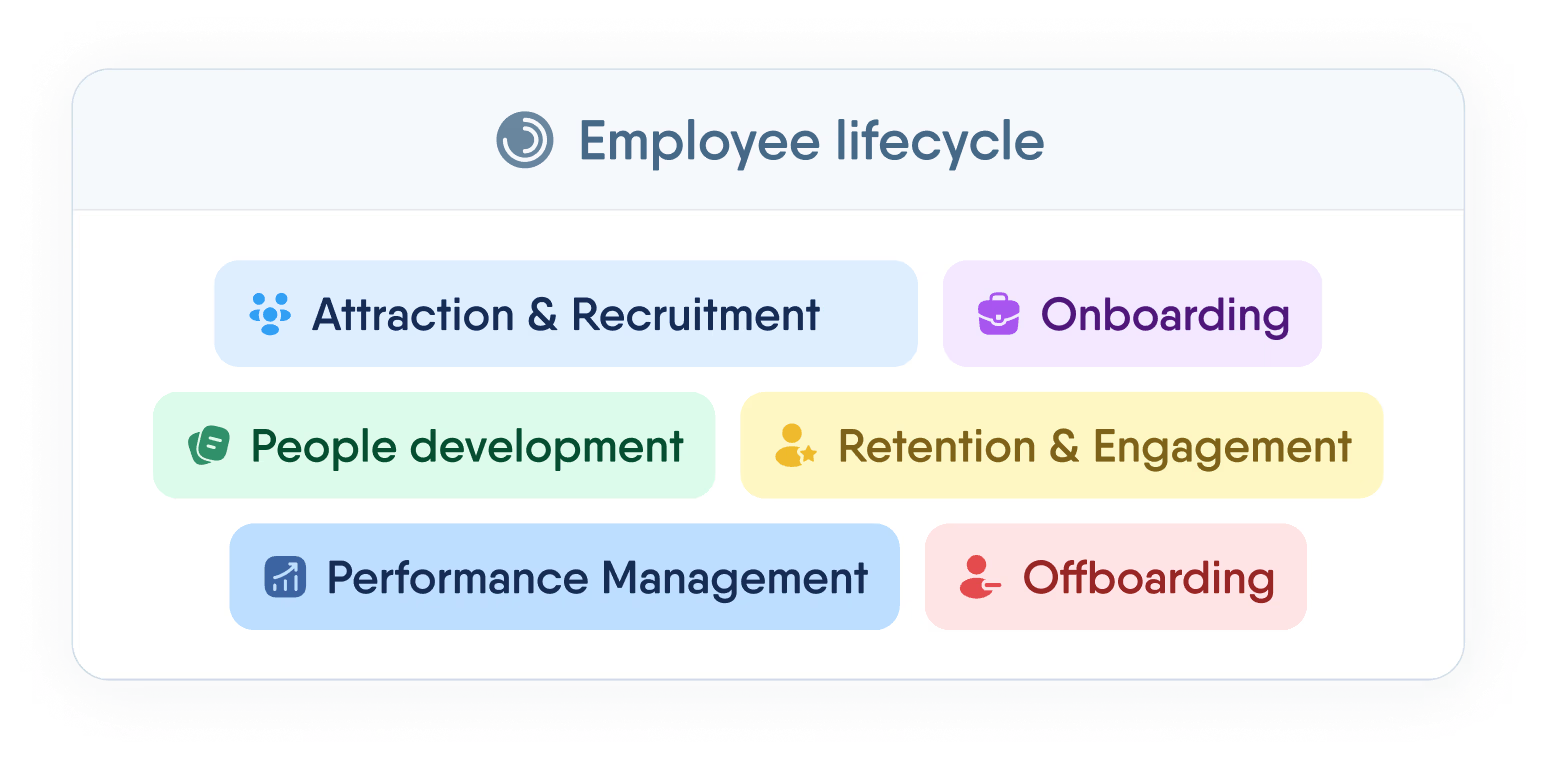
Manage the full employee lifecycle — from first interview to final offboarding — without switching tabs or losing data.
Recent articles
 2026-11-05
Gamification in HR: what it is and how to use it in training and sales
What gamification is, which game mechanics it uses, examples in HR, training and sales, and how to introduce it without putting the team off.
2026-11-03Inclusion in the workplace: what it means and how to build an inclusive culture
What workplace inclusion is, why it drives retention, engagement and innovation, and the practical steps that help build an inclusive culture.
2026-11-02AI in HR: the five jobs it does today, and how each one looks in PeopleForce
Most AI in HR today falls into five jobs. How each one works, how it looks in PeopleForce, and the five questions to ask any vendor.